"What a thousand acres of Silphiums looked like when they tickled the bellies of the buffalo is a question never again to be answered, and perhaps not even asked." -Aldo Leopold
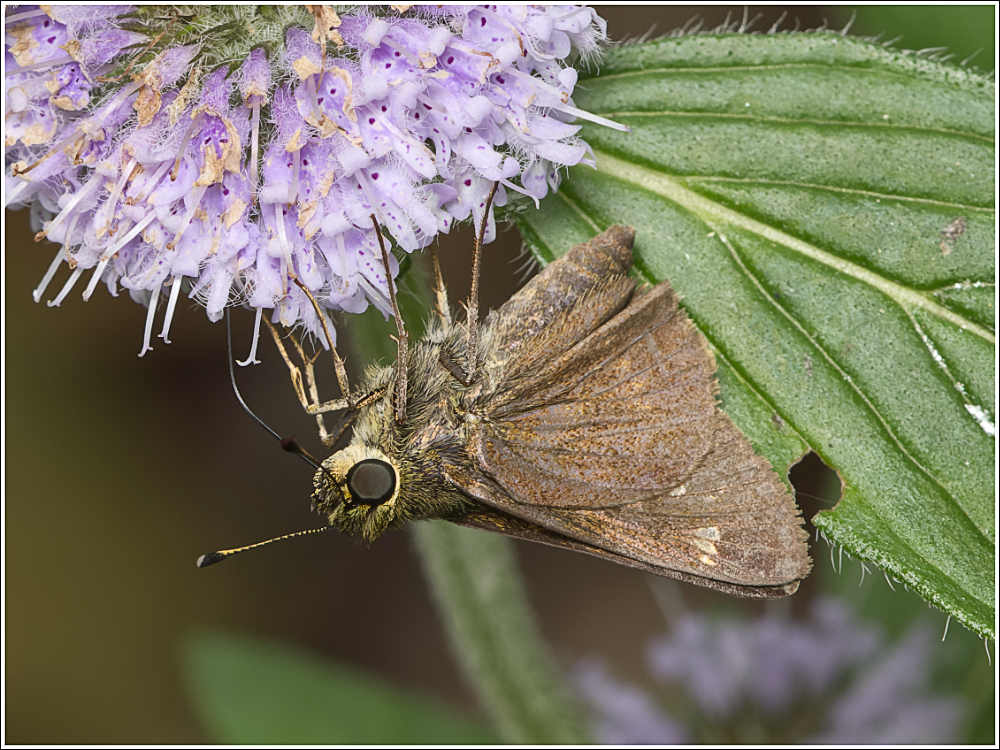
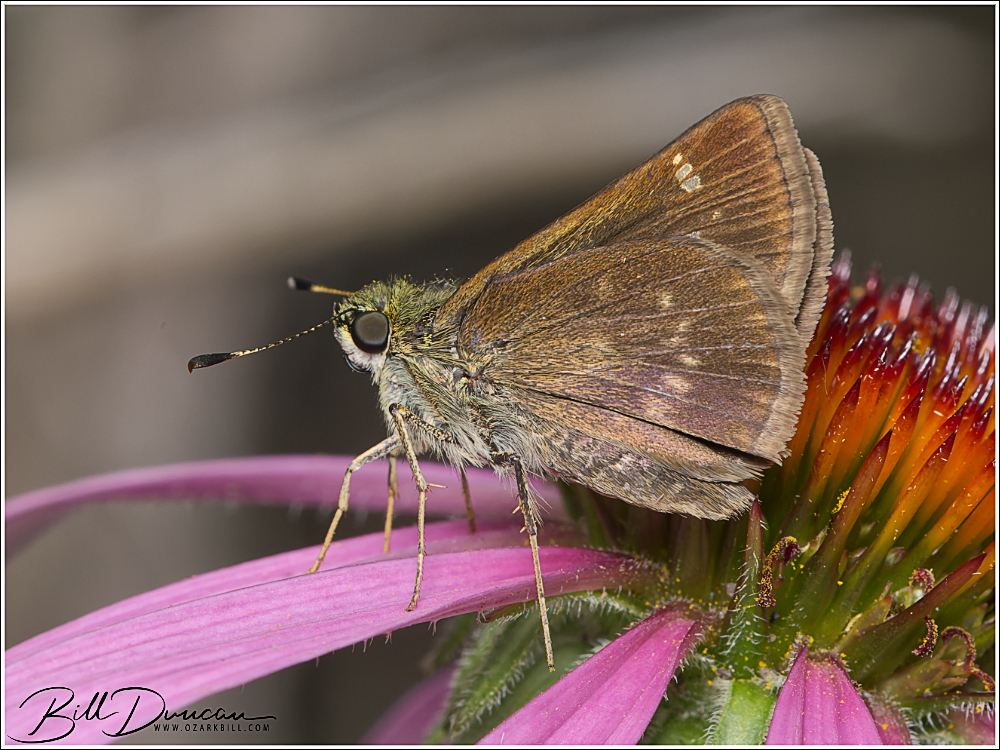
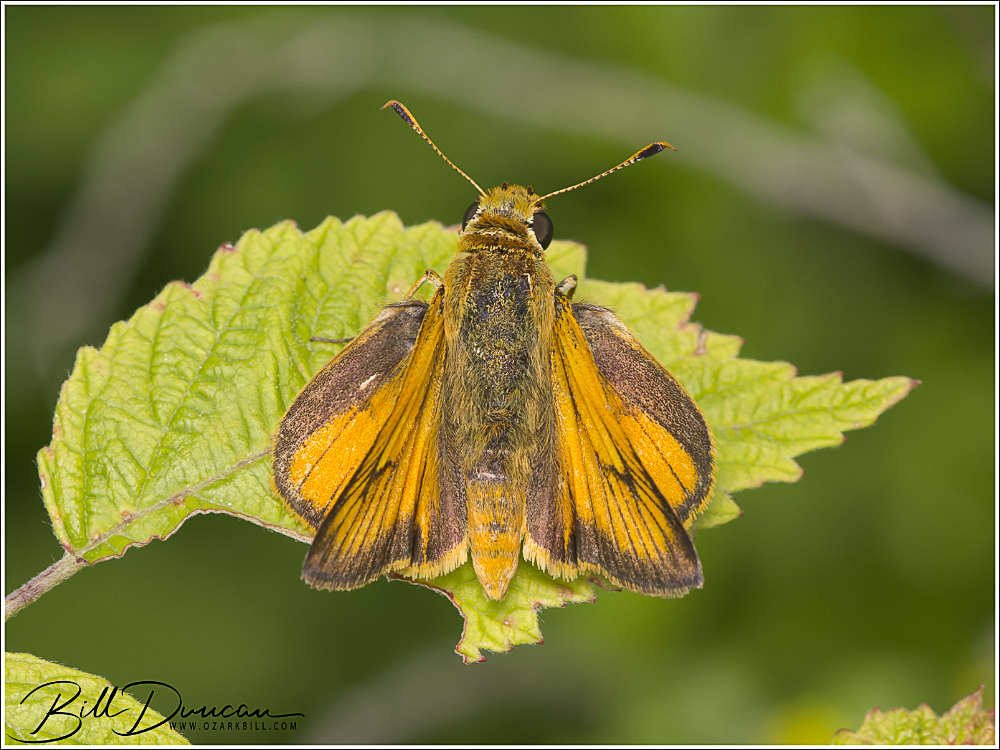
The fellas and I spent a few hours this spring hunting for a few butterflies in Phelps and Franklin Counties. We finally had some success locating the rare golden-banded skipper after numerous attempts over the past two or three seasons. We were hunting in the right place, but not in the exact right spot. Thanks to our friends who shared the location of their original find.
The Golden-banded Skipper (Telegonus cellus)
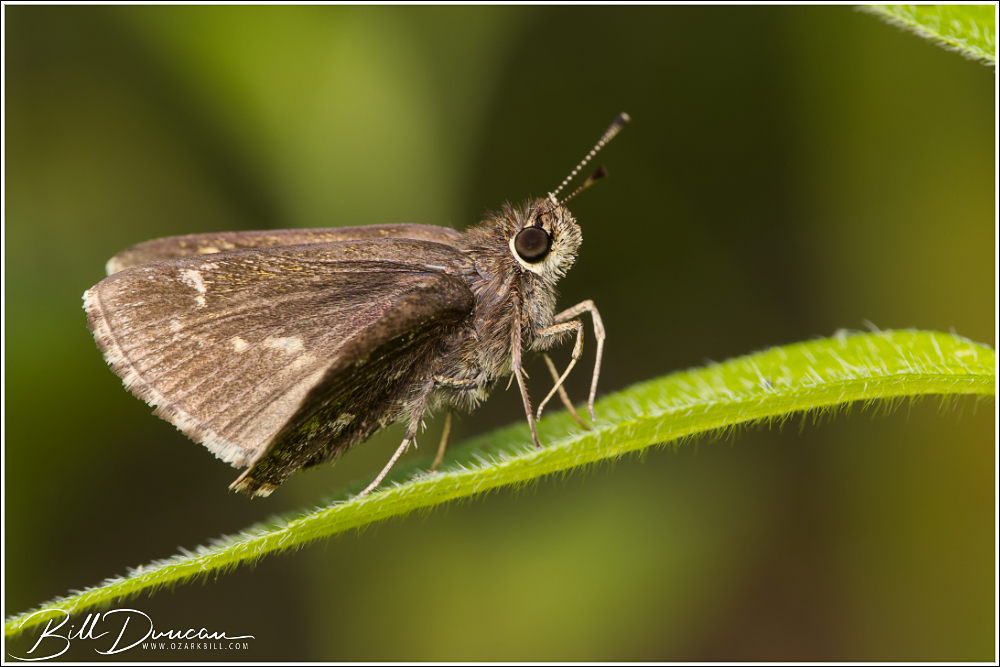
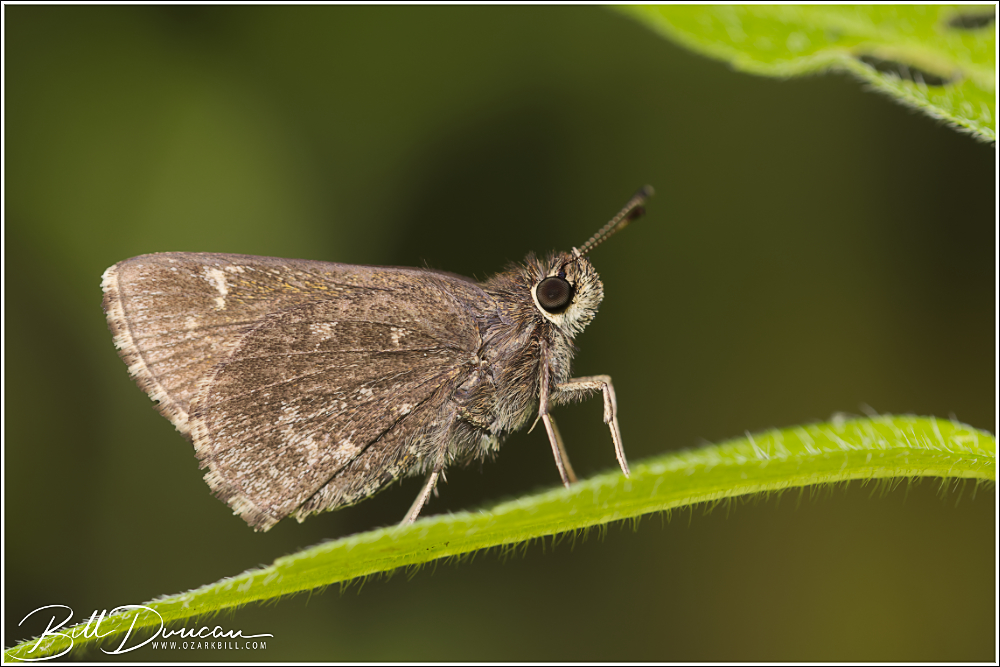
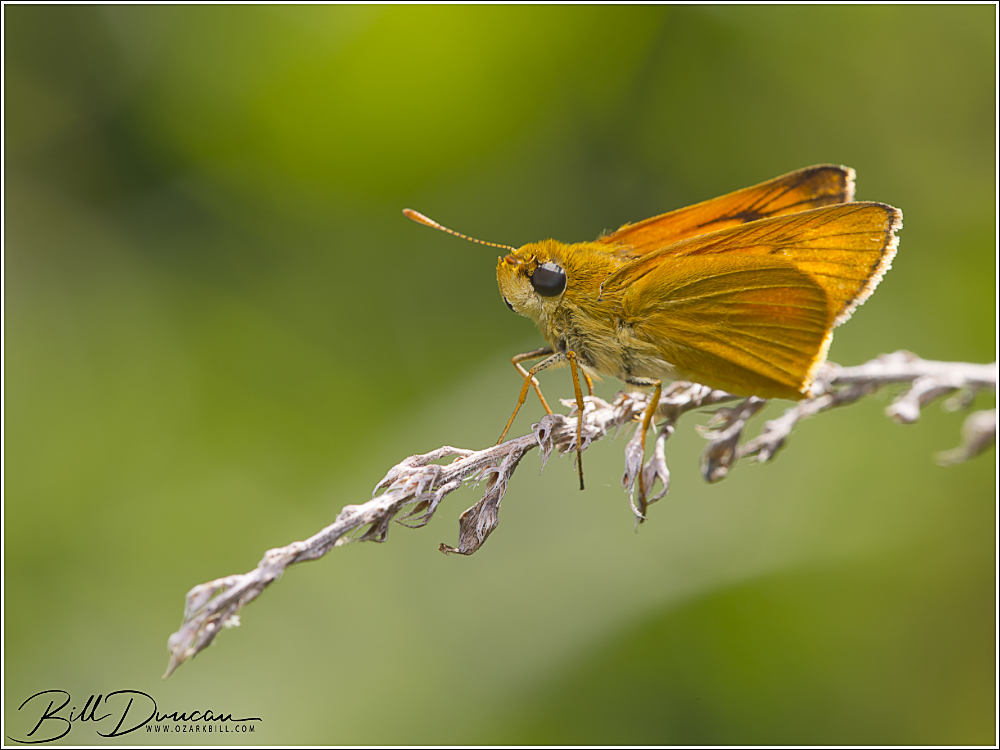
In order to find and identify the rare skipper butterflies (Hesperiidae), one must first find and take lots of photos of the more common species. There are so many skippers that look very similar to each other and even with taking photos, I found it to be a painful chore to come to the correct identification on many of these. Many thanks to CA Ivy from Butterflies and Moths of North America for helping me get the proper IDs on the following.
Little Glassy Wing (Pompeius verna)
Northern Cloudywing (Thorybes pylades)
Bell’s Roadside-Skipper (Amblyscirtes belli)
Delaware Skipper (Anatrytone logan)
Least Skipper (Ancyloxypha numitor)
Zabulon Skipper (Poanes zabulon)
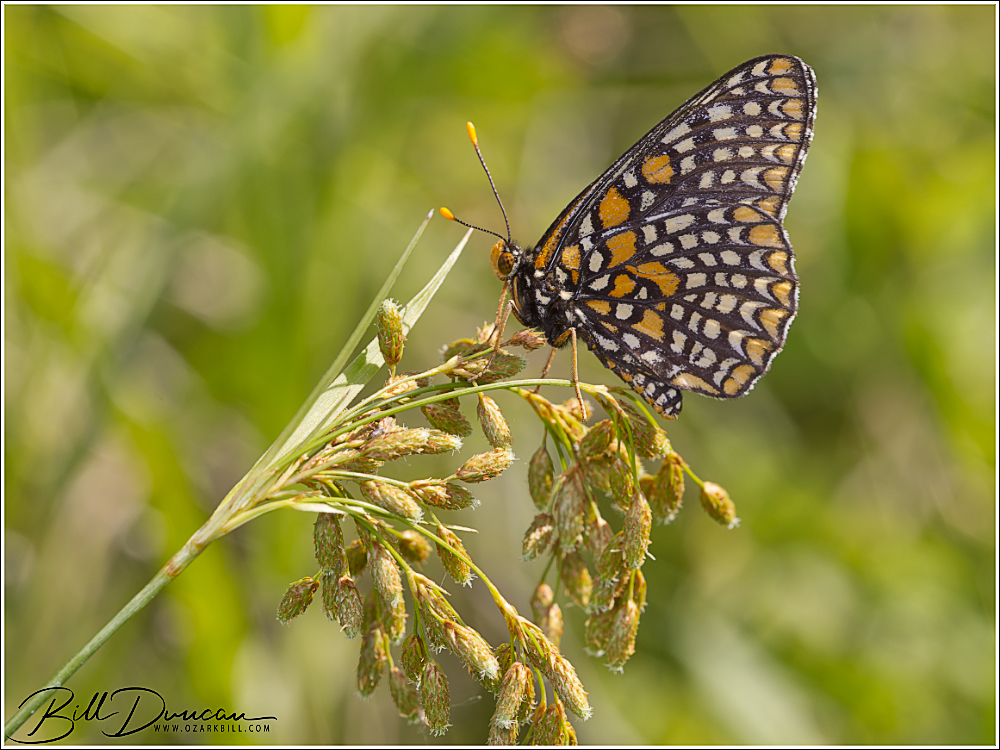
We found other leps besides skippers, including quite a few of the Ozark Baltimore Checkerspot (Euphydryas phaeton ozarkae).
It was so nice to see something with these colors and patterns that wasn’t a dang Pearl Crescent. This one is the Silvery Checkerspot (Chlosyne nycteis).
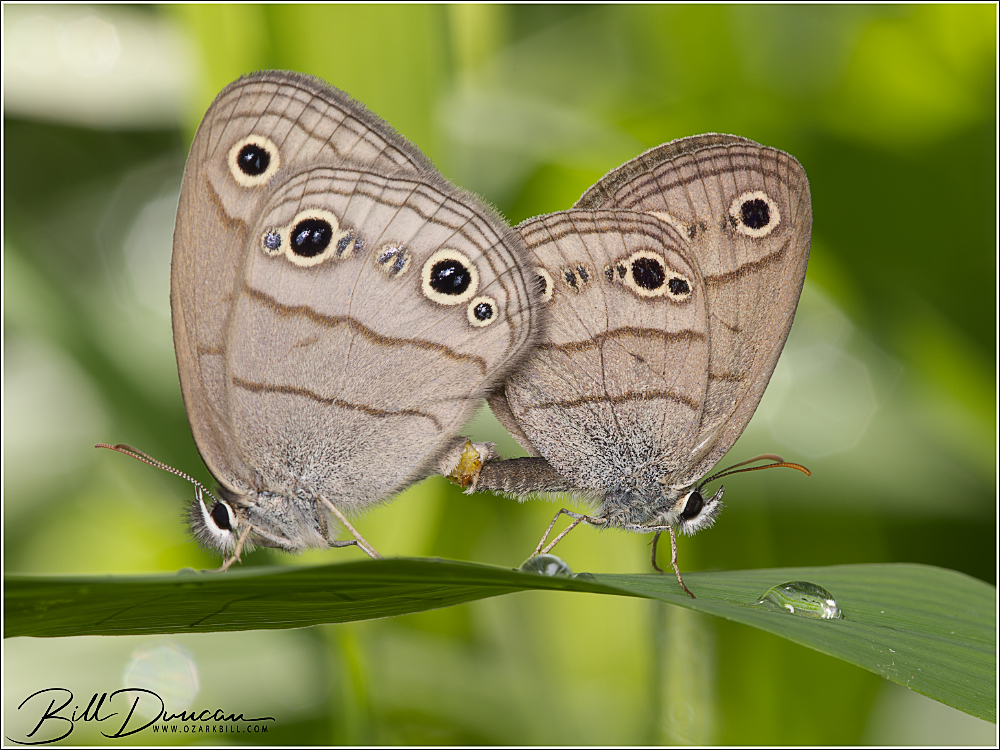
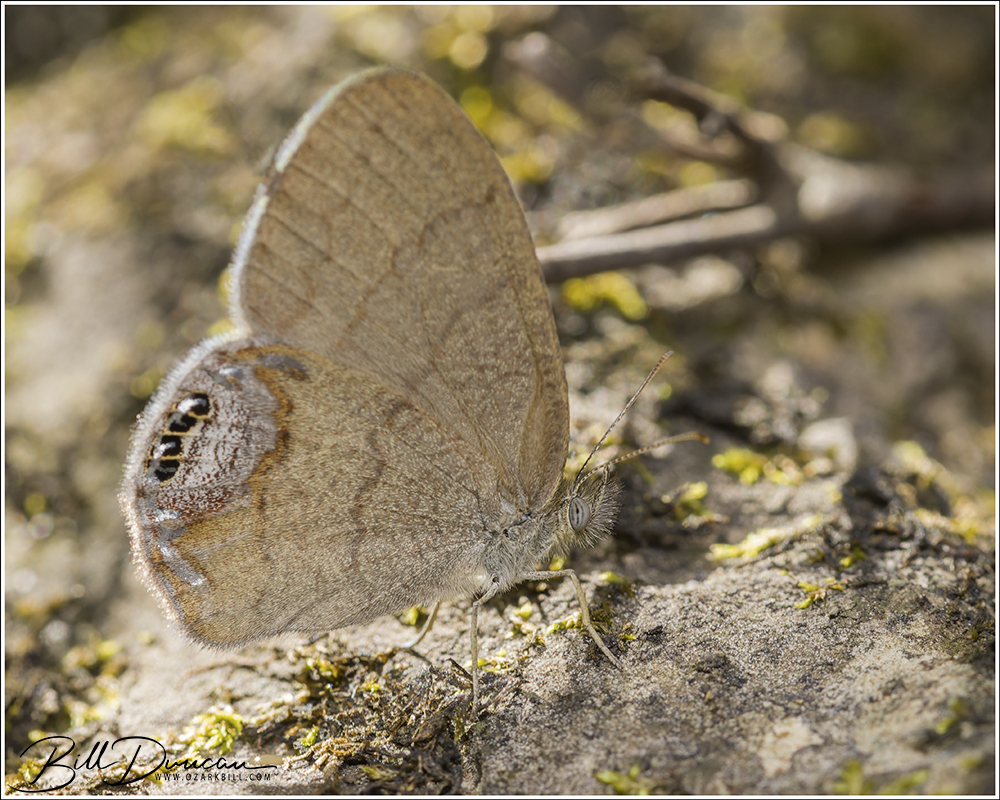
I’ve struggled for years to get a photo of the Little Wood-Satyr (Megisto cymela). I finally found the trick to get them to stay put for a few seconds… 😉
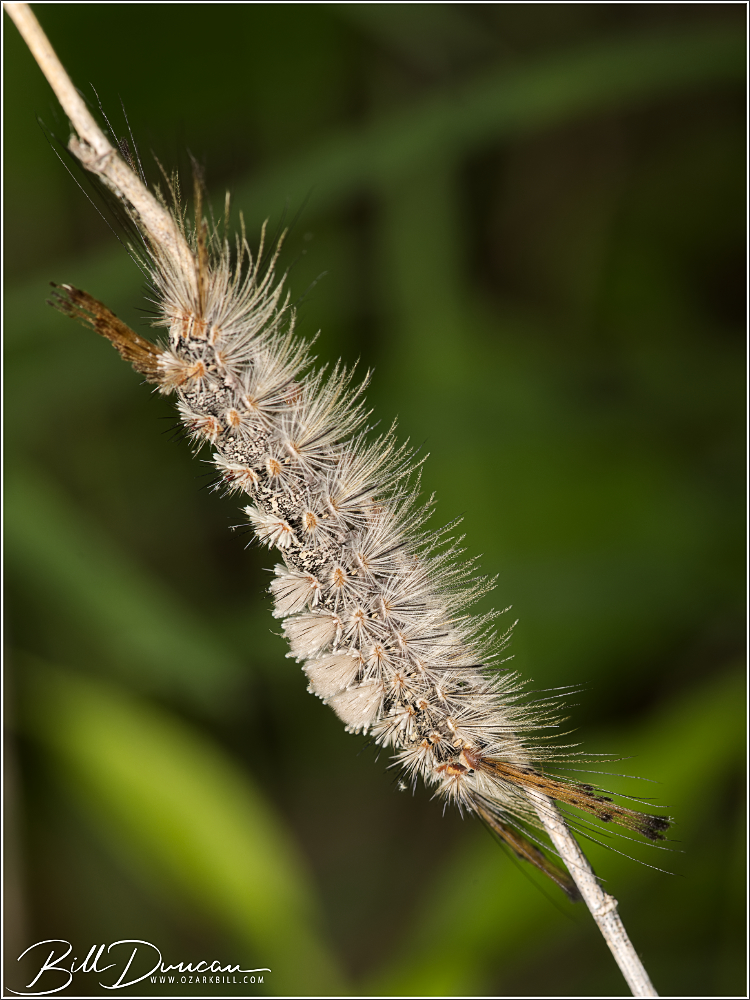
Casey and I stumbled across this first for me – a gorgeous Tephra Tussock Moth (Dasychira tephra) caterpillar.
Not another lep, but we had a few of this fantastic species – the Saw-combed Fishfly (Nigronia serricornis) associated with a fen and creek we were searching in.
It has been suggested that we might be seeing a very good moth and butterfly season this year due to birds and other predators filing up and raising their young on the Brood XIX periodical cicadas. From my anecdotal experiences, this seems to be true. Hopefully I can find more caterpillars over the summer if this continues to be the case.
Early this month the WGNSS Nature Photography Group traveled to the southwest part of the state. Our primary destination, the Roston Native Butterfly House, is a real treasure that I never get tired of visiting.
Officially considered as an accidental species in Missouri, the Dianna fritillary (Speyeria diana) has a strong population in the mountains of northwest Arkansas.
The Roston Native Butterfly House was established to create a haven for local butterfly species and to educate the public about their ecological significance. Its history is rooted in conservation efforts and the desire to preserve native butterfly populations threatened by habitat loss and environmental changes.
Another fritillary, the great spangled (Speyeria cybele)
This native butterfly house, located within the Springfield Botanical Garden, was created and named in honor of Dr. Bill Roston, an MD of the small town of Forsyth, MO who had an avid interest in conservation and pollinators. Today this lovely location is curated by Dr. Chris Barnhart and his wife Deborah.
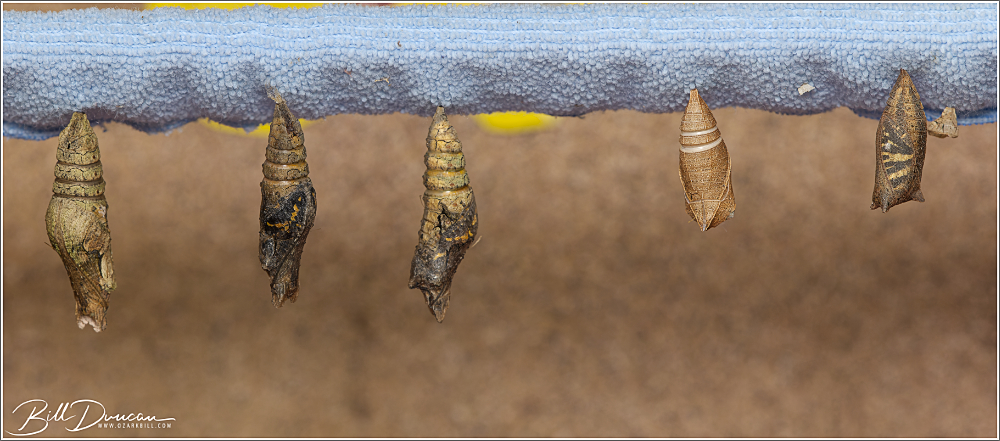
A couple individuals at slightly different stages of pupation. These are the larvae of the viceroy (Limenitis archippus) which resemble bird droppings.
Pictured above is a caterpillar of the silver-sided skipper (Epargyreus clarus).
The Barnharts and their staff of volunteers do an incredible job of rearing several native butterfly species and maintain a nice population of their required host plants within the house. The Barnharts welcome several thousand visitors each year and do an excellent job in educating the visitors on the life histories and conservation stories of the butterflies they raise. Chris and Deborah always eagerly support our small group visits and often go out of their way to help us get the photographs of the butterflies and caterpillars we are after.
The Roston Native Butterfly House is a great place to see many of the swallowtail species found in our region, like this newly emerged giant swallowtail (Papilio cresphontes).
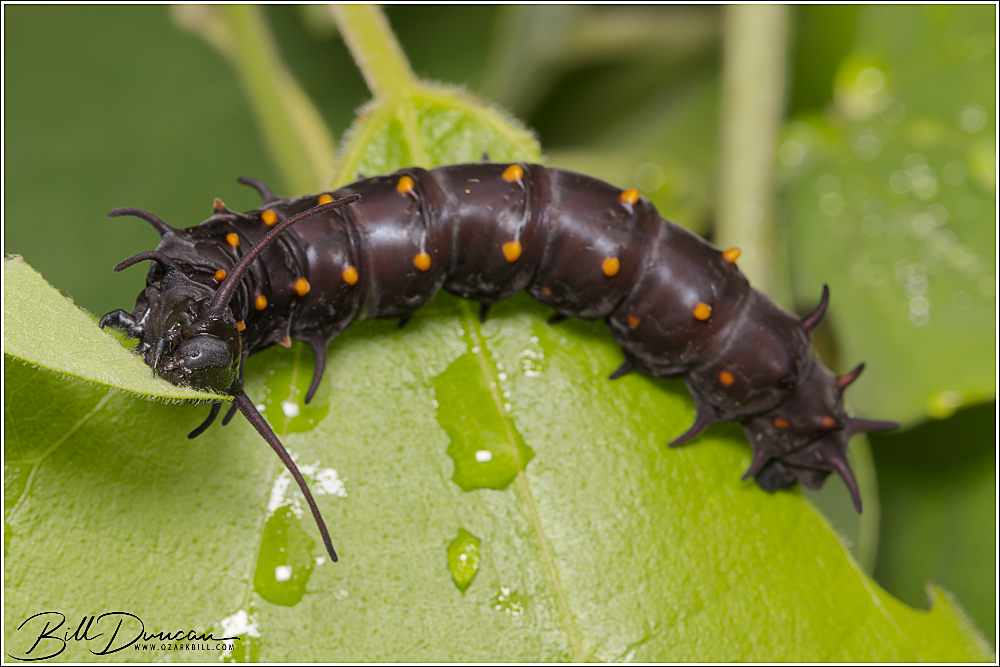
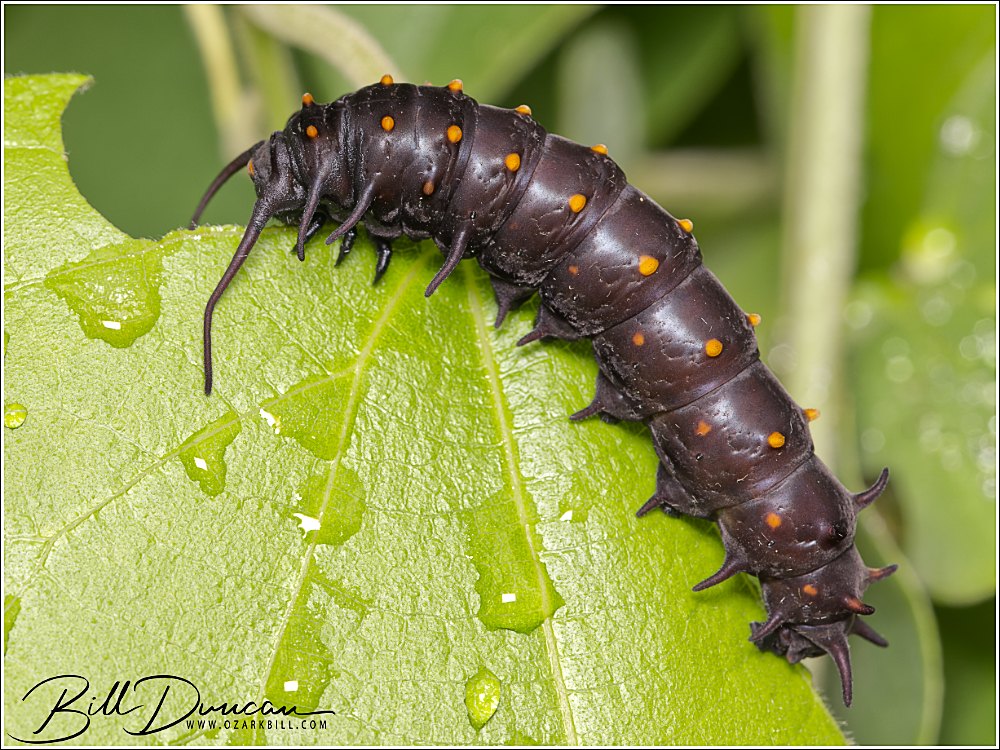
Here are a couple of shots of the incredible larvae of the pipevine swallowtail (Papilio troilus). These cats are typically very conspicuous feeders, relying on their aposematic coloration to warn predators of their poisonous disposition.
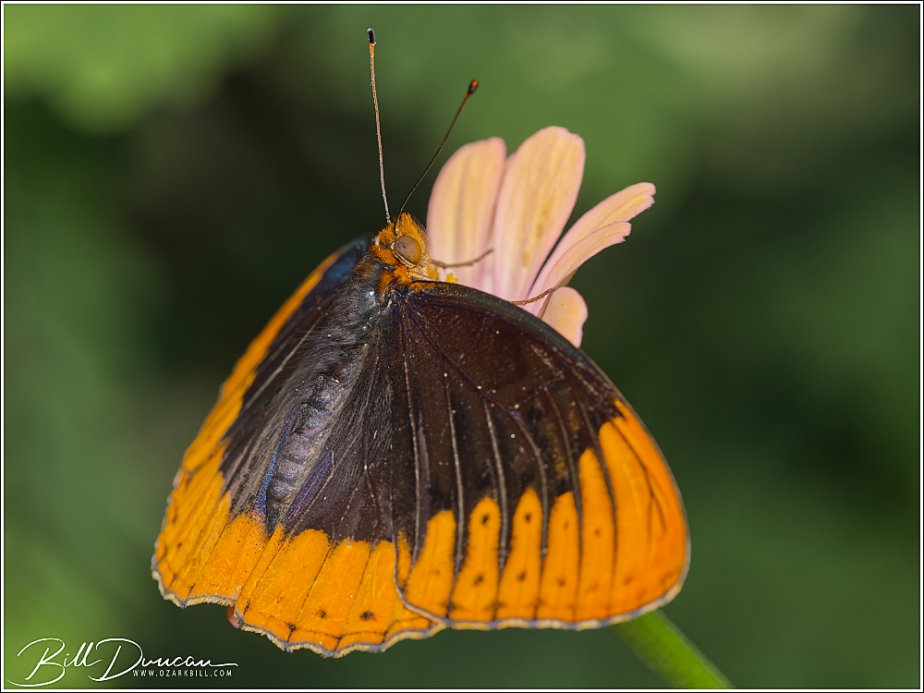
Native to Florida, Cuba and the Bahamas, the Atala butterfly is an excellent example of a specialist. The Atala (Eumae atala) feed only on the coontie cycad (Zamia integrifolia). You might notice that this member of the Lycinidae (hairstreaks) family also shows aposematic coloration in both larval and adult forms. This is to warn predators of the neurotoxic secondary plant compound – cycasin, that they ingest from their cycad hosts and carry with them for their entire lives.
Related to the common hairstreak butterflies seen in our own backyards, the Atala butterfly is a tropical representative of this family native to Florida.
The Barnharts go to great lengths to rear the Atala butterflies. They bring back larvae from cycad farms (that really don’t want them) in Florida and must make sure they raise and overwinter enough cycad plants for them to raise the cats to their adult forms.
Nothing against the typical butterfly houses that tend to showcase tropical species from around the world, but I would sure like to see more strictly native butterfly houses like the Roston Native Butterfly House. As I hope my photographs show, not only are the natives spectacular, but showcasing them in this type of setting helps to educate its visitors on the species they might see in their own neighborhoods or while out on the trails.
Chrysalises of the various native butterflies can usually be observed when visiting the Roston Native Butterfly House in Springfield, MO.
A great big thank you to Chris and Deborah for always being gracious hosts. We are looking forward to more visits.
I was happy to final start working on getting some butterfly and skipper photos in 2023. I joined the local North American Butterfly Association and really enjoyed getting out on a few of their counts. I’m still learning the diurnal moths (butterflies) and have a ways to go before I can call myself competent. Here are a few photos from the Nymphalidae family to share from 2023.
Gemmed Satyr (Cyllopsis gemma)
This gemmed satyr was an unexpected find while visiting St. Francois State Park in September. Not long ago this species was restricted to extreme southern Missouri. They now seem to be continuing a northern expansion in their range. Quite a few butterflies have eyespots that are found on different locations of their wings, presumably to make them look like much larger organisms as well as to persuade would-be predators to attack something beside the vulnerable true heads. I have recently read that some have hypothesized the spot on this species wings developed to mimic certain jumping spiders. In my photo I think this looks to be highly plausible – with the two primary eyes centered around a grey backdrop that looks very much like a jumping spider to me.
Viceroy (Limenitis archippus)
Once believed to be a pure example of Batesian mimicry in a complex with the monarch and queen butterflies, some evidence now suggests that the viceroy may be distasteful to predators, providing evidence that this is instead should be considered a case of Müllerian mimicry. This is turning out to be quite the complex case to understand, with some reports suggesting that the host plant that a particular individual viceroy was raised on determines whether or not it is distasteful. Other work has suggested that gene complexes that may differ between populations of viceroys determines distastefulness. More work is needed to determine what exactly is going on here. This photo was taken on a NABA walk ate Marais Temps Clair C.A. in September.
Red Admiral (Vanessa atalanta)
Photographed at Marais Temps Clair C.A. in early October, the red admiral is a lover of nettles, feeding solely on members of the Urticaceae family.
Painted Lady (Vanessa cardui)
Famous for its migration, the painted lady hosts on numerous species of Asteraceae.
American Lady (Vanessa virginiensis)
Being strictly found in the new-world, the American lady can be distinguished from the painted lady by the number of spots on the ventral sides of the hindwings. As seen in the photo above, the American lady has two large eyespots whereas its cousin, the painted lady, has four. Photographed at Horn’s Prairie Grove LWR in July.
“So, where are we going? To see Sophey having sex?” my wife questioned me when I woke her early on one of our shared days off during the past holiday break.
No, I replied. “We are getting up early to get some breakfast and then on to the Sophia M. Sachs Butterfly House. We have to get there by 9:00 to beat the crowds of older and younger people that will surely be troublesome as well as everyone with a camera phone who is trying to take a masterpiece of a butterfly. We have to get there early so that the butterflies are not fully warmed by the slow winter sun and become too active to shoot easily.”
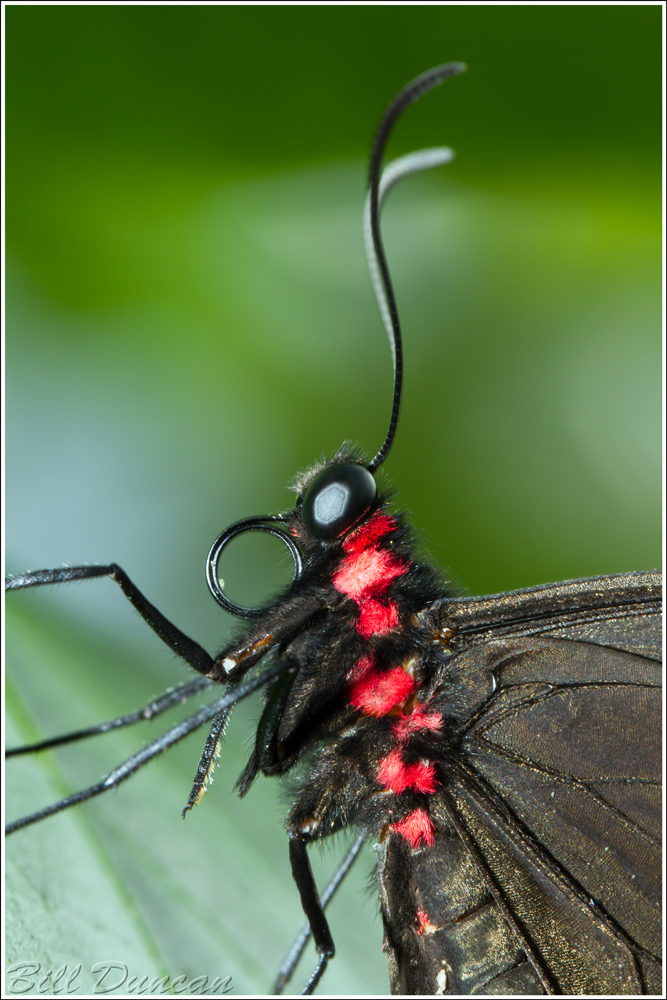
Technical details: Canon EOS 7D camera, EF100mm f/2.8L Macro IS USM lens, ISO 160, f/14, 1/30 sec
These subjects at this location are definitely a challenge. What makes it even worse is that on a colder winter day you cannot expect to go directly in to the high temperature and high humidity environment and start shooting. You will find that your cold equipment has condensation all over it. Sure, you could try wiping the glass surface of your lens over and over until the condensation is all but gone, but you shouldn’t. Think about it. If the moisture is building on the outside of your camera and lens, then any moisture that is suspended in the air inside your equipment will also condense – condense all over the intricate electronic circuits that make up your expensive camera and lens package that you saved for so long to purchase.
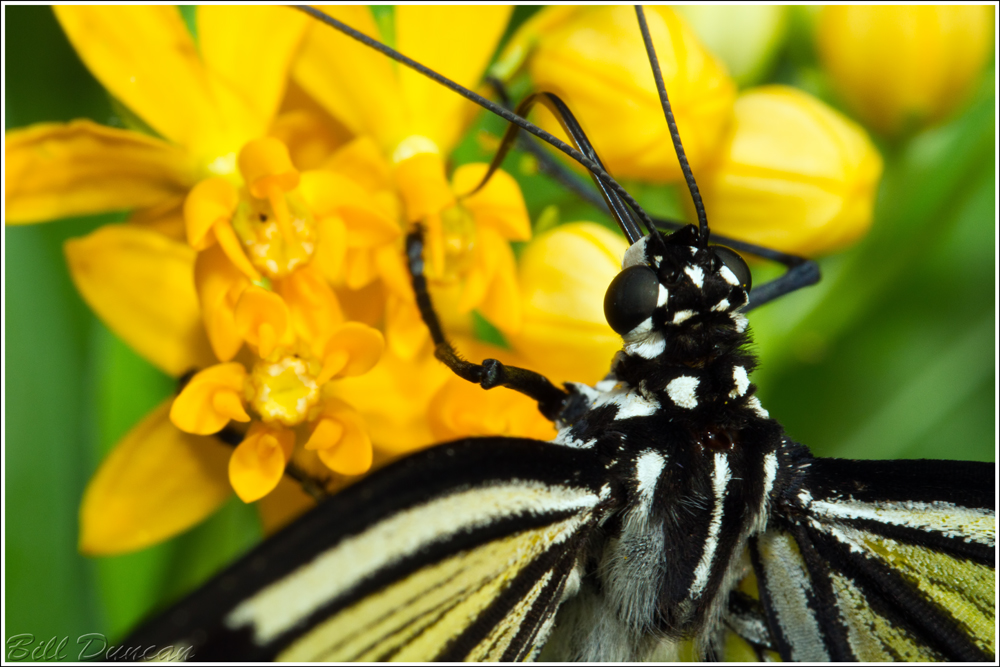
Technical details: Canon EOS 7D camera, EF100mm f/2.8L Macro IS USM lens, ISO 200, f/14, 1/30 sec
So what to do now? Well, if your equipment is much colder or warmer moving from one environment to another you only have a couple of options. You could do nothing and wait for all signs of condensation to dissipate before powering your equipment, thereby being relatively certain there is no condensation on those electrical connections that you do not want to short. Or, you can seal your equipment in a zip-lock bag. Leave your equipment in the bag and allow it to reach the temperature of the new environment. The air in the bag will not be nearly as humid as the air in the greenhouse, or whatever warmer environment you have moved to. Once the equipment has reached the same temperature, take it out of the bag and you will not see the condensation. This second option would be the most desirable, if you remember to pack appropriate-sized zip-lock bags.
Technical details: Canon EOS 7D camera, EF100mm f/2.8L Macro IS USM lens, ISO 320, f/16, 1/40 sec
There are many techniques and equipment combinations one can use for macro photography and I have used several different combinations and techniques. For insects, distance is obviously important and focal length and focusing distance should be a primary consideration when making your decisions about what equipment to purchase.
Technical details: Canon EOS 7D camera, EF100mm f/2.8L Macro IS USM lens, ISO 200, f/11, 1/40 sec
I would love to see the Butterfly House have one or two “photographers hours” a week. I picture a day where they open the house early for an hour or so for only photographers. There would be no school groups, no kids trying to rip the animals wings off. This could be a great opportunity for us to get some great practice in for the summer insect season.
Technical details: Canon EOS 7D camera, EF100mm f/2.8L Macro IS USM lens, ISO 320, f/16, 1/60 sec