Missouri Orchids – Liparis liliifolia – Large Twayblade

Today’s orchid, Liparis liliifolia, (large twayblade, purple twayblade, lily-leaved twayblade, mauve sleekwort) is considered one of the most abundant in Missouri with quite a large range across the state. They have the potential to be found almost anywhere in the state with moist to dry-mesic forests, but do need open spots with partial sun. This is a species that benefits from disturbances and clearings due to fire, tree falls and human activity like trails where they are most likely to be found.

Liparis liliifolia with its pair of fleshy basal leaves and flowering raceme that blooms from the bottom to the top.

Insects are the most obvious choice for pollinators, however, there have not been many recorded observations of specific efficacious visitors and more information is needed to determine what species are responsible for pollinating this species. There is no real fragrance associated with these flowers. The purplish translucent flowers have been hypothesized to attract flesh flies which might be efficient pollinators. The primary mode of reproduction seems to be vegetative via underground corms.

This male mosquito was observed feeding at the nectary of this Liparis liliifolia flower. However, he was too small to come into contact with the column and is not considered an efficacious pollinator.

The flowers are set in the typical 3-petals and 3-sepals configuration of the family. In this case, the lower petal, or “lip”, is mauve in color and translucent. The translucency was enhanced when the lip was wet. The two lateral petals are filiform, or worm-like. To me they resembled the nectar spurs found on some orchids, but these are not hollow and do not contain nectar. The three sepals are blade-like, with one facing straight upwards behind the column and two are lateral and underneath the lip. It would not be a stretch to say the entire flower might mimic some insect.
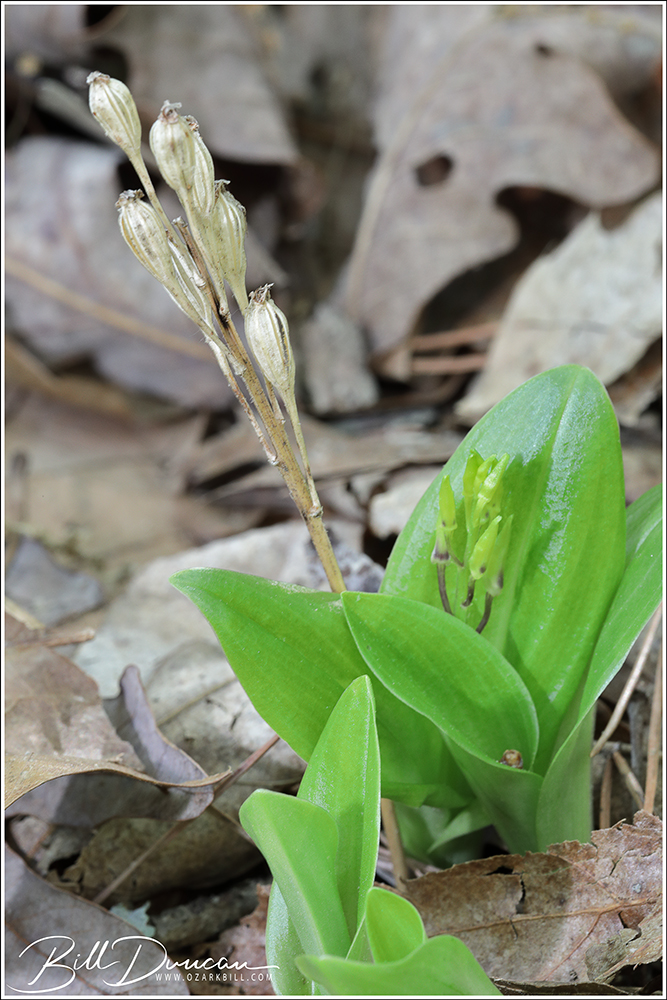
A young developing flower stalk of Liparis liliifolia next to flowering stalks and seed capsules of last year’s efforts.

The large twayblade is definitely an interesting Missouri orchid. I will look for these close to home in the coming years and perhaps get some photos of their pollinators visiting.

-OZB
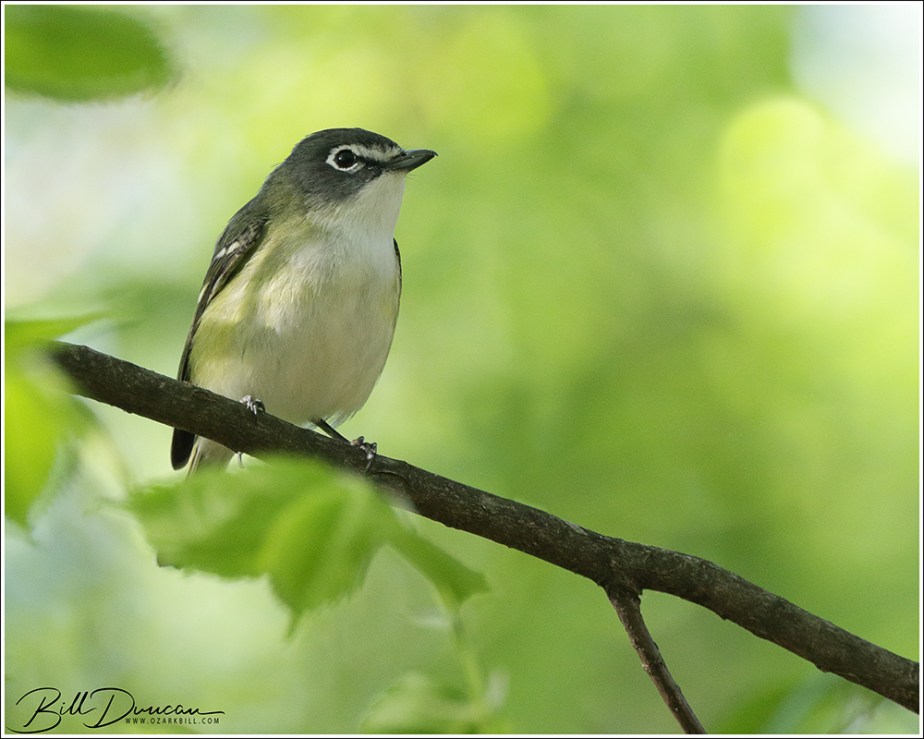
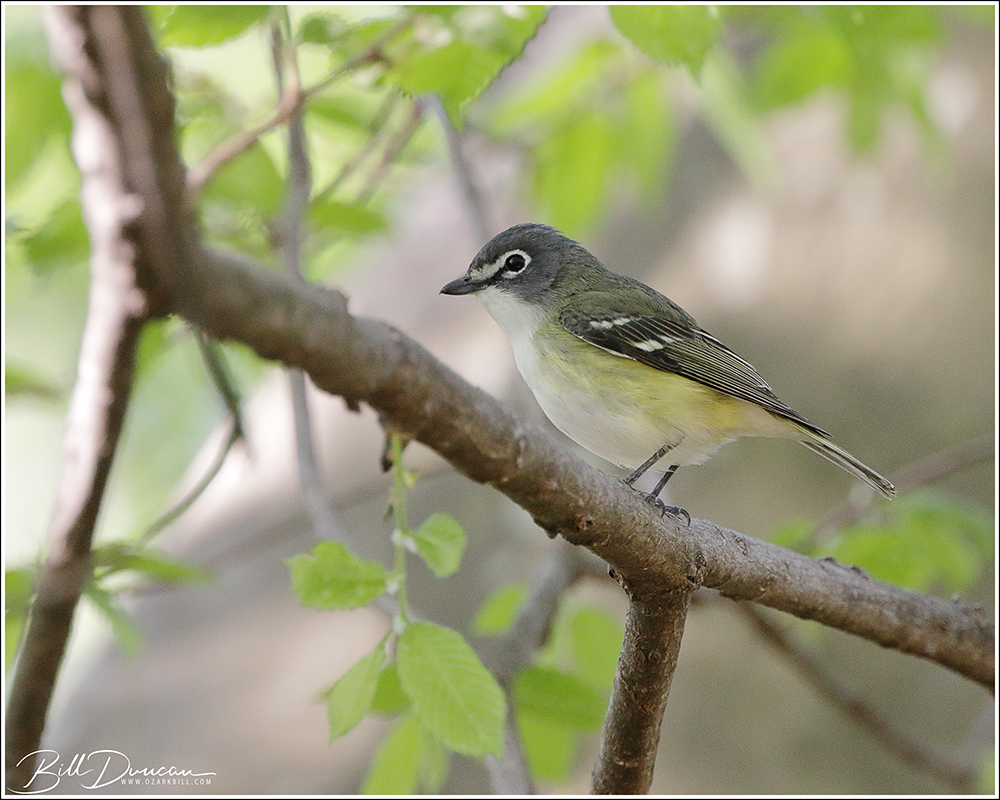
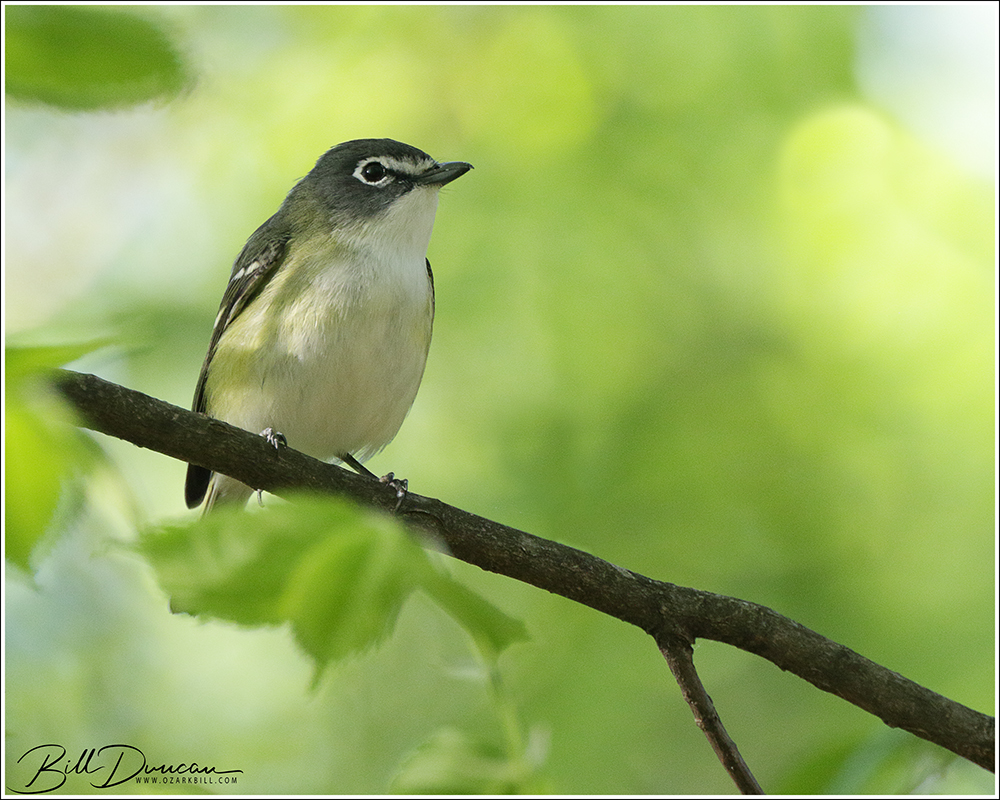
Blue-headed Vireo

The Blue-headed Vireo (Vireo solitarius) is a through-migrant in Missouri. It winters throughout the southern Atlantic and gulf states, Mexico and parts of Central America. This vireo nests in cool temperate forests across Canada and in high elevations of the Appalachian Mountains. This is a species that will be threatened by the continued loss of the boreal forests of Canada. You can hear its sweet song in the spring in Missouri at places like Tower Grove Park where this photograph was taken.

The Blue-headed Vireo is an attractive Vireo that is seen in the spring and fall in the St. Louis area.
The song of the Blue-headed Vireo sounds much like a Red-eyed Vireo that is taking its time.

-OZB

Astragalus distortus (Ozark Milkvetch)

Casey and I found this gorgeous little bean at Middle Fork Barren Natural Area in Saline Co., Arkansas and was photographed on May 11, 2021. There are two varieties that this could be: Astragalus distortus var. distortus, or Astragalus d. var. englemannii. We did not take the necessary measurements in the field to determine which variety this was.

This was a beautiful little barren with a lot of slate outcrops. The soils are very shallow and poor and results in dwarf plants that really “behave” themselves. Most plants we came upon were much smaller than their average at the time of flowering.

Astragalus distortus (Ozark Milkvetch)

-OZB

Spring Beauty Rust (Puccina mariae-wilsoniae)

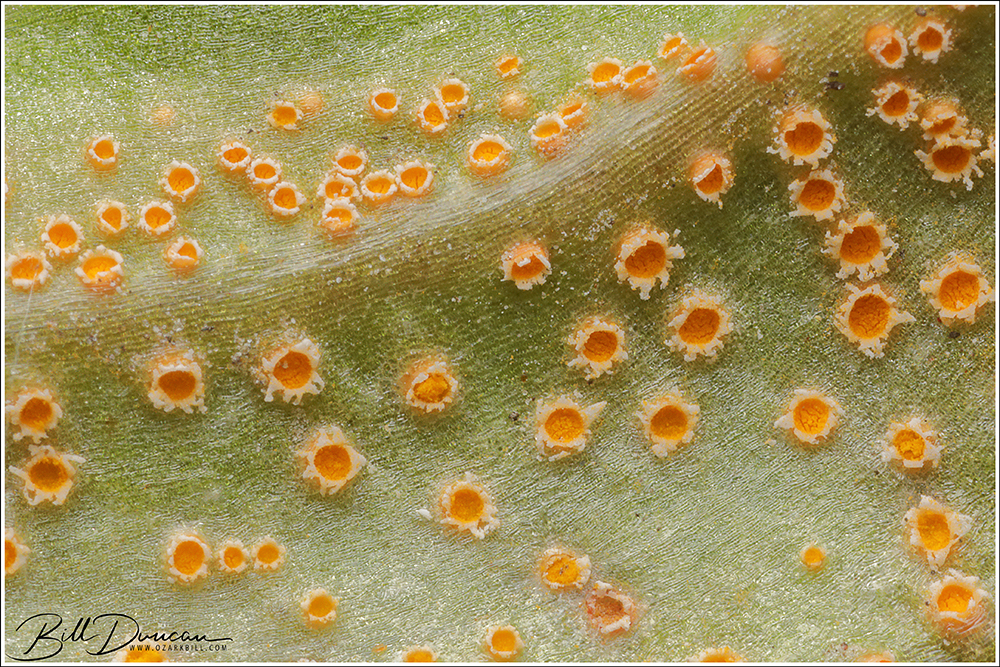
I shared some images and info on the spring beauty rust last year. I did not find it nearly as prevalent this year in the same patch of spring beauty (Claytonia virginica) but I was able to find the alternate and rarer sporulating telia. The life cycle of the Puccina rusts are very complex and often require the use of two hosts (heteroecious). In the case of this species, there does not seem the need to use more than one host to complete its lifecycle. The first sporulating legions are the yellow “cluster cups” or aecia. These structures burst open and release dikaryotic (containing two nuclei) aeciospores.

“Cluster cups” or aecia of Puccina mariae-wilsoniae

The next photo shows the darker teliospore-producing telia. Known as “black rust” in the wheat pathogen, the teliospores are able to survive harsher conditions in the environment and do not need the strict temperature and humidity requirements to survive and infect the next generation.

Telia of Puccina mariae-wilsoniae

This is all I have for now. Next year I would like to see if I can get photographs of each respective spore if I can figure out the right equipment.

-OZB

Bizarre Creatures in My Garden

Here is a perfect example of ‘why native plants?’ in the home garden. This is the first year of our new native flower garden in front of our new house. This spring we spent a good deal of money and time getting the old exotic evergreen bushes out of the beds and planting a new garden consisting of mostly native forbs and a couple patches of grasses. After a long and cool spring, we are finally getting some heat units on these mostly gladey and xeric species and a few are starting to respond nicely.

These golden drops turned out to be eggs of a leaf-footed bug (Coreidae family)

During my daily deadheading of some flowering Coreopsis and other asters, I notice new things from time to time. The arthropods are beginning to come. Since the original razing of the land that this subdivision sets on some 45+ years ago, these plant and insect communities have undoubtedly been rare. While my 100 square feet of natives won’t likely make a big difference, hopefully more and more of us will ‘go native’

I originally noticed these eggs by observing this jumping spider. The concurrence is assumed accidental.

About a week ago, I noticed these golden drops on the leaf of a Liatris spicata (marsh blazing star). After taking a few photos in situ, I decided to collect the leaf and see what the hatch might be. I figured it was a hemipteran of some sort and after a little research, I narrowed it down to the Coreidae family, or ‘leaf-footed bugs.’ If you can identify these to any degree of higher specificity, please let me know.

Coreid nymphs within an hour of hatching.

After three or four days in a jar, all of a sudden the leaf was alive with the movement of spikey mechanisms. I took a few photos on their cradle leaf, then moved a few to a Coreopsis sp. bloom. Afterwards, I let them go to feed as they like on our plants, maybe to see them another day.

-OZB

Missouri Orchids – Calopogon oklahomensis – Oklahoma Grass Pink

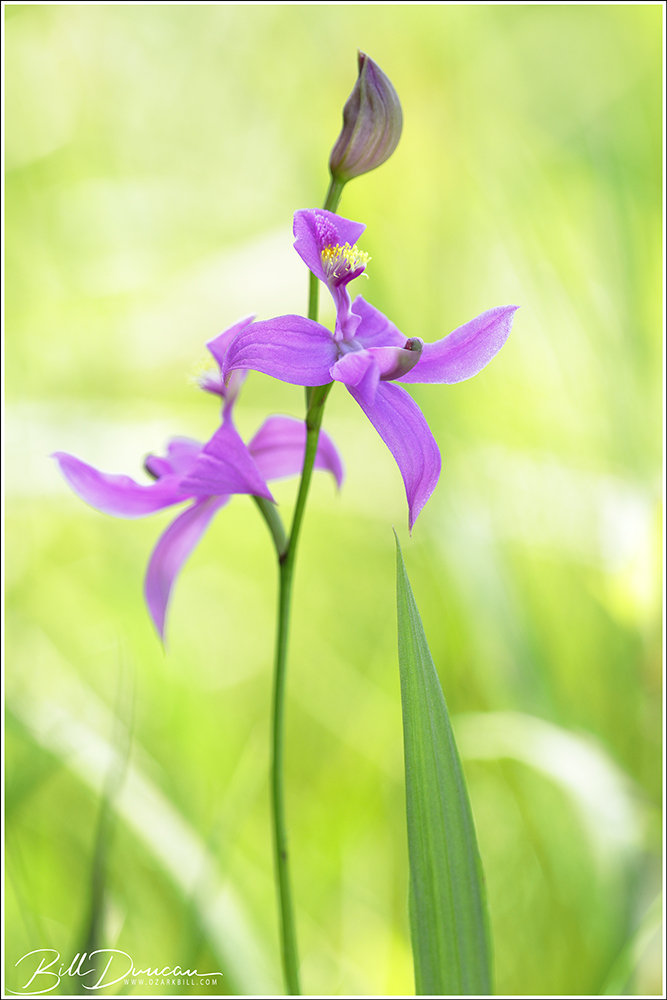
The second new “Missouri” orchid I came across on Casey’s and my trip through Arkansas in May was the Calopogon oklahomensis, the Oklahoma Grass Pink. This is a sister species to C. tuberosus, the Grass Pink, and likewise has the odd non-resupinate flower, meaning the flower pedicle does not twist and the lip is on the top side of the flower, an odd arrangement for orchids. Whereas C. tuberosus prefers wet feet and is typically found in fens, wet meadows and prairies, C. oklahomensis prefers drier feet and is found in more mesic prairies, savannas and open woods.

Calopogon oklahomensis is ranked as globally vulnerable primarily due to habitat destruction across the southcentral United States.

The orchids seen here were photographed in a prairie in Prairie County, AR. This location was a real treat, with hundreds of orchids and a variety of colorations. I wish we could have spent more time here photographing all the variations, but there were miles to be driven yet on this day.

Colors of the Oklahoma Grass Pink at this location ranged from a deep pink-magenta to completely white (not pictured).
When photographing orchids in prairie situations be prepared to deal with harsh sun and windy situations.

-OZB

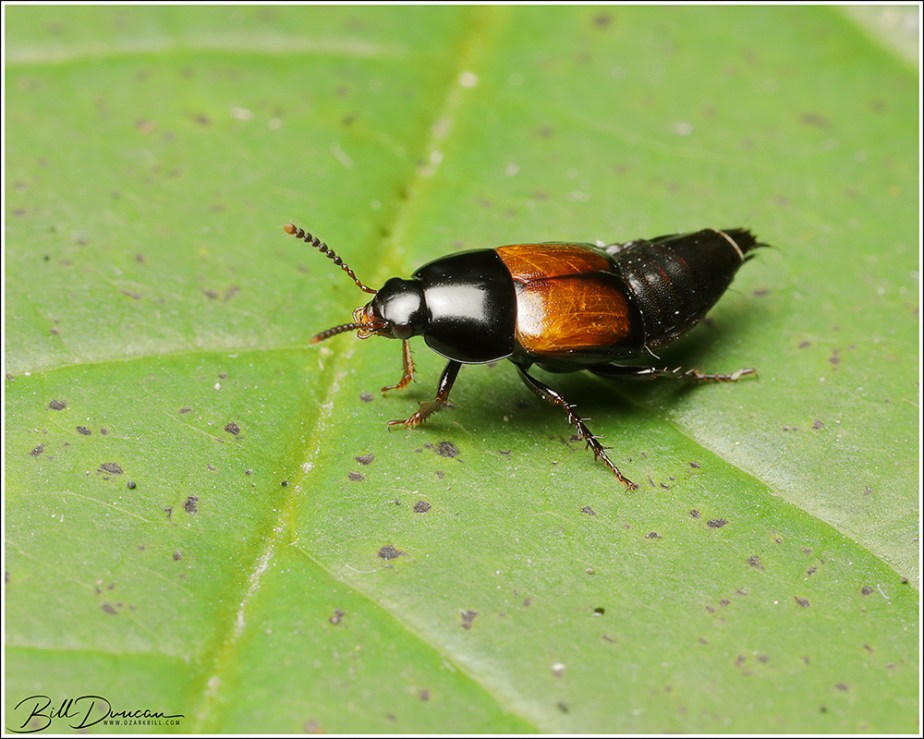
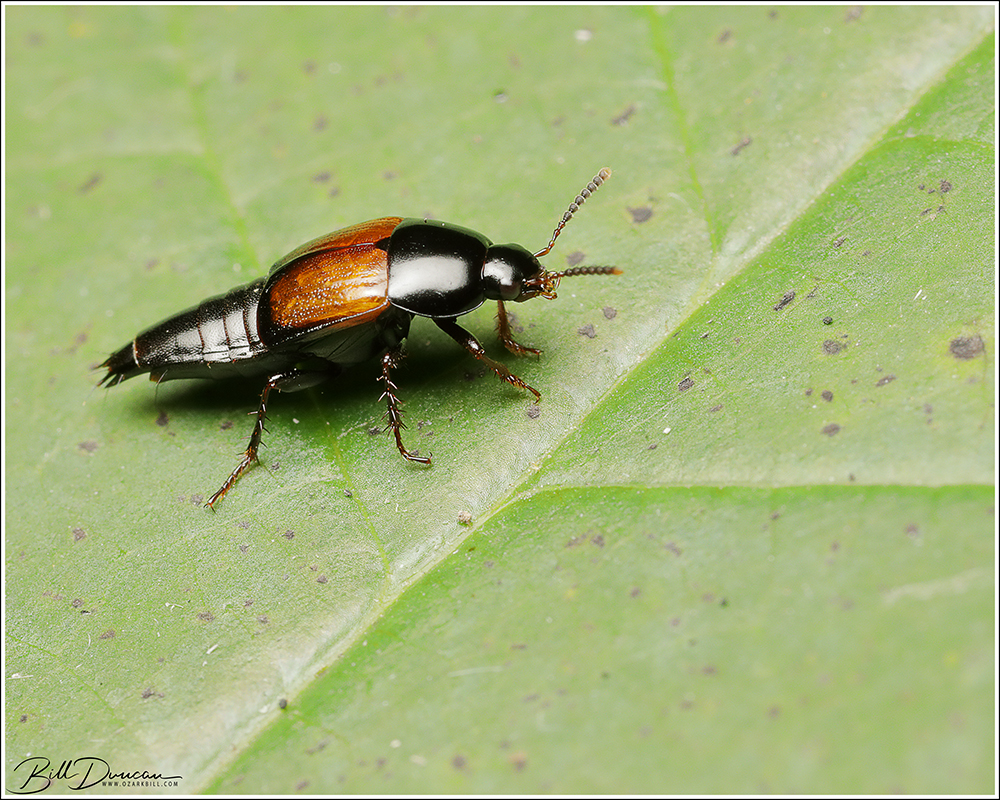
Tachinus fimbriatus (crab-like rove beetle)

Tachinus fimbriatus – who decomposes the decomposers?

This Tachinus fimbriatus, a member of the rove beetle family, Staphylinidae, was found and photographed in September, 2020 at Babler State Park in St. Louis Co, MO. Some consider the Staphylinidae the largest family of animals in North America with close to 5,000 species described in more than 500 genera. Most rove beetles are carnivorous and feed primarily upon invertebrates. However, many feed on decaying vegetation, especially as larvae. This adorable beetle is believed to feed primarily on rotting mushrooms.

Tachinus fimbriatus – a potential pet for the tiny home?

Melanthium virginicum – Illinois Bunchflower

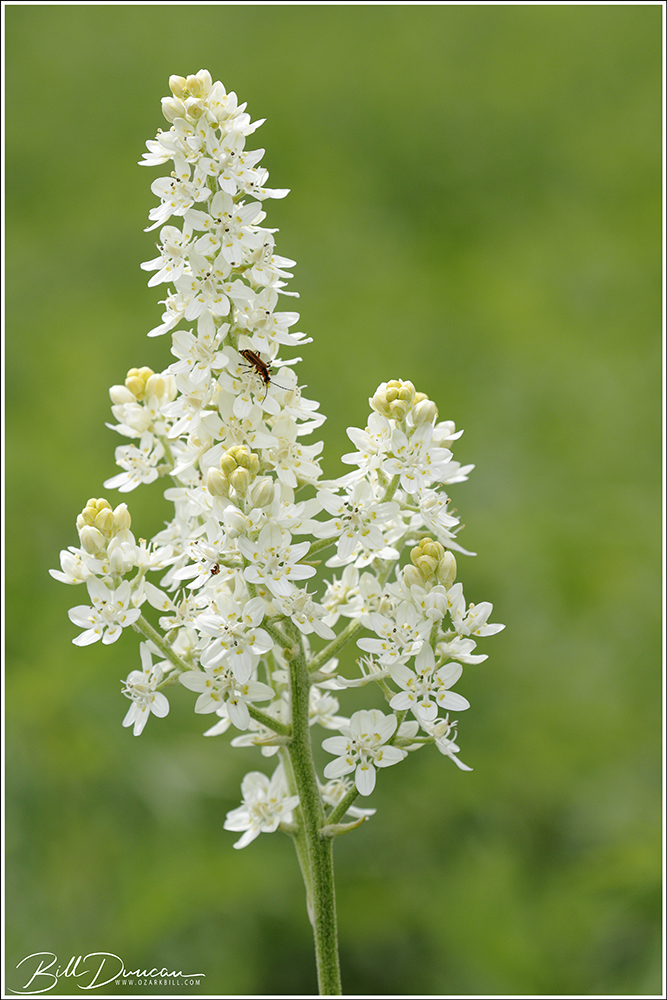
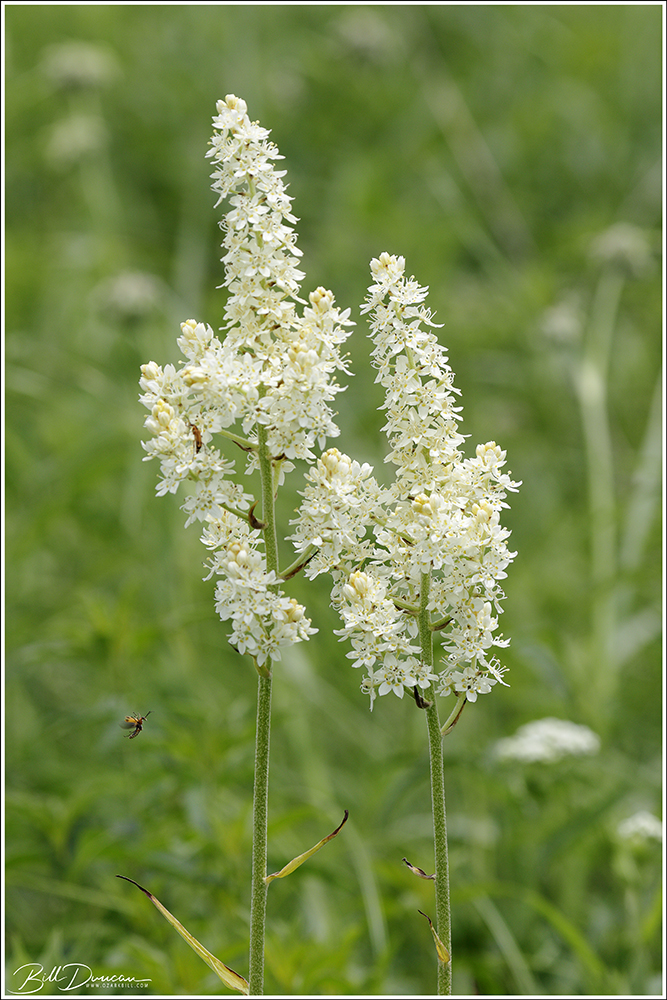
I still have quite a few from 2020 to share. These Melanthium virginicum were photographed a year ago this month at Helton Prairie Natural Area in Harrison County, MO.

Melanthium virginicum (Illinois bunchflower) in full bloom in June being visited by pollinators.

With a CC value of 9, this plant requires specific habitat of wet meadows, moist prairies, fens and acid seeps. With the loss of these habitat types, this plant has become rare in Missouri and Illinois. This plant is also toxic to mammalian herbivores. So, if you have the appropriate spot, this would be a great native perennial to plant in high deer pressure areas.

Melanthium virginicum, a glorious native lily.

-OZB