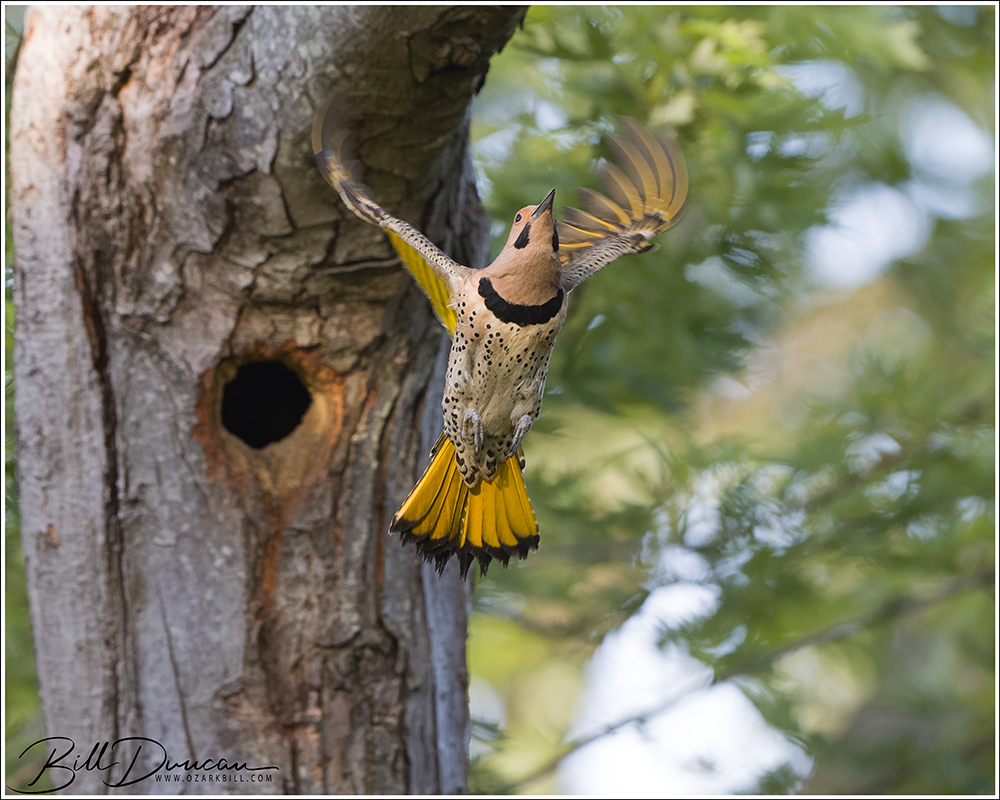
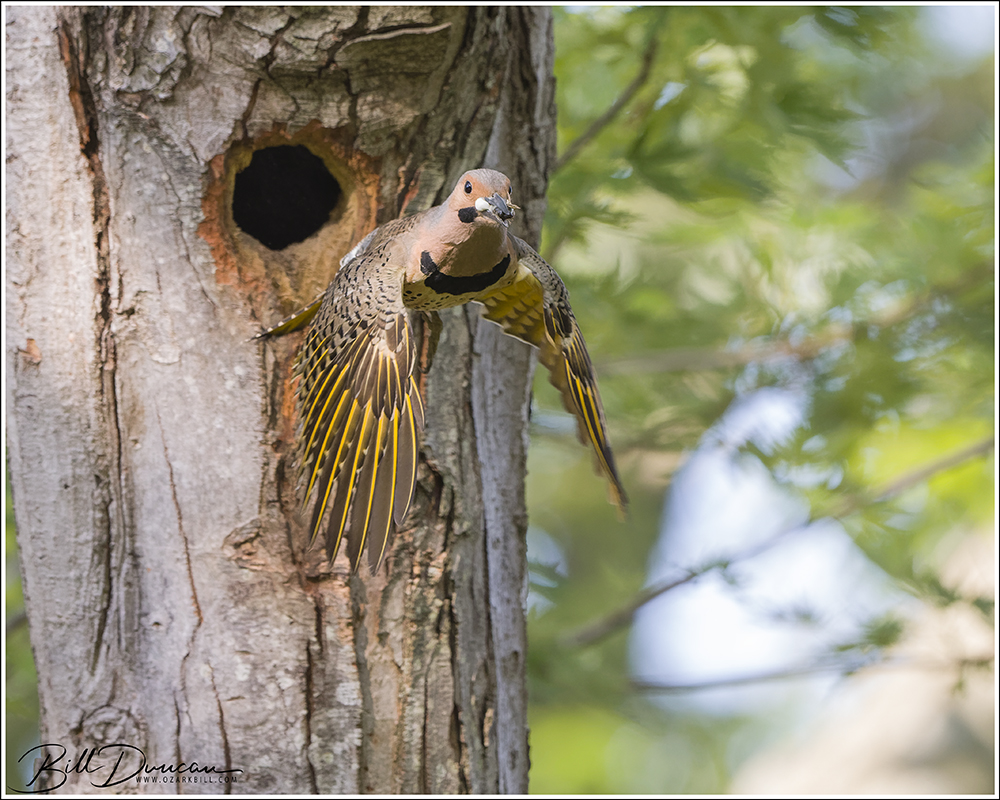
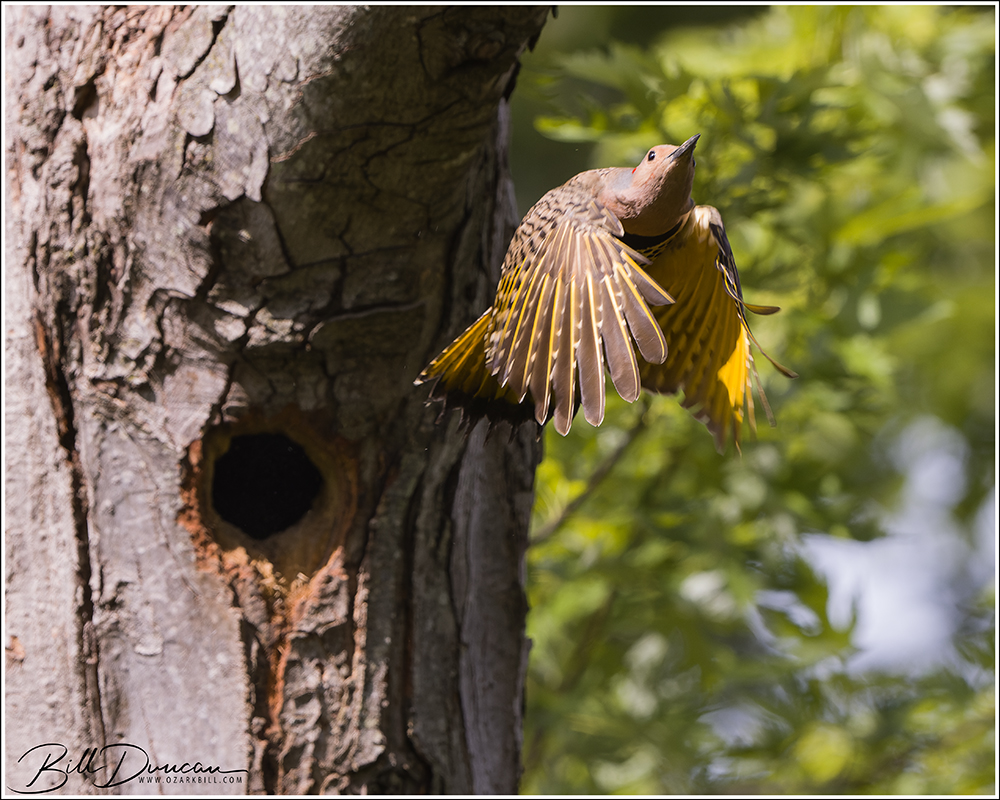
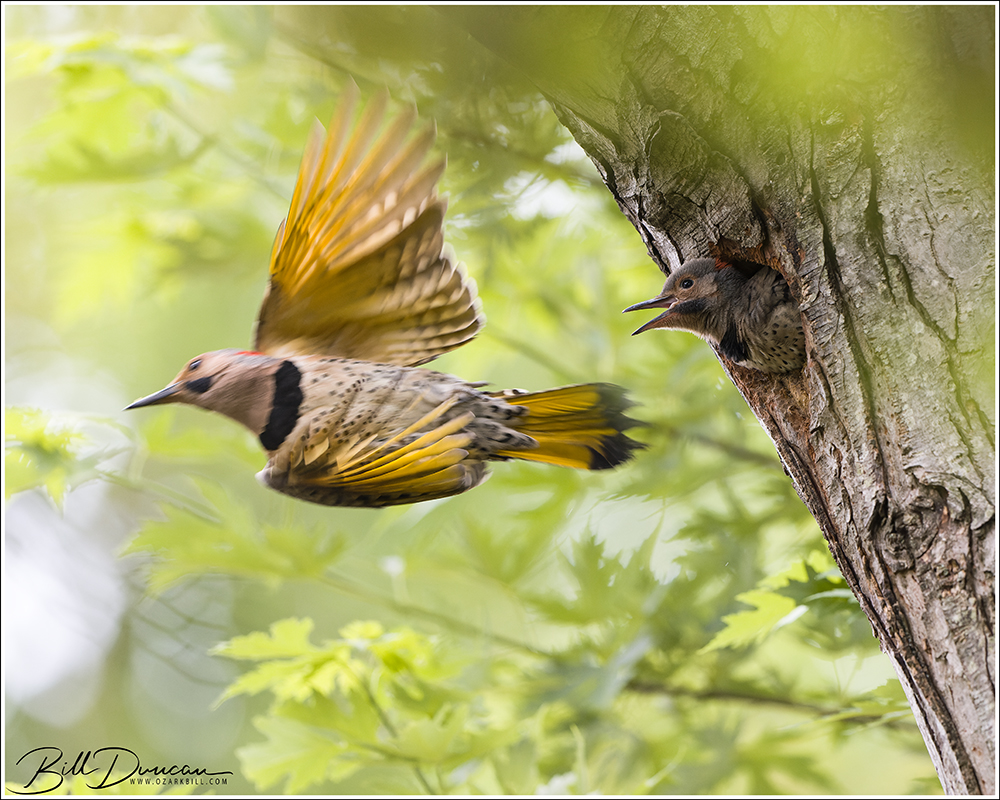
"What a thousand acres of Silphiums looked like when they tickled the bellies of the buffalo is a question never again to be answered, and perhaps not even asked." -Aldo Leopold
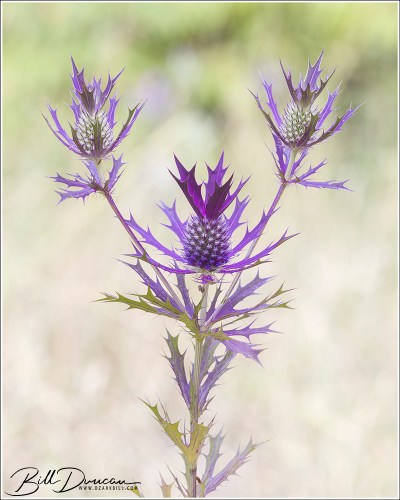
Just across the border into Kansas, Pete and I found Eryngium leavenworthii (Leavenworth’s Eryngo). Along with species like rattlesnake master and creeping eryngo, this is quite a diverse and fascinating genus.
The level of purple varies in individual plants, but as you can see in the following photos, virtually every part of the plant – stems, leaves, bracts and flowers, have some bit of purple.
Eryngium leavenworthii (Leavenworth’s Eryngo)
Even the anthers and filaments of Eryngium leavenworthii are blue/purple.
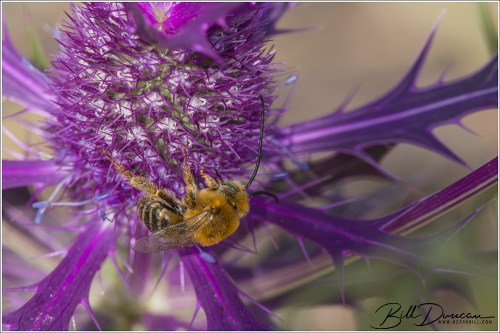
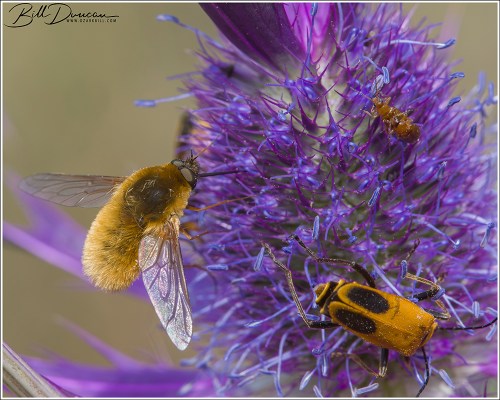
The flowers of these plants were really drawing in the pollinators. Here are just a few of the insects we observed visiting.
A long-horned bee, probably in the genus Melissodes, visits Eryngium leavenworthii.
A bee fly (Bombylius sp.) and some beetles nectaring on Eryngium leavenworthii.
This plant does well on poor, dry soils and they are apparently very deer resistant. I might have to introduce these to the garden if I can find them available in a local nursery.
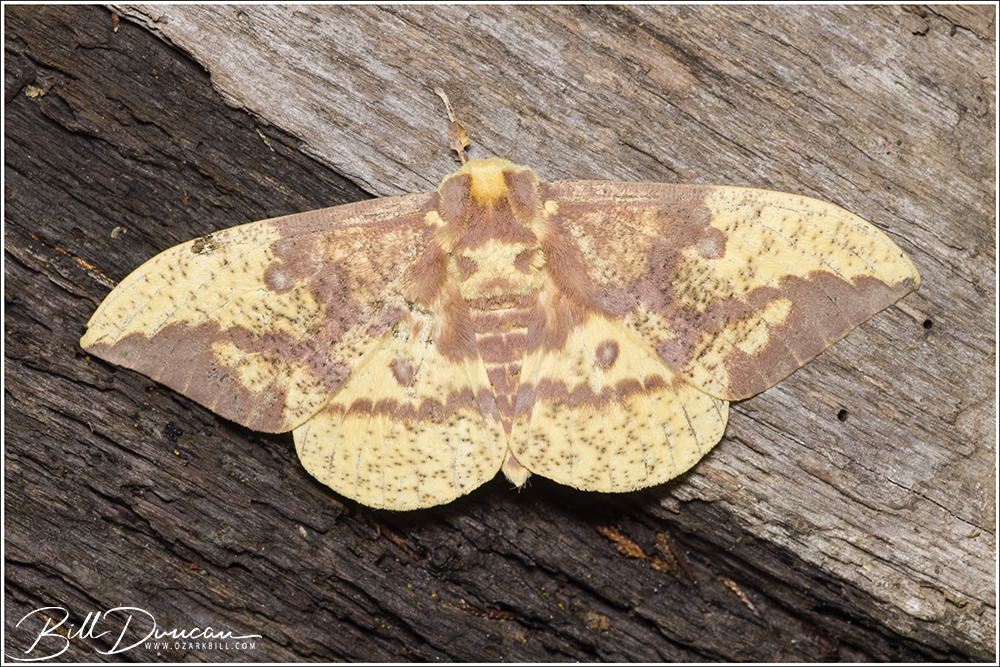
I forgot to post the following adult imperial moth from our black-lighting night this year in the previous post. As you can see, it was a worthwhile night! I photographed this species once before and they do commonly show up on black-lighting occasions, but I never get tired of them showing up! All of these images were taken at Engelmann Natural Area in Franklin County, MO.
Imperial Moth (Eacles imperialis)
Imperial Moth (Eacles imperialis)
This imperial moth caterpillar was found on a night cat hunt in late September.
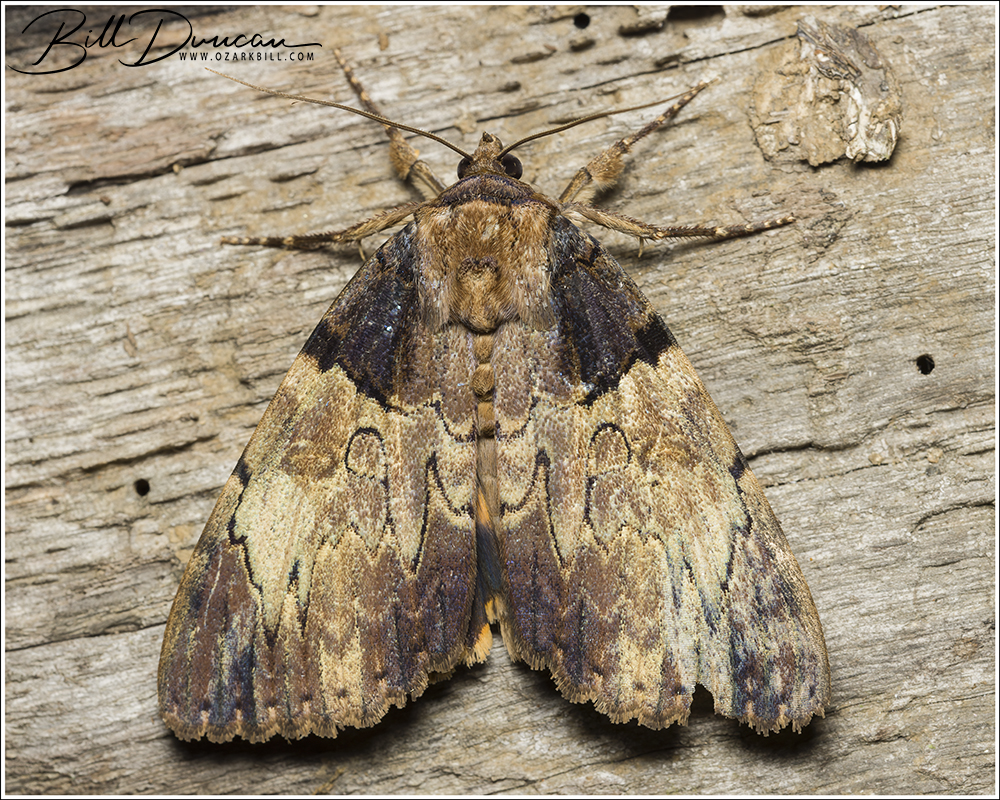
I got a whole one night of black-lighting in this season, when Miguel and I headed to Engelmann Woods Natural Area in Franklin County, Mo in early August. For only a few hours in a single night, our results were pretty fun. Here are some of what I have gotten around to processing so far.
Clouded Underwing (Catocala nebulosa) Erebidae, Hodges#8796 This one wouldn’t open up his wings to show the pink tones that are hiding on the dorsal side of its hind wings. Nonetheless, the pattern and warm tones make this a very handsome species. Now I just need to find the beautiful larvae!
Clouded Underwing (Catocala nebulosa)
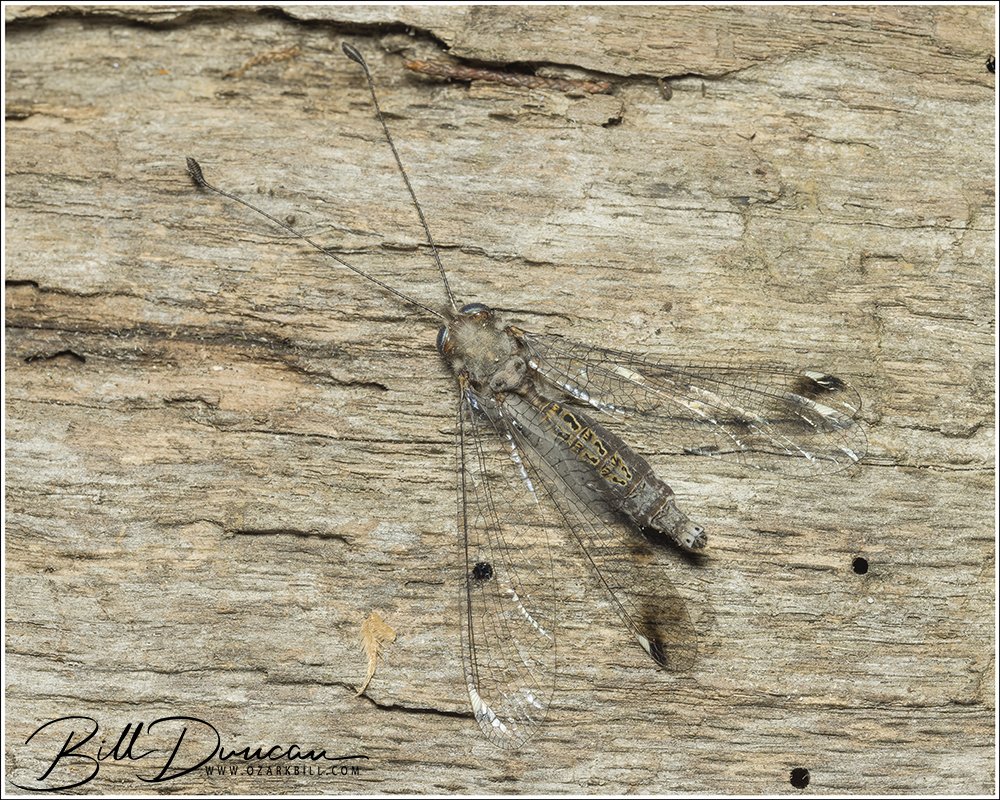
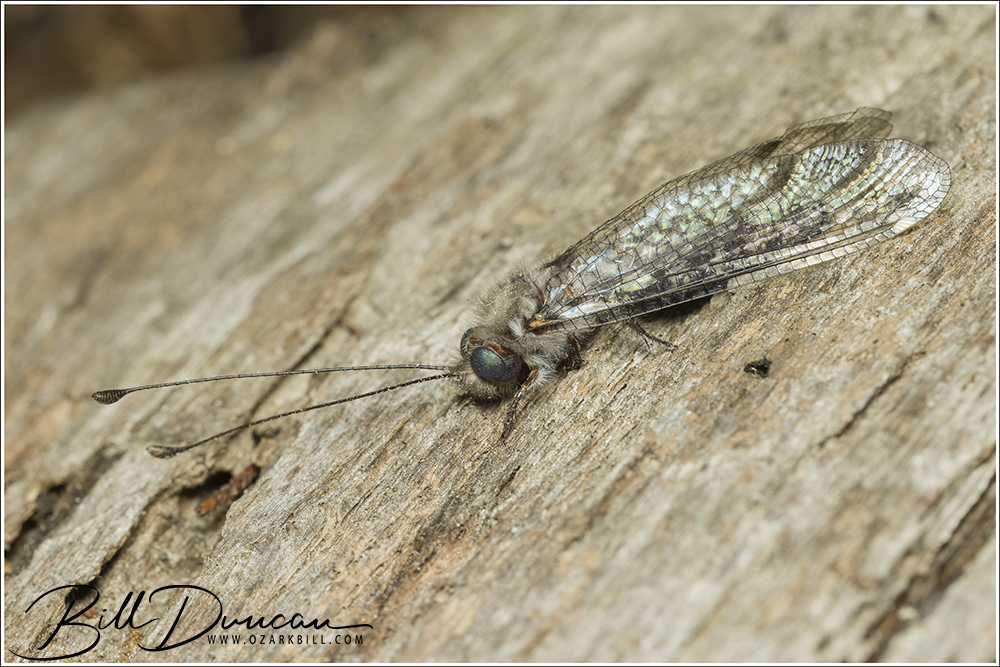
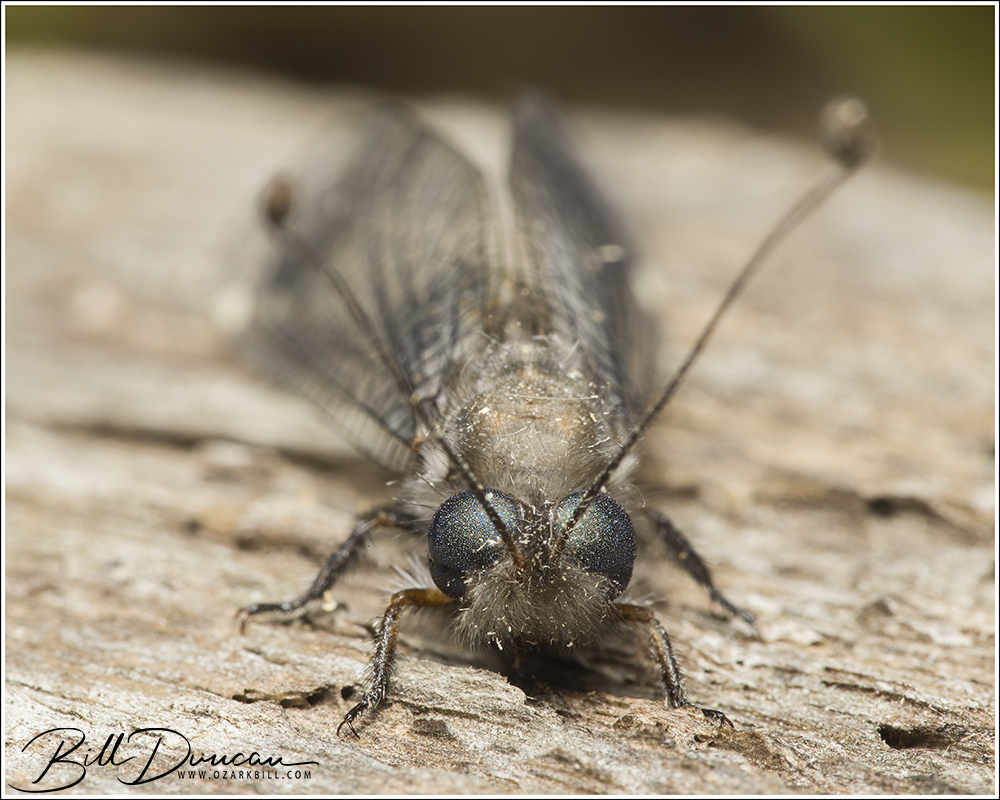
Owlfly (Ululodes sp.) Ascalaphidae These guys show up to the lights from time to time and it’s always a nice treat to find them.
Eastern Hercules Beetle (Dynastes tityus) Scarabaeidae It’s a party when one of these shows up. This is the third individual I’ve been able to find and they were all females. I want to find a male badly!
Heitzman’s Dagger Moth (Acronicta heitzmani) Noctuidae, Hodges#9241.1 Not only is this a very attractive dagger moth (a group I’m becoming much more interested in), but is a really special species for Missouri and a real privilege to find and photograph. Missouri is a stronghold in the range of this species and the type specimen was collected at Truman State Park. It was named for the late lepidopterist, Richard Heitzman – author of the “Butterflies and Moths of Missouri” books published by the MDC. To my knowledge, the larvae of this species has yet to be found or photographed.
Heitzman’s Dagger Moth (Acronicta heitzmani)
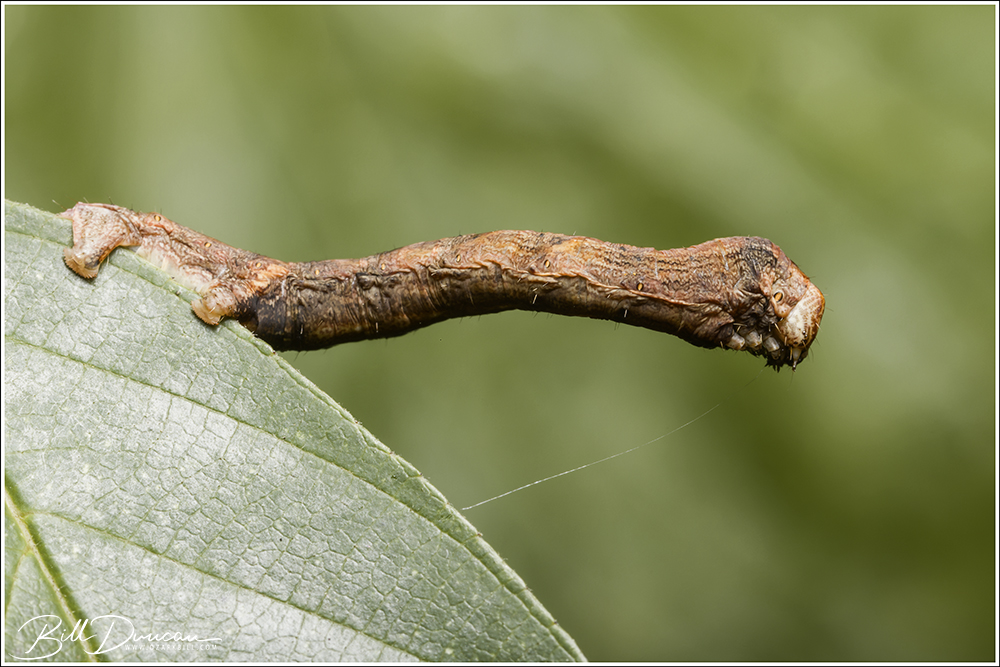
Small engrailed (Ectropis crepuscularia) Geometridae. Hodges#6597 We also found some time to do a little caterpillar hunting. The larvae of this Geometrid are known by the name of saddleback looper. This one was found on persimmon (Diospyros virginiana).
Small engrailed (Ectropis crepuscularia)
Skiff moth (Prolimacodes badia) Limacodidae, Hodges#4671 Limacodid, or “slug” moths are known to be some of the first and most abundant moths attracted to lights and I always feel a bit guilty to see them trapped against the sheets while black-lighting. Even on the slowest evenings, you can usually count on a skiff moth or several to make an appearance.
Skiff moth (Prolimacodes badia)
These are the highlights from black-lighting in 2023. I hope to get out for this a few more times next year.
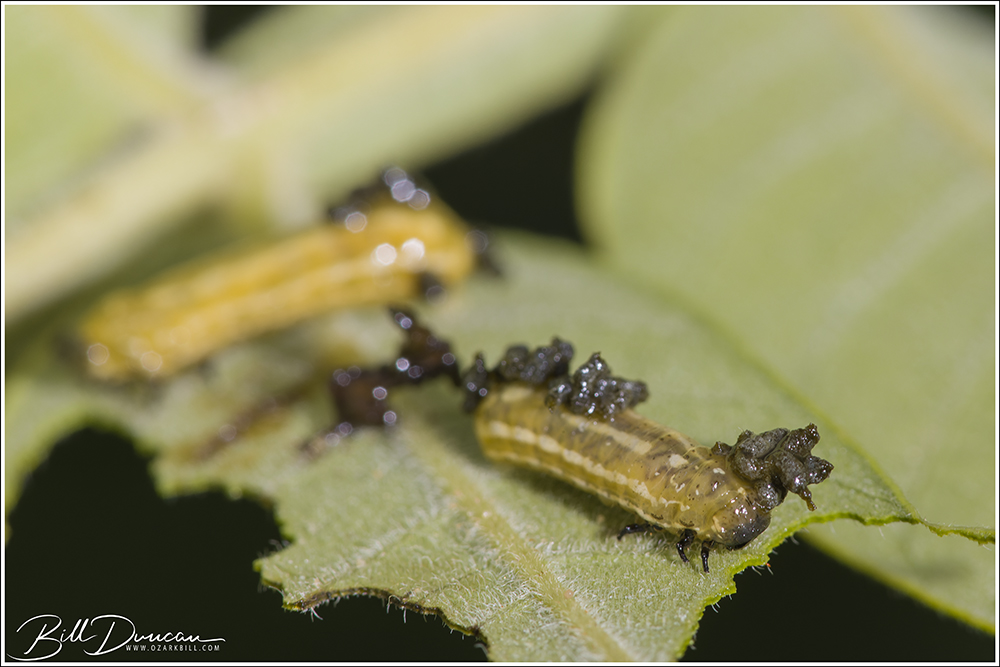
Today’s post features lovely little Chrysomelid beetle larvae. These were found at Taberville Conservation Area in St. Clair County, MO in June of this year. Blepharida rhois – the sumac flea beetle, create “shields” by retaining their feces as a means of protection from would-be predators. It has been discovered that chemicals from their sumac (Rhuss spp.) host plants, along with partial metabolites from the digestive process, act as swell deterrents in avoiding ant predators. When fed a diet of lettuce, the shields’ protective abilities were lost.*
*Vencl, F., Morton, T. The shield defense of the sumac flea beetle, Blepharida rhois (Chrysomelidae: Alticinae). Chemoecology8, 25–32 (1998). https://doi.org/10.1007/PL00001800
Belepharida rhois – the sumac flea beetle with protective shields composed of their own frass
This Indigo Bunting was found in mid-August of this year at Little Creve Coeur Ecological Area in St. Louis County, MO. This is either an immature male or an adult male that quickly molted into nonbreeding colors.
We had a great time this past Saturday when the WGNSS Entomology and Nature Photo Groups got together for our great caterpillar hunt at Pickle Springs C.A. in Ste. Genevieve County, MO. Of course I was primarily looking for the Limacodidae – the slug moth caterpillars. We’ve had better results with the slugs, but we did find five species over the course of the day, including a spun-glass slug (Isochaetes beutenmuelleri) and this saddleback (Acharia stimulea). Unfortunately, I was the only one to see this one as I spent some time by myself in the late afternoon looking through hundreds of young oak trees at Hawn State Park.
As always, we did find a few other species of interest, unexpected things and, as of now, unidentified creatures. I will be posting more from this trip in the near future.
I decided to go for stacking this nice saddleback. With so many details and intersecting lines, I knew this might be a risky attempt. I think they turned out pretty nice.
As much as I like the convenience and price of my wireless Godox flash system, it does come with some aggravations. One thing that frustrates me is the ease in which the controls can be inadvertently changed when carrying the system around on a strap. Then, the flash doesn’t work and I have to take the time to figure out what happened and make the necessary adjustments. Or, after powering the transmitter and flash down, the settings in one or the other change for some reason.
Another thing that drew my attention when putting these stacks together is the variable light output when taking a stack of images like these. Despite everything in the camera and flash units being on full-manual control, the illumination provided by the flash varied noticeably from one image to the next. This is something I never noticed when using my Canon branded speedlights. Thankfully, the differences between exposures, in the slivers that are used to make up these final images, is not noticeable at all. So, maybe I’m complaining about nothing.
Here is the first stack, also featured at the top of the post. The head of the caterpillar is facing you but is not visible as it is covered in the protective hood. Additional protection is also afforded by the obvious sharp tubercles that can break off into any would-be predator, injecting toxins that burn and irritate, an experience that I think is very similar to that of brushing up against nettles.
Saddleback caterpillar (Acharia stimulea). This image was taken with a 180mm macro lens on a full-sized sensor camera, composed of a 37 image focus stack at f/11, 1/125 sec and ISO-250.
The next stacked image is an overhead view. I am putting this one in as a full-sized jpeg file. So, be sure to click on the image to see the details up close! The remnants of the mucous-like silk they secrete as the glide about the leaf surface can be seen towards the bottom of the image.
Saddleback caterpillar (Acharia stimulea). This image was taken with a 180mm macro lens on a full-sized sensor camera, composed of a 26 image focus stack at f/11, 1/60 sec and ISO-250.
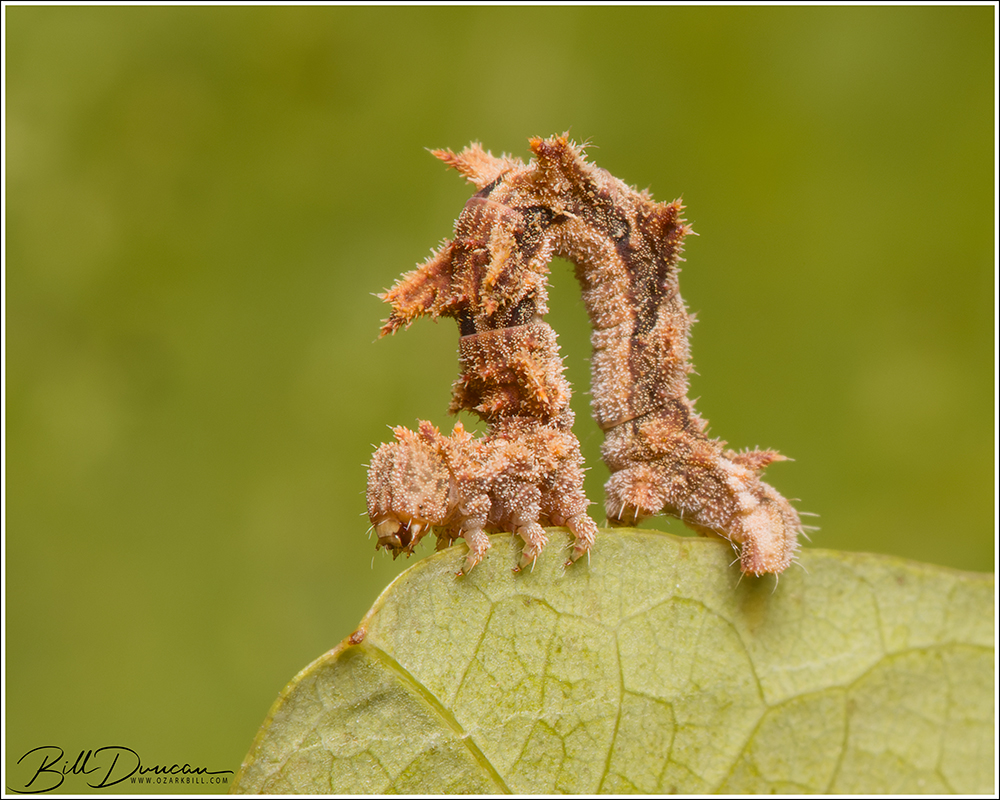
Sarah and I found this very little guy on a cat trip at Onondaga Cave State Park in Crawford County, MO in early September, 2023. Click here to see photos of the adults.
Virginia snakeroot (Endodeca serpentaria) is an easily overlooked cousin of the much more familiar Dutchman’s pipevine (Aristolochia macrophylla). Belonging to the Aristolochiaceae (birthwort) family, both species host the pipevine swallowtail butterfly. The Aristolochiaceae family is composed primarily of tropical woody vining species. Virginia snakeroot is an exception in the family, being neither tropical, woody nor a vine. This species is a low and slow growing herbaceous perennial native to Missouri and is a really nice find.
The hastate leaves and growing habit of Virginia snakeroot (Endodeca serpentaria). Note the ground-level flower.