WGNSS Hits the Glades

Back in early May of this year, a small group from the WGNSS Nature Photography Group headed out to visit some glades in Washington County, Missouri. Being a relatively wet and cool spring, we expected the glades to be lush and full of blooming wildflowers. These specialized blooming plants and their associated pollinators were our planned primary targets for this beautiful Saturday.

Unfortunately for us, the timing of our visit did not seem to be optimal. We found very few plants in bloom and even fewer interesting butterflies and skippers that we were hoping to find. However, I noticed something about this particular glade that Casey had steered us into. Looking around, I noticed that there was very little sign that foot traffic or rock tipping had occurred recently – something that plagues the more popular glades in Missouri.

Normally, I loathe the thought of rock-tipping – the process of lifting rocks in sunny natural areas in order to find reptiles, amphibians and arthropods. As I alluded to above, this activity can be highly over-practiced and is often accompanied by people harassing or collecting the animals found. In large and popular glades, the signs of rock tipping can be abundantly clear. Just look for large flat rocks that have obviously been moved and are no longer in close contact with their underlying soil substrate. In this case, because we were on the lookout for improvised subjects and the fact that this area has not seen much pressure from others, we decided to carefully tip a few to see what we might find.

Little did I know what a treat we were in for. With tipping over just a few stones, we were able to find close to 20 prairie ring-neck snakes (Diadophis punctatus arnyi), including one albino! The prairie ring-neck is a small, slender snake native to prairies and other grasslands in the central United States.

An albino prairie ring-neck snake (Diadophis punctatus arnyi)

These snakes can reach up to 14 inches in length, but seem much smaller due to their slender build. This species primarily feeds on small invertebrates such as earthworms, slugs, and insects, but may also consume small amphibians and other reptiles. The prairie ring-neck snake is considered an opisthoglyphous colubrid, meaning they possess small fangs in the rear of their mouths along with a very mild venom. They are completely harmless to humans as they will very rarely attempt to bite, relying instead on a foul-smelling musk that they emit along with exposing their orange and red warning colors on their undersides in order to dissuade predators. On rare reports of bites to humans, the reaction has been described as a mild discomfort or stinging sensation, akin to a nettle sting or a sting from a sweat bee.

A typically colored prairie ring-neck snake

Rock tipping can also yield a number of interesting invertebrates. Although we did not find any tarantulas or black widows that can be found in this manner, we did find Missouri’s only scorpion and a common centipede.

The striped bark scorpion (Centruroides vittatus)
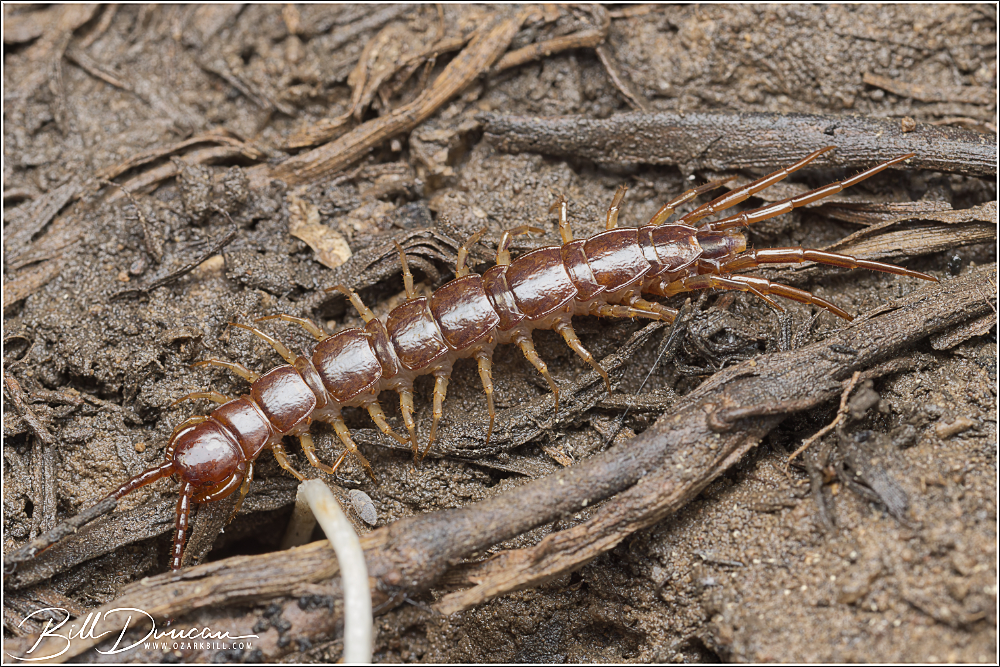
The rock centipede (Lithobius forficatus)

When we were done with our subjects we made sure they all found their way back safely underneath their rock dwellings.

-OZB

Allegheny Spurge (Pachysandra procumbens)

Pachysandra procumbens (Family Buxaceae), commonly known as Allegheny spurge or mountain pachysandra, is a species of flowering plant native to the southeastern United States. Many thanks to Pete, who turned us on to this small group of plants that was found in Forest Park in St. Louis City. Not native to this region, this was obviously planted there at some point.

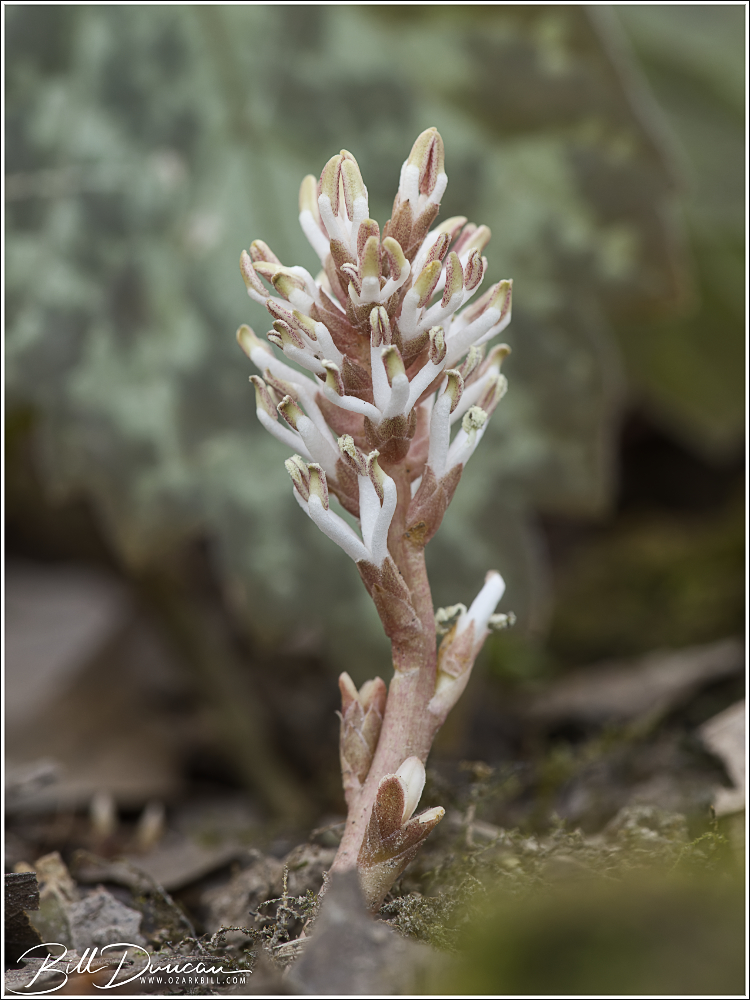
A newly emerging inflorescence of Pachysandra procumbens.

Pachysandra procumbens has a delicate and unique appearance. Its leaves are larger and serrated, with a distinct purple-bronze coloration in the spring that matures to a glossy green throughout the growing season.

A prime inflorescence of Pachysandra procumbens against a backdrop of its leaves.

In the spring, Pachysandra procumbens produces small, white, bottlebrush-like flowers that are highly attractive to pollinators such as bees and butterflies. These flowers give way to small, berry-like fruits that add further interest. This plant prefers moist, well-drained soil and is partial to full shade. The inflorescence are small, but definitely worth a close look.

From the Garden – Manfreda virginica (False Aloe)

During the first couple of seasons in our front-yard wildflower garden, the deer took a liking to this Manfreda virginica (F. Asparagaceae). This prompted me to start spraying its foliage with deer deterrent last year. This had the desired effect and I was happy to see and photograph the blooms of this plant, which are primarily pollinated by large moths such as the sphinx moths. The blooms will also be visited by Ruby-throated Hummingbirds.

Inflorescence of Manfreda virginica.

This species is typically found in dry, rocky and alkali soils, so I was not sure how it would like the clay pan in our yard. I’m happy to say that it is putting on new leaves this spring. I’ve lost a few plants in the garden during the past winter and I’m glad to see this one coming back.

Closeup of individual bloom of Manfreda virginica.

Arthropod Miscellany – 2023

A few miscellaneous arthropods from 2023.

Tetraopes tetrophthalmus (red milkweed beetles) photographed in June of 2023. Location not recorded.
A sawfly (F. Cimbicidae), Abia sp., photographed at Hughes Mountain Natural Area in early April.
(Antaeotricha schlaegeri) Schlaeger’s fruitworm moth (F. Oecophoridae) photographed at Meramec State Park in May.
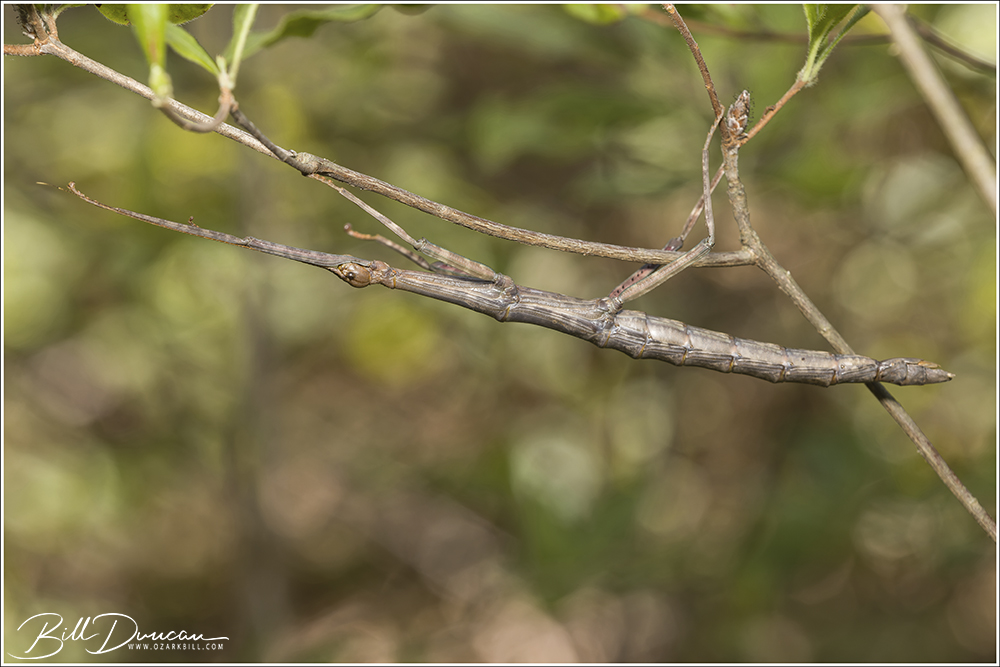
Giant Walking Stick (Megaphasma denticrus) photographed on a WGNSS trip in September at Pickle Springs Natural Area.
This salticid female Phidippus clarus (brilliant jumping spider), was photographed at Horn’s Prairie Grove LWR in July.
A Mecaphesa asperata, F. Thomisidae, crab spider feasting on a native bee at Paintbrush Prairie Conservation Area in June.

WGNSS Goes to the Sophia M. Sachs Butterfly House

In February, the Webster Groves nature Study Society’s Nature Photography Group headed to the Sophia M. Sachs Butterfly House in Chesterfield. We paid for after-hours access and were delighted with the opportunities presented to us. Many thanks to Casey Galvin, group leader for the Nature Photography Group, for organizing this visit, and to Chris Hartley from the Butterfly House for being a lovely host. Chris patiently dealt with our needs, requests and questions, while wrangling our subjects for us. He and the Butterfly House provided us a wonderful experience of photographing some remarkable arthropods from around the world. Here are some of my favorite photos from the evening.

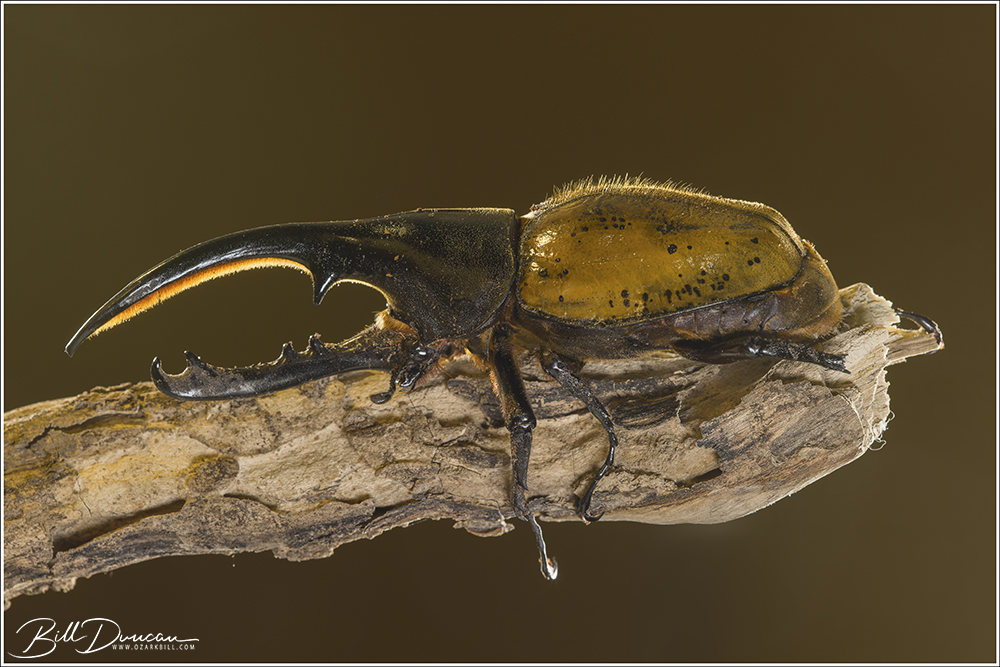
Hercules Beetle (Dynastes hercules) F. Scarabidae. The hercules beetle, found in the neotropics, is the longest extant beetle species in the world.

Rainbow Stag Beetle
(Phalacrognathus muelleri) F. Lucanidae. This beetle is found in northern Australia and New Guinea. The mites that can be seen on this beetle do no harm to it. They tag along to pick up a free meal from their sloppy host.

Flamboyant Flower Beetle (Eudicella gralli) F. Scarabaeidae. Found in tropical Africa, this beetle is a sure stunner.

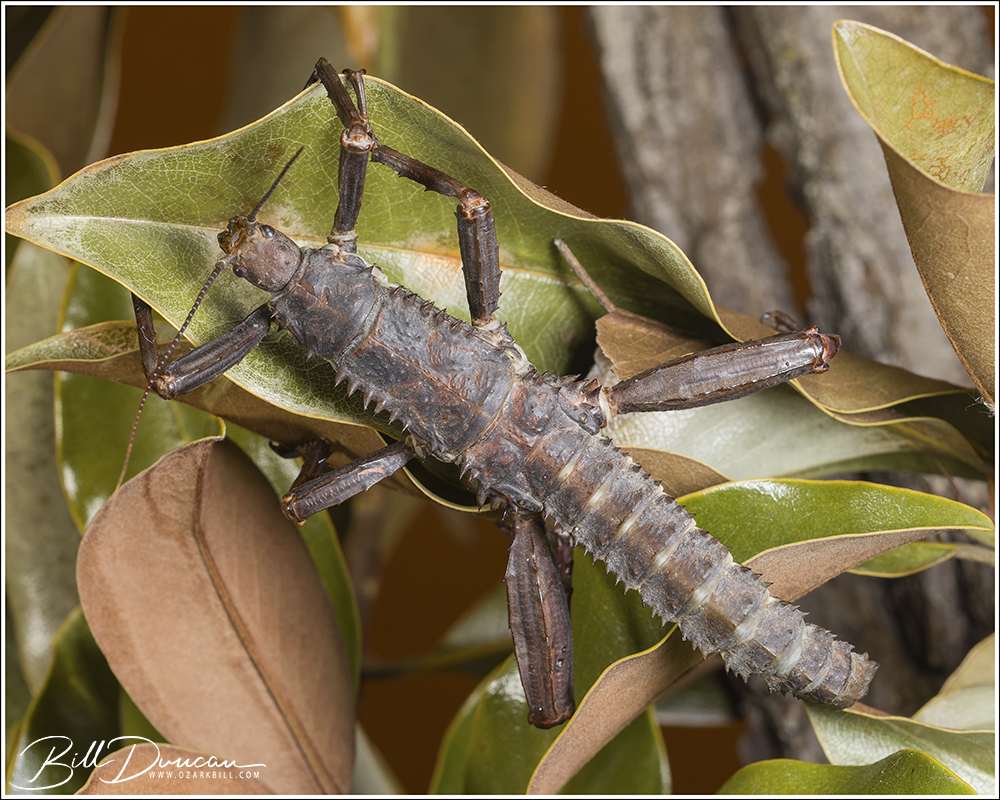
Spiny Stick Insect
(Eurycantha calcaratta) F. Lonchodidae. These giant phasmids are endemic to humid rainforests in Australasia.

Curly-haired Tarantula (Tiltocatl albopilosum) F. Theraphosidae. This handsome spider is native to Central America.

That’s all from this outing. Interested in joining in one one of these WGNSS outings? Feel free to contact me or check us out at http://www.wgnss.org to learn more.

-OZB
A Trio of Hoppers

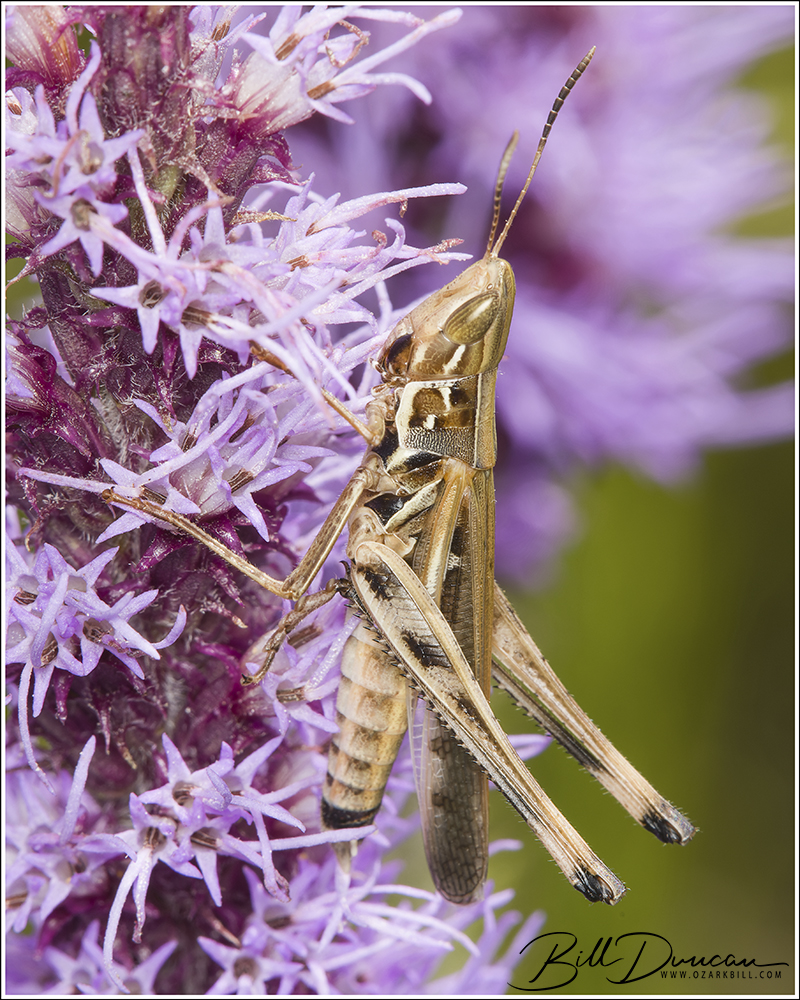
Here are a few handsome Orthopterans from the 2023 season.

Syrbula admirabilis, is known by the common name – admirable grasshopper. Photographed at Horn Prairie Grove LWR.
Orchelimum nigripes, the black-legged meadow katydid prefers wetland habitats. This individual was found at Marais Temps Clair C.A. in St. Charles County, MO.
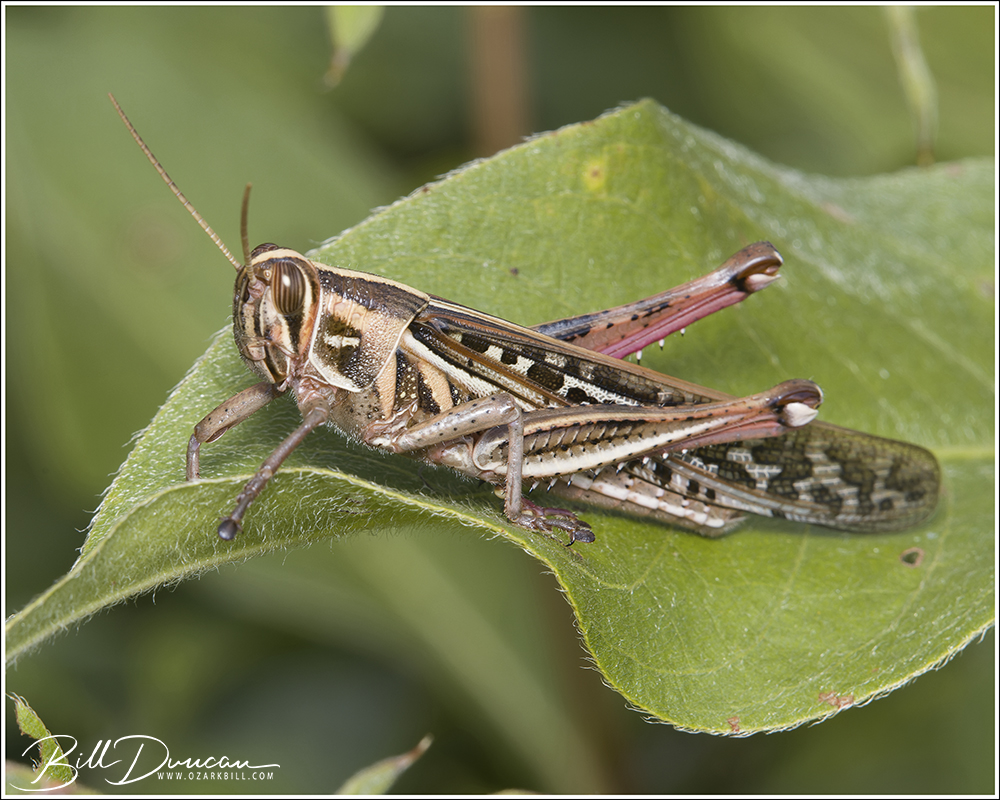
This American bird grasshopper (Schistocerca americana) was also photographed at Marais Temps Clair C.A. in St. Charles County, MO.

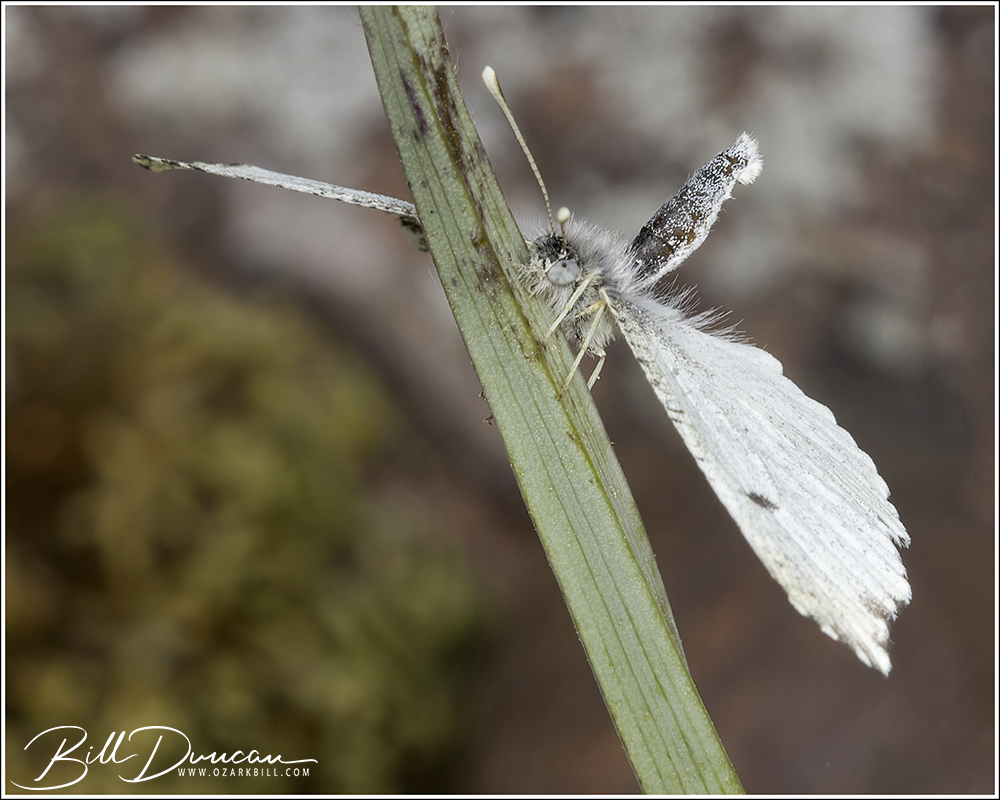
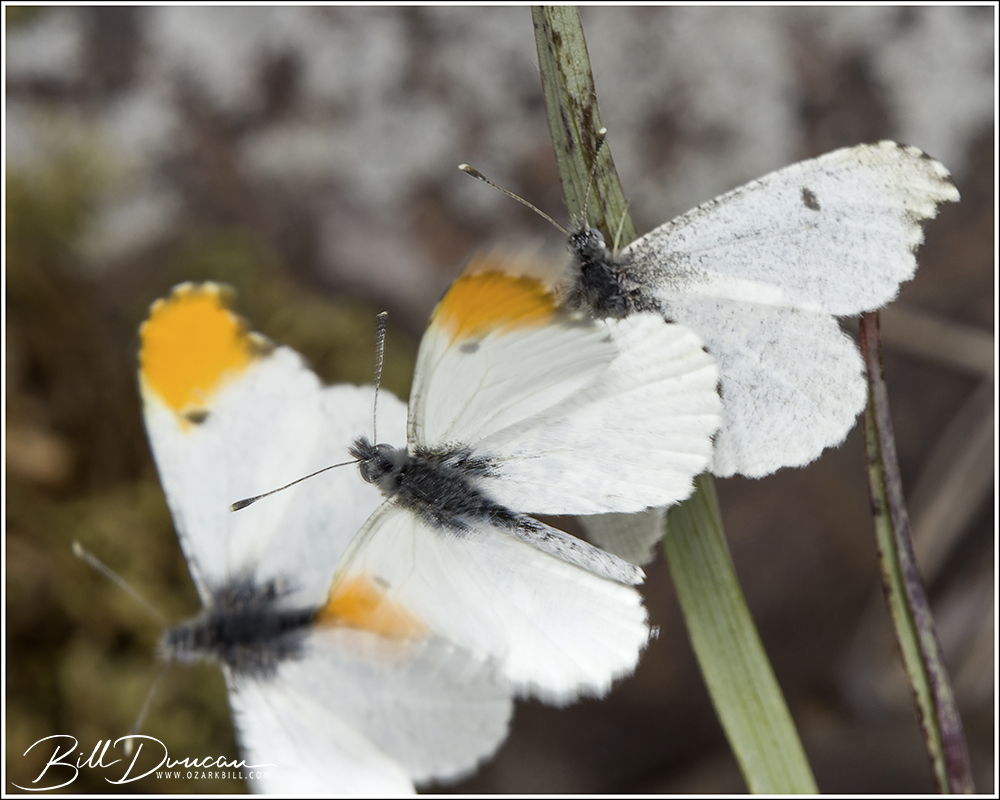
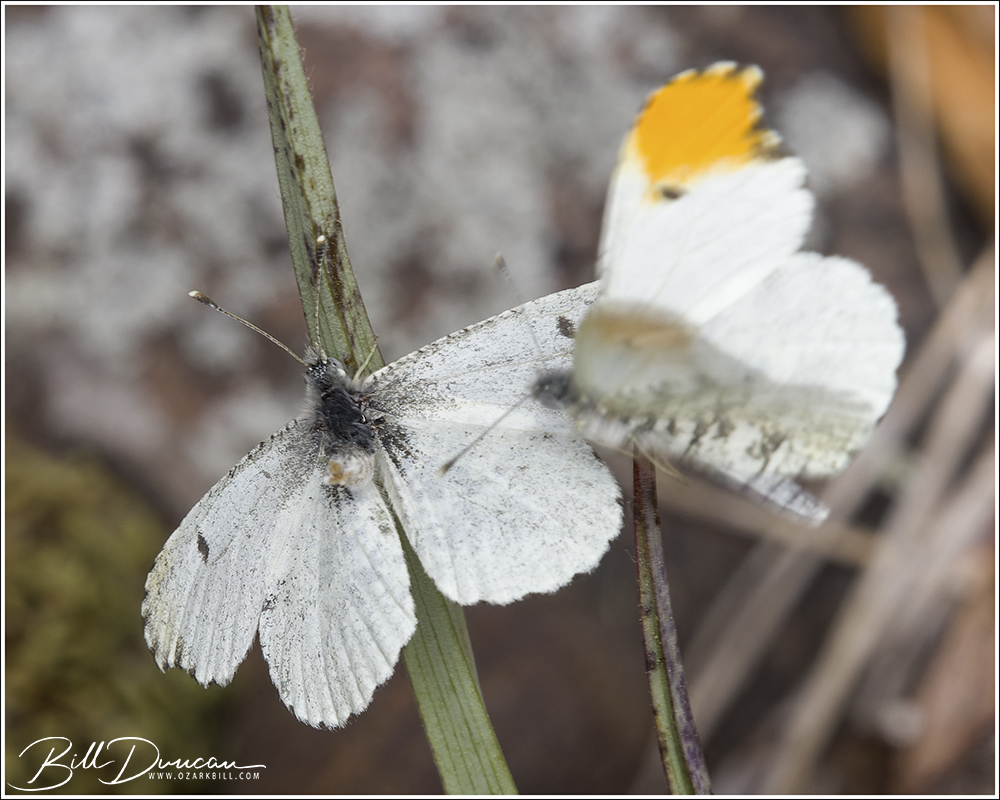
Falcate Orangetip (Anthocharis midea)

These are not the photos I envisioned getting when going after the falcate orangetip (Anthocharis midea). Casey and I must have spent more than a couple of hours running around Hugh’s Mountain Natural Area, waiting for one of these gorgeous males to land at a flower to nectar. Unfortunately, this rarely happened, and when they did finally set they were up again within seconds.

A female falcate orangetip perched with abdomen raised, presumably to better release pheromones that announce her readiness to mate.

These guys were definitely not interested in feeding while we were there, instead they incessantly roamed the glades and woodland edges hunting for females. This is where I finally got a little bit of luck by finding a stationary female. She had drawn the attention of several males who were fighting for a chance to breed.

Members of the Pieridae family, the falcate orangetip’s host are members of the mustard family (Brassicaceae). The caterpillars feed mostly at night on the flower tissues of these plants.

Nymphalids of 2023

I was happy to final start working on getting some butterfly and skipper photos in 2023. I joined the local North American Butterfly Association and really enjoyed getting out on a few of their counts. I’m still learning the diurnal moths (butterflies) and have a ways to go before I can call myself competent. Here are a few photos from the Nymphalidae family to share from 2023.

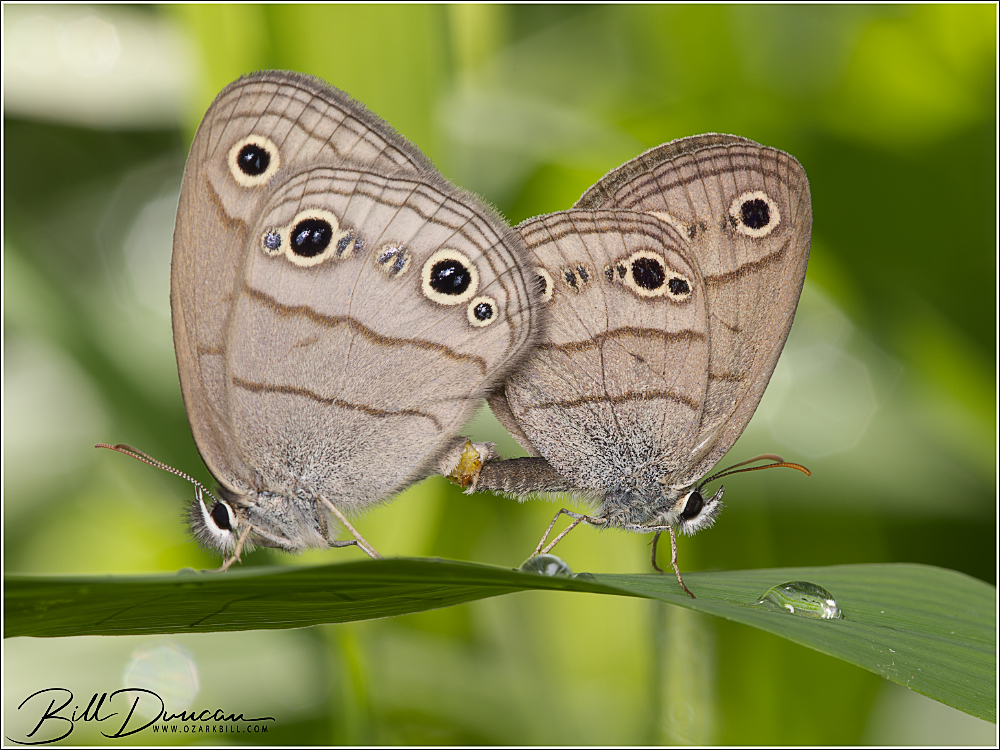
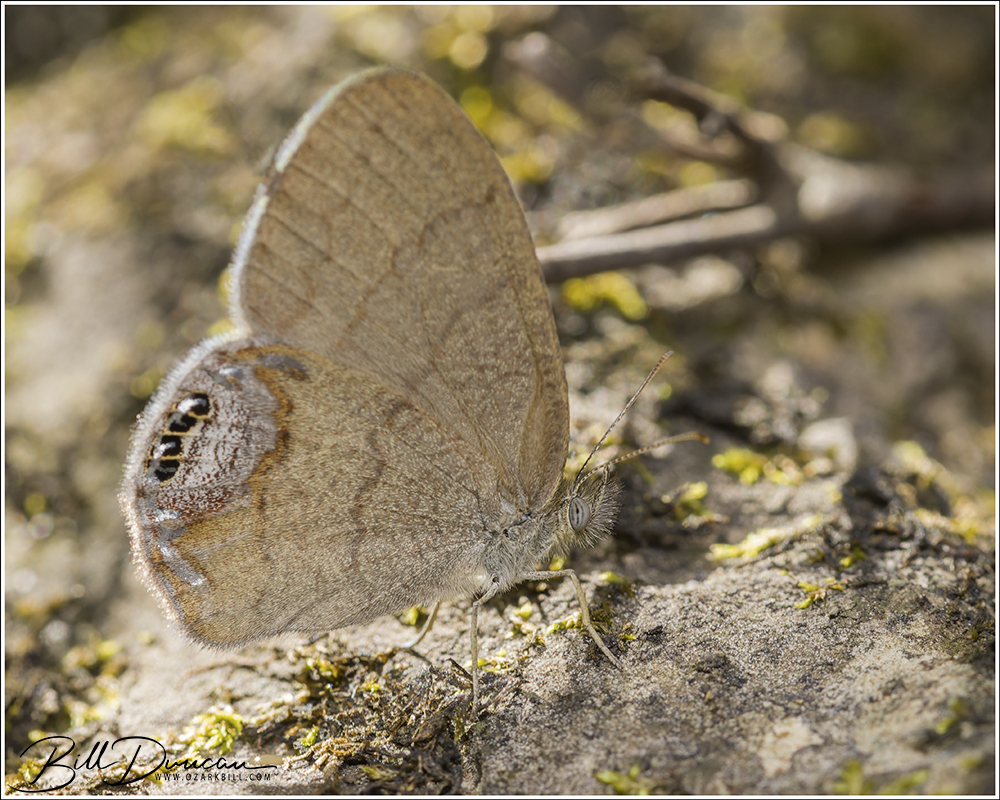
Gemmed Satyr (Cyllopsis gemma)

This gemmed satyr was an unexpected find while visiting St. Francois State Park in September. Not long ago this species was restricted to extreme southern Missouri. They now seem to be continuing a northern expansion in their range. Quite a few butterflies have eyespots that are found on different locations of their wings, presumably to make them look like much larger organisms as well as to persuade would-be predators to attack something beside the vulnerable true heads. I have recently read that some have hypothesized the spot on this species wings developed to mimic certain jumping spiders. In my photo I think this looks to be highly plausible – with the two primary eyes centered around a grey backdrop that looks very much like a jumping spider to me.

Viceroy (Limenitis archippus)

Once believed to be a pure example of Batesian mimicry in a complex with the monarch and queen butterflies, some evidence now suggests that the viceroy may be distasteful to predators, providing evidence that this is instead should be considered a case of Müllerian mimicry. This is turning out to be quite the complex case to understand, with some reports suggesting that the host plant that a particular individual viceroy was raised on determines whether or not it is distasteful. Other work has suggested that gene complexes that may differ between populations of viceroys determines distastefulness. More work is needed to determine what exactly is going on here. This photo was taken on a NABA walk ate Marais Temps Clair C.A. in September.

Red Admiral (Vanessa atalanta)

Photographed at Marais Temps Clair C.A. in early October, the red admiral is a lover of nettles, feeding solely on members of the Urticaceae family.

Painted Lady (Vanessa cardui)

Famous for its migration, the painted lady hosts on numerous species of Asteraceae.

American Lady (Vanessa virginiensis)

Being strictly found in the new-world, the American lady can be distinguished from the painted lady by the number of spots on the ventral sides of the hindwings. As seen in the photo above, the American lady has two large eyespots whereas its cousin, the painted lady, has four. Photographed at Horn’s Prairie Grove LWR in July.

Caterpillars of 2023 – The Rest

Today I’m finishing up with the remaining cats of late summer and autumn hunting trips of 2023 from an assortment of families.

Walnut Sphinx Moth (Amorpha juglandis) Sphingidae, Hodges#7287
These are among my favorites. Not only are they quite handsome when viewed up close, but they are one of the few caterpillars with a voice! Be prepared if you handle or otherwise disturb them; they will let out a surprising squeak when they feel threatened.

Walnut Sphinx Moth (Amorpha juglandis)

Curve-lined Angle (Diagrammia continuata) Geometridae, Hodges#6362
Casey and I observed that the juniper hairstreaks (Callophrys gryneus) had a bumper year this year while hiking in glades early in the season. We thought this might be the year to finally find the fantastic larvae of this species. We spent several hours beat-sheeting the red cedars in these areas in late summer and early fall. No luck in finding that species, but we did find another inconspicuous cat that uses this plant as its host. You can probably see that, like the hairstreak, the caterpillars of this moth species would be next to impossible to find without the use of a beat-sheet.

Curve-lined Angle (Diagrammia continuata)

Undescribed Flower Moth (Schinia nr-jaguarina) Noctuidae, Hodges#11132.01
I shared photos of this yet to be described species before. These are photos of the cats we found at a new location, Horn’s Prairie Grove LWR, in central Illinois.

Red-lined Panopoda (Panopoda rufimargo) Erebidae, Hodges#8587
An interesting cat we found while beet-sheeting a hickory thicket on a friend’s property in St. Francois County.

Red-lined Panopoda (Panopoda rufimargo)

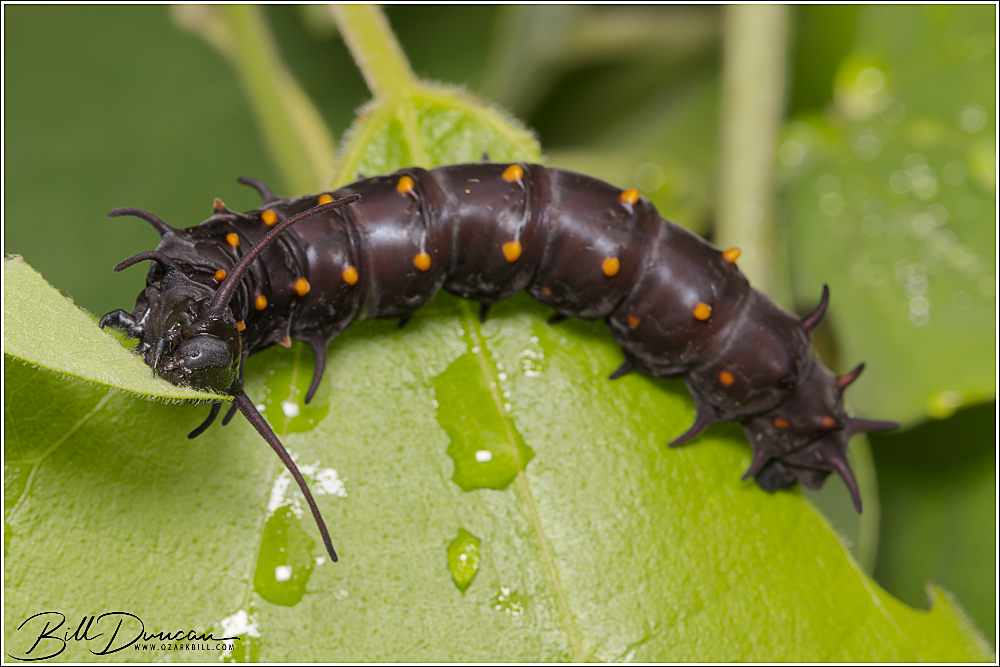
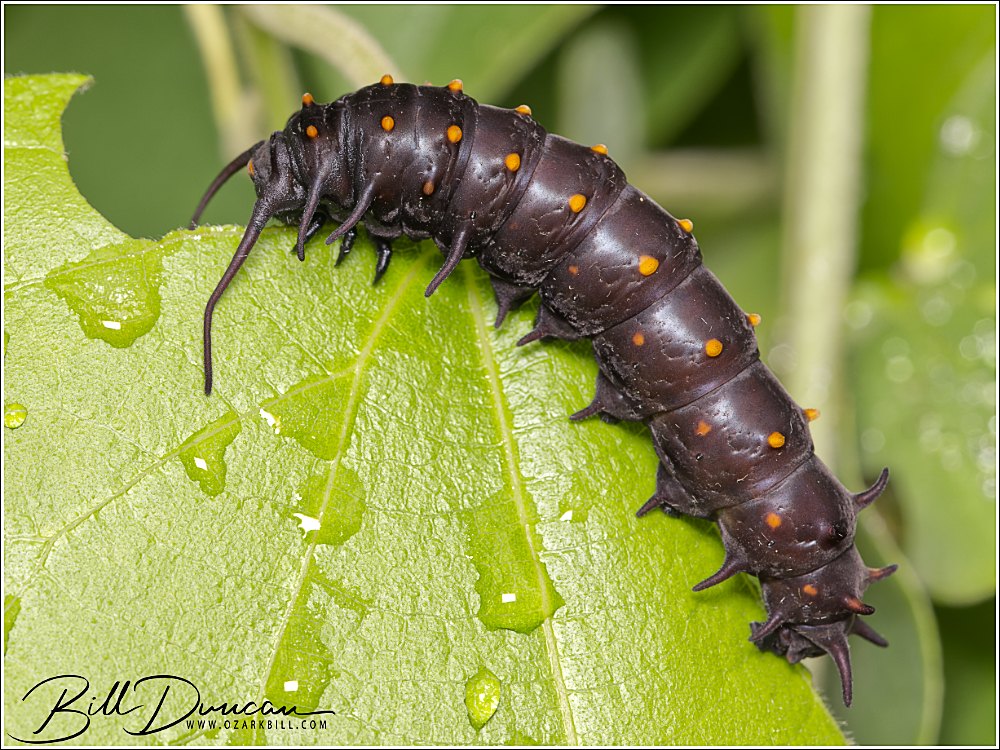
Pipevine Swallowtail (Battus philenor) Papilionoidea
Conspicuous and distasteful due to the absorbed secondary chemicals of their pipevine host, it seems like we always find these guys in low-light situations, making the use of supplemental light a necessity.

Pipevine Swallowtail (Battus philenor)

Giant Swallowtail (Papilio cresphontes) Papilionoidea
My favorite swallowtail species. It was a real treat finding this final instar cat back in September.

Caterpillars of 2023 – The Notodontidae

Today I am featuring the more interesting larvae we found of the Notodontidae Family, commonly known as the prominent moths. This is a widely distributed and diverse family with close to 4,000 species described worldwide. Hosts for this family are mostly woody plants and we often find these feeding on oaks and hickories.

Variable Oakleaf Caterpillar (Lochmaeus manteo) Notodontidae, Hodges#7998
Finding a lot more than I decided to photograph, this aptly-named species feeds primarily on oaks (Quercus sp.) and is highly variable in coloration and pattern. This is a species you may get tired of finding when focusing on oaks during your searches.

Mottled Prominent (Macrurocampa marthesia) Notodontidae, Hodges#7975
We found a few of these guys this year and I find these to be very handsome little cats.

Heterocampa pulverea, Notodontidae, Hodges#7990.1
Until recently, this was a pretty large genus, containing close to 50 species. A couple of years ago, armed with molecular data, this genus was split and now contains 18 species. This one was found on a WGNSS group outing at Pickle Spring Conservation Area in early September.

Orange-banded Prominent (Litodonta hydromeli) Notodontidae, Hodges#7968
We found this guy on another WGNSS outing while looking for the bumelia borer beetle (Plinthocoelium suaveolens). We did not find our target that day but I was thrilled to find this cat that previously I did not know existed. This is another specialist that only feeds on the gum bumelia (Sideroxylon lanuginosum).

Saddled Prominent (Cecrita guttivitta) Notodontidae, Hodges#7994
This is a very common species that feeds on oaks and until recently belonged in the genus Heterocampa.

White-streaked Prominent (Ianassa lignicolor) Notodontidae, Hodges#8017
Also known as the lace-capped caterpillar, this is one of many caterpillars in this family that hide in plain sight. You will almost always find these sitting on the section of leaf they have previously eaten, using their coloration and patterns to look like a diseased or senescent portion of the leaf. These can be quite tricky to find until you get the right search engine installed in your brain.

Red-washed Prominent (Oedemasia_semirufescens) Notodontidae, Hodges#8012
Although considered fairly common, this was the first year I was finally able to find one of these outstanding cats. This species is quite polyphagous, feeding on almost any native woody plants. One of the two we found this year was feeding on pawpaw (Asimina triloba).

Datana Caterpillars (Datana sp.) Notodontidae
Most notodontids are solitary. But certain groups, like these Datana are gregarious and can be found in large groups even in later instars.

Yellow-necked caterpillars (Datana ministra)
A group of datana caterpillars (Datana sp.)

Symmerista Prominents (Symmerista sp.) Notodontidae
Another gregarious taxa, the Symmerista are notoriously difficult to identify to species in both larval and adult phases.

Symmerista sp. caterpillars

White-dotted Prominent (Nadata gibbosa) Notodontidae, Hodges#7915
Perhaps the most common caterpillar we find on our hunting trips, the white-dotted prominent can be found in large numbers on oaks. We find these so often that I rarely even tell the others in the group when I find them. But here we find a common species in a not so common situation. We came across this one on its way to find its pupation spot that would likely be in the ground or leaf litter. You can tell this was the case by the reddish or maroon coloration. Many caterpillars will change to this type of coloration immediately before they begin the pre-pupal stage. Unfortunately for the caterpillar, some southern yellowjackets (Vespula squamosa) found it as well. We watched the drama unfold as the wasps continued to sting and bite at the poor creature that will not likely make it to adulthood.

Thanks for stopping by!
-OZB