The Sandhill Crane

This stained adult Sandhill Crane is currently visiting some soy fields near St. Louis.

“Our ability to perceive quality in nature begins, as in art, with the pretty.  It expands through successive stages of the beautiful to values as yet uncaptured by language.  The quality of cranes lies, I think, in this higher gamut, as yet beyond the reach of words.”

-Aldo Leopold

“A Sand County Almanac And Sketches Here and There”

“Stained Adult Sandhill Crane”

Technical details: Canon EOS 7D camera,  EF400mm f/5.6L USM lens, ISO 400,  f/5.6, 1/500 sec

Summer at the Confluence

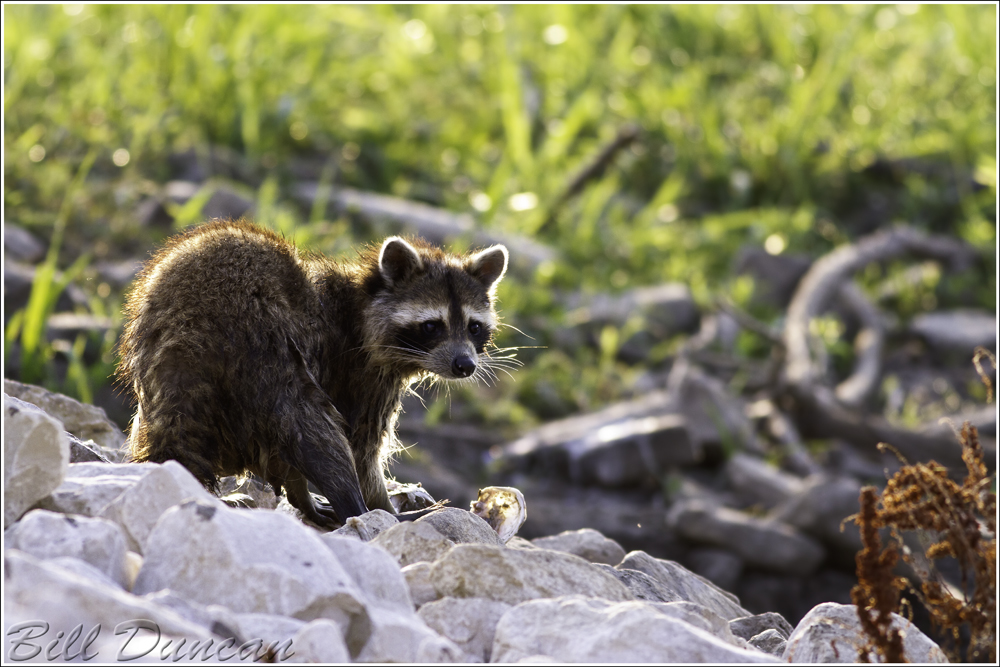
This weekend I spent both mornings at Riverlands Migratory Bird Sanctuary, arriving near dawn and walking around the trails for a few hours before the extreme heat of the day took over.  Sarah got up early and came with me this morning. Saturday morning I was fortunate to spot this guy feasting on carcases of fish that succumbed to the poorly oxygenated waters of the shrinking, heated pools of the wetlands.  This was my first opportunity at shooting a raccoon.  Even at such an early morning hour, the back-light serves to give a sense of the heat and humidity that were already noticeable.

Technical details: Canon EOS 7D camera,  EF400mm f/5.6L USM lens, ISO 640,  f/5.6, 1/400 sec

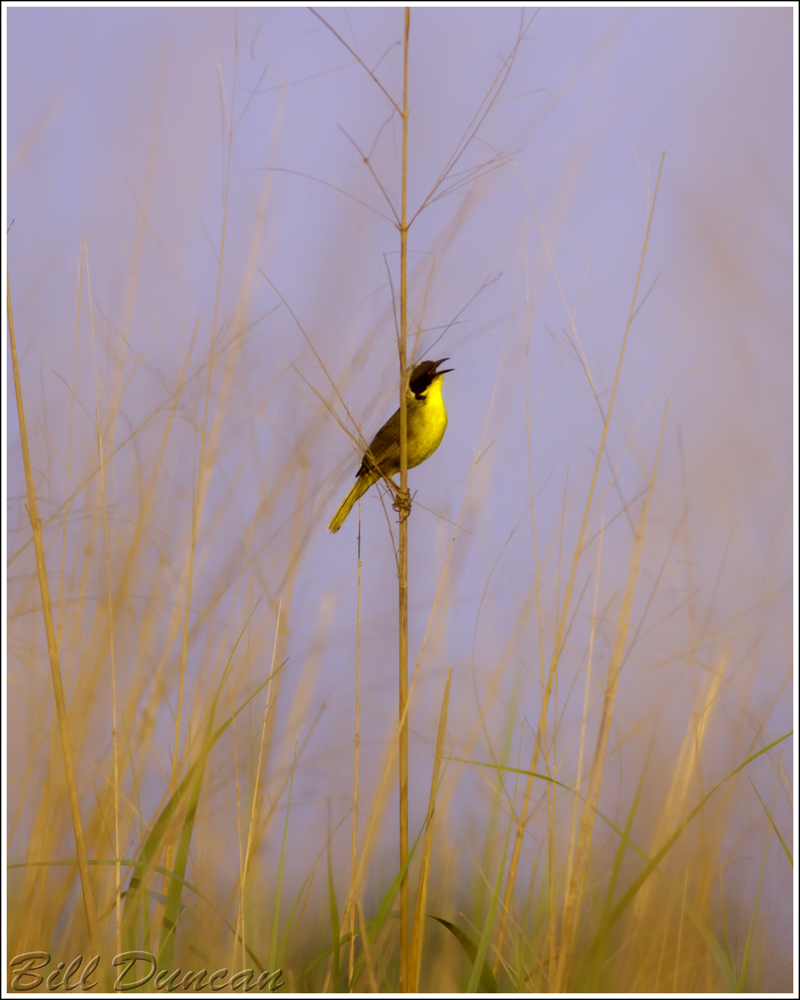
One of the photographic challenges of this location is trying to get shots of the song birds that live among the tall grasses.  They usually stay pretty far from the trails and are usually hidden low in the vegetation.  This Common Yellowthroat Warbler was close enough and partially obscured by the grasses.

Technical details: Canon EOS 7D camera,  EF400mm f/5.6L USM lens, ISO 640,  f/5.6, 1/1250 sec

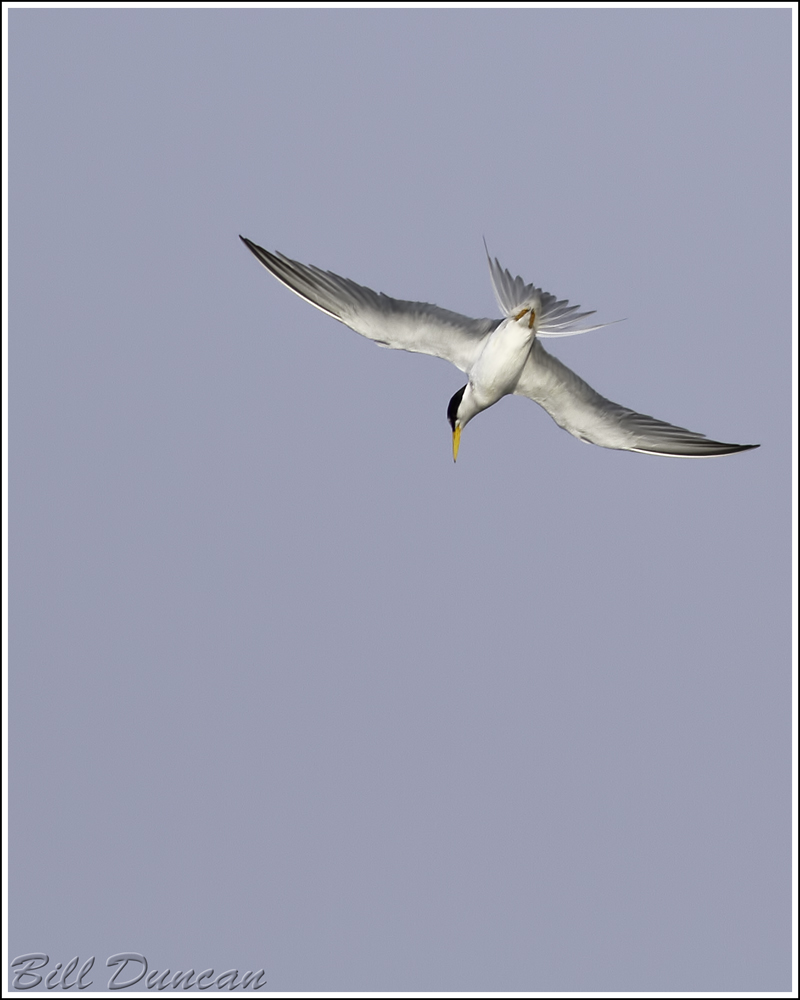
One of the pleasure one can get from a summertime visit to RMBS is watching the Least Tern.  I love watching these guys fish.  This one is beginning the plunge into the water off of Ellis Island to grab a little fish.

Technical details: Canon EOS 7D camera,  EF400mm f/5.6L USM lens, ISO 250,  f/5.6, 1/1600 sec

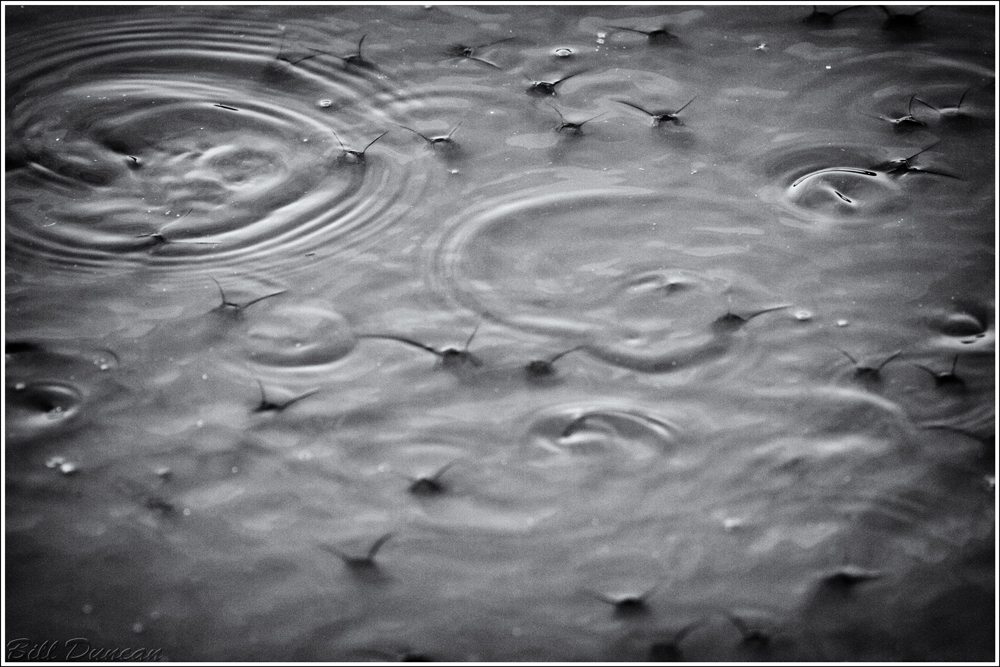
Kudos to Sarah, who took a closer look at these guys.  What looked like a bunch of tadpoles gulping at the surface of one of these rapidly vanishing pools was actually a nice-sized school of small catfish.  If rains do not come soon, these guys have no chance.

Technical details: Canon EOS 7D camera,  EF400mm f/5.6L USM lens, ISO 800,  f/5.6, 1/400 sec

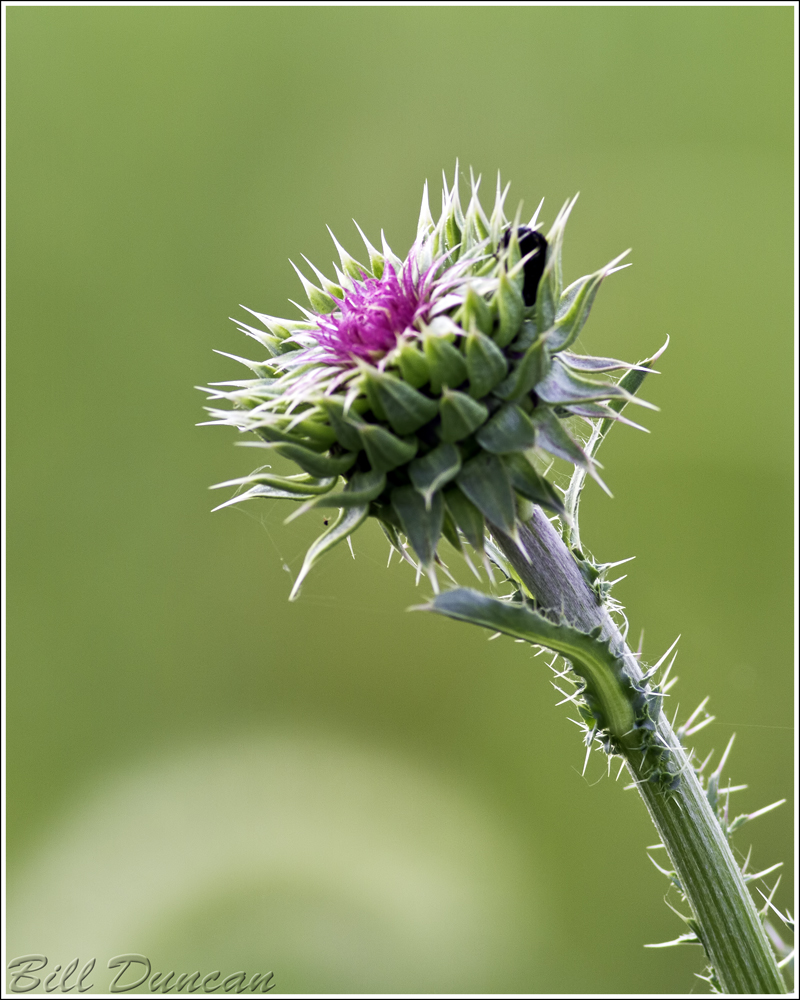
Sarah also spotted this thistle in early bloom and asked that I take its picture.  I haven’t done a lot of macro style shooting with the 400mm, but I know that using the super tele’s to do this can work magic.  The focus isn’t perfect, but I was actually fighting the minimum focus distance.  I need to try this with dragonflies and other large insects.

Technical details: Canon EOS 7D camera,  EF400mm f/5.6L USM lens, ISO 800,  f/5.6, 1/400 sec

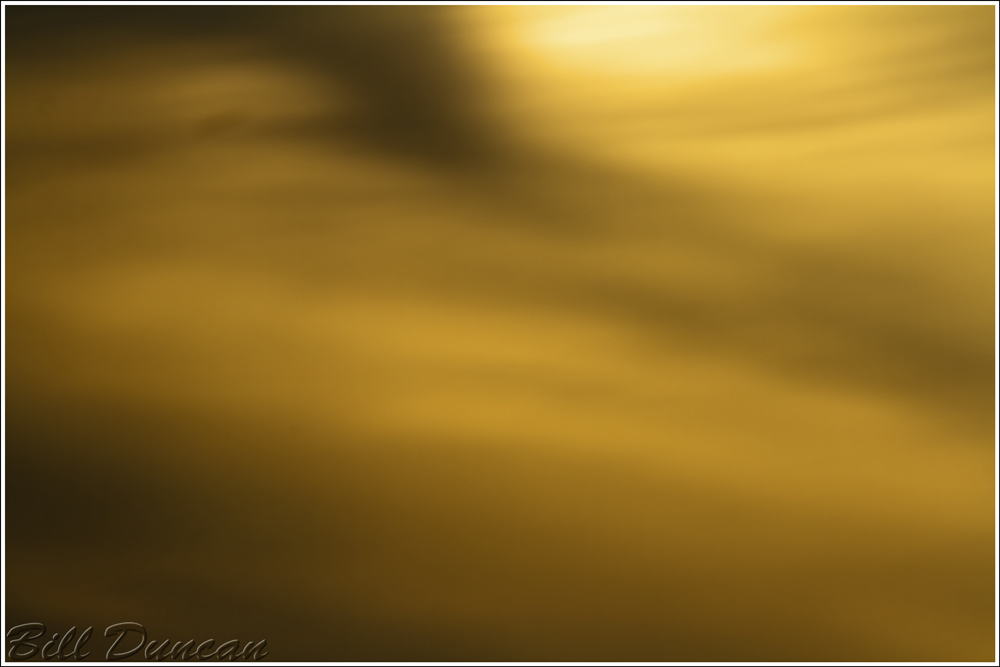
This morning there was actually a bit of cloud cover over the sun.  I decided to try a little panning blur and thought this was an apt image to go along with the record breaking heat we’ve been experiencing.  Stay cool everyone.  I am sure looking forward to all the time I’ll have to spend in the greenhouse this week.  ;=)

Technical details: Canon EOS 7D camera,  EF400mm f/5.6L USM lens, ISO 100,  f/14, 1/125 sec

Location Spotlight: Squaw Creek National Wildlife Refuge

“Traditional Boundaries”

Technical details: Canon EOS 7D camera,  EF400mm f/5.6L USM lens, ISO 400,  f/10, 1/1250 sec

I’m finally taking a few of the images I made during my first visit to Squaw Creek National Wildlife Refuge last autumn and putting them into a blog post.  Living within miles of the Mississippi River Flyway – an ancestral route many migratory birds follow in their north-south seasonal movements – I have all sorts of options in visiting well-managed wetland areas to watch and photograph waterfowl.  Of all these locations none has the opportunities for getting great looks at numbers and diversity of bird species that can be found at Squaw Creek NWR, located near Mound City in north-western Missouri, not too far from the Nebraska Border.

“Cacophonic”

Technical details: Canon EOS 7D camera,  EF400mm f/5.6L USM lens, ISO 1600,  f/5.6, 1/125 sec

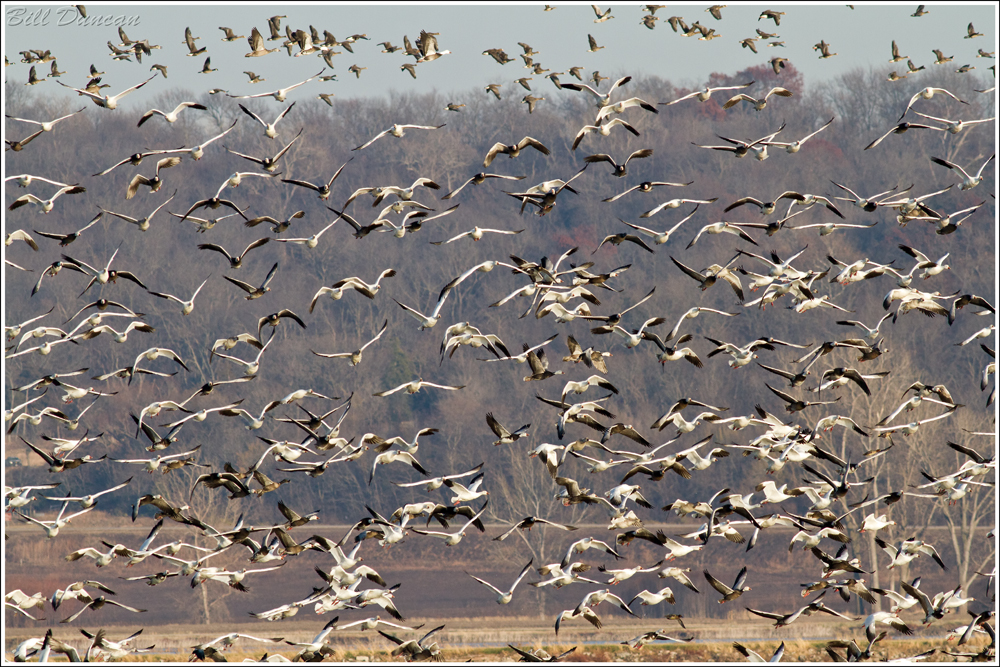
The big stars at Squaw Creek around Thanksgiving and surrounding weeks are the Snow Geese.  For years I had read about and seen images of the more than one million birds that pass through this location every fall.  At peak times more than 500,000 birds can be counted on the reserve at one time.  I had images in mind that I hoped to make if I could find the birds present in these kinds of numbers.  I really had little clue of where and when I needed to be set up and if I had the ammunition (lenses) to make the images I had in mind.  I feel the photos I was able to get are of mixed success due to several reasons.  I was quite lucky in the numbers of birds that showed up.  A week before my visit the counts were only a little more than 10,000.  The day I arrived the latest weekly count suggested there were more than 250,000 on the reserve.  This is shy of the 500-600K that can be found during peek times, but for my first visit, it was quite a treat!  Of the 1.5 days I had to spend here, one full day was very cloudy and dark, making bird photography particularly troublesome.  Around noon on my last day the sky cleared and I was able to get some nice light.  Hopefully I can spend a few days more during my next visit.

“Let My Army Be The Rocks And The Trees And The Birds In The Sky”

Technical details: Canon EOS 7D camera,  EF400mm f/5.6L USM lens, ISO 400,  f/8,  1/1250 sec

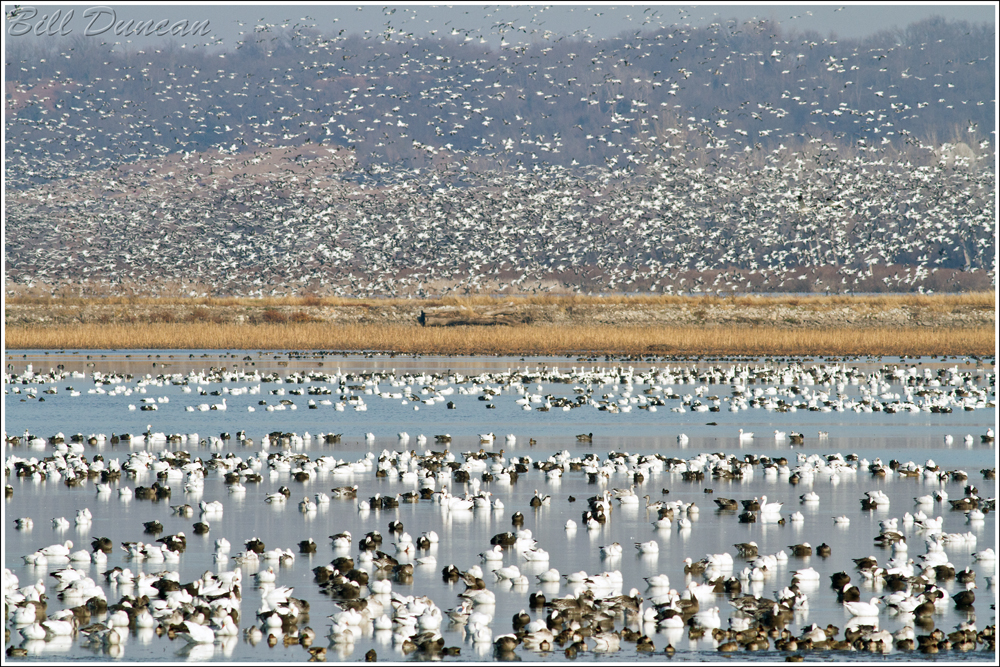
Snow Geese are not the only waterfowl that can be found in good numbers here.  In almost every one of these types of images Greater White-fronted Geese, Green-winged Teal, Northern Pintail, Mallards and more can be found as well.

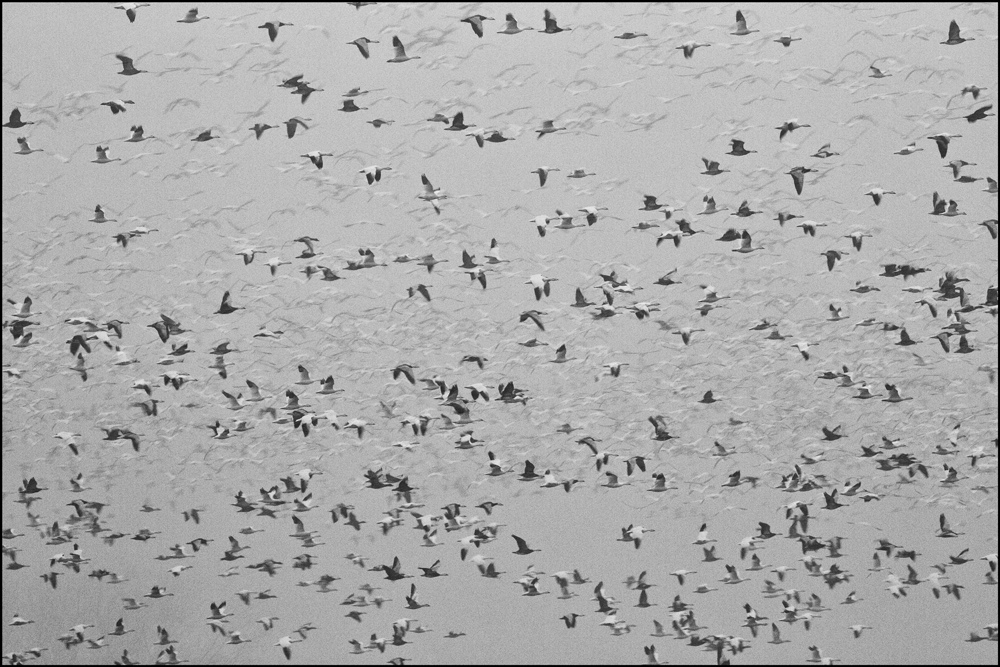
“The Snow & the Mist”

Technical details: Canon EOS 7D camera,  EF400mm f/5.6L USM lens, ISO 1600,  f/8,  1/100 sec

Squaw Creek NWR and its 7500 acres was established in 1935 just in time.  Close to 98% of the original marshes and related wetlands that border the Missouri River in the state of Missouri have been destroyed or permanently altered – mostly for use as farmland.  Thankfully sportsmen realized the importance for providing habitat for migrating and over-wintering waterfowl and a series of these man-made marshes were built near Kansas City, Columbia and St. Louis.  This image is actually a composite of two separate photographs – the foreground and the background, both taken in extremely cloudy and grey conditions.  I was surprised by how well this blending worked and I feel it represents what it was like on this first day, the geese constantly taking off in large groups and others taking their place in the marshes.

“Squaw Creek Eagle”

Technical details: Canon EOS 7D camera,  EF400mm f/5.6L USM lens, ISO 800,  f/5.6,  1/400 sec

Waterfowl are not the only birds or wildlife that utilize the reserve.  Although you can see more Bald Eagles in spots along the Mississippi River, I have never been able to get as close to these birds perched as I did during this visit.  This is true with the wildlife in general.  The auto-route roads were set perfectly in the reserve, in my opinion.  Getting close enough to the wildlife can be troublesome from the roads at other places I visit, but here the roads are much better situated near the pools and the wildlife never seem to be overly stressed.  During the time of my visit with cloudy weather and poor light, I was able to get closer to several duck species than I have ever been able to before.

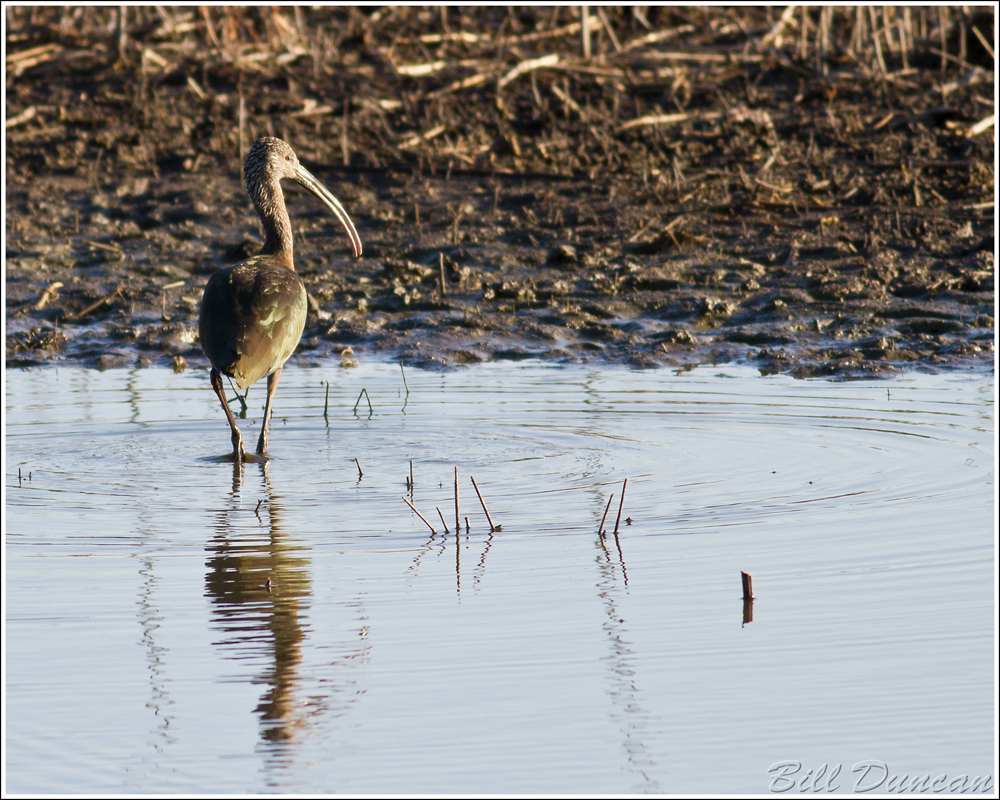
“White Ibis”

Technical details: Canon EOS 7D camera,  EF400mm f/5.6L USM lens, ISO 400,  f/5.6,  1/640 sec

This White Ibis was actually a very late bird for this part of Missouri and it made a bit of noise in the MO birding community.  This was also one of my best looks at this species.  I had found it the day before and took some rather poor photos.  I was happy to see it still in the same pool the next day when light was better.

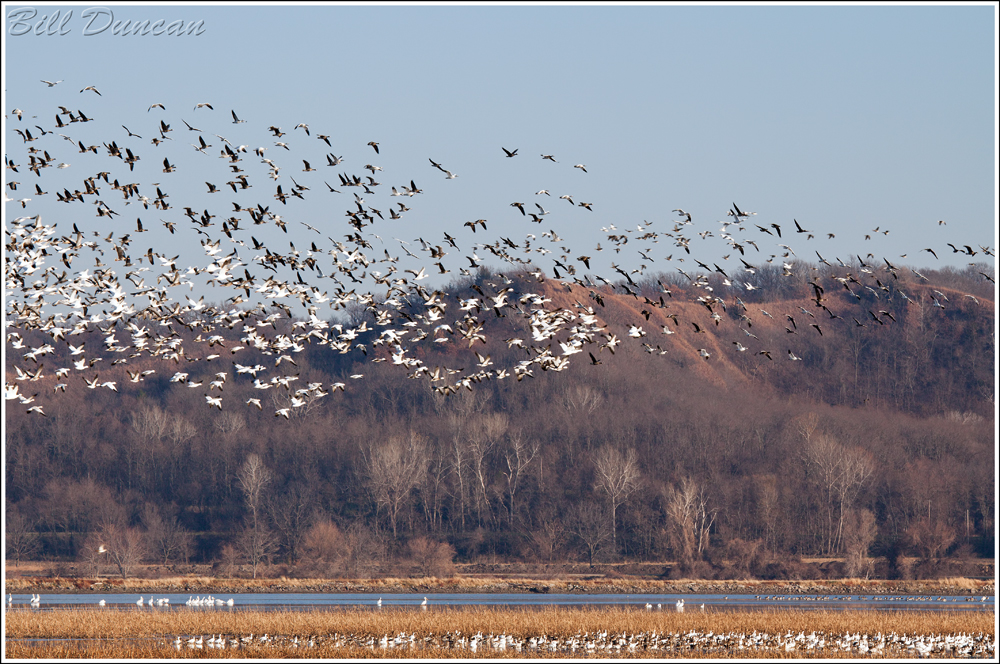
“Snow Geese on Loess”

Technical details: Canon EOS 50D camera, EF70-200mm f/4L IS USM lens @ 150mm, ISO 100,  f/10,  1/200 sec

This image is probably my favorite from this trip.  To me, it really captures the essence of the place and I believe this is what this area looked like when Lewis and Clark first laid eyes to this part of the country.  The bluffs in the background are known as loess hills and are formed by the actions of glaciers.  Along with draining the natural wetland habitats along the Big Muddy, European settlers also got busy destroying many of the impressive loess hills, using the fertile soil for numerous development and farming projects.  Many of these features are still being harvested and destroyed to this day.

There are several more nationally well-known reserves like this throughout the country that scores of photographers, nature lovers, biologists and sportsmen flock to every year.  I can’t imagine a spot being more suited for these activities than Squaw Creek NWR.  I hope to make an annual pilgrimage to this location on Thanksgiving week.

If you make the visit and are looking for a nice place to eat, I highly recommend “Klub”.  This is a great place to enjoy a late dinner after spending the day at the reserve, which is only about ten minutes away.  They have a great menu using a lot of fresh, local ingredients.  I ate here twice during my visit and I was quite surprised to find such a quality establishment in such a little town like Mound City.

Thanks for paying a visit.  You can find more photographs taken from this location by visiting my Squaw Creek Flickr Set

More Snipe than You Could Fit in Your Bag

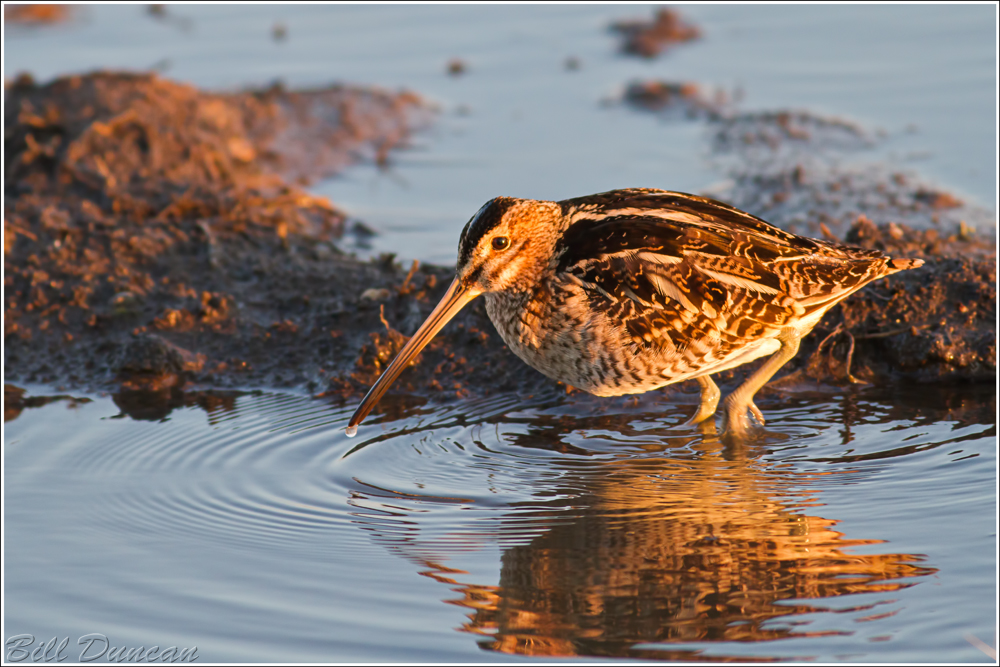
“Scolopacid Dawn”

Technical details: Canon EOS 7D camera,  EF400mm f/5.6L USM lens, ISO 640,  f/5.6, 1/400 sec

I arrived at CBCA well before dawn.  I knew from a visit a week earlier that a large amount of waterfowl, specifically Pintail, were using the habitat here and my hope was to catch some early morning photos of these birds flying by.  In one of the large pools alongside the road I saw nearly 50 of these bizarre birds with a bill almost as long as their bodies.  They were not very flighty at all, allowing me in my “mobile blind” to easily get within distance for some decent shots.

Members of the Scolopacidae family of shorebirds include the traditional Sandpipers, the beautiful Phalaropes, the Curlews, the Dowitchers, and several others – including the bird pictured above, the Common Snipe.  The Scolopacids are well known for their complex and diverse mating behaviors.  Not as complex or developed as the Passerine songbirds, this group also uses extensive advertisement vocalizations, most likely evolved to be well understood on their vast tundra breeding grounds.

Similar to its cousin, the Woodcock, the Common Snipe uses a “winnowing display” to attract mates.  These birds will fly high into the air and plummet towards the ground while fanning their tail feathers, which make a distinctive winnowing noise as the air rushed rapidly over them.

Looking closely at the length of a shorebird species’ bill gives a great clue to what the bird feeds on and how much water they typically forage in.  With the great diversity in the morphology of these birds, the specific depth of water and vegetation these species are accustomed to and food sources they utilize, it is no wonder that habitat management programs can be quite complex.  What works great for waterfowl or a particular species of shorebird may not be useable at all for another species.  CBCA has come a long way in providing the diversity of habitat and the managers seem to be doing a great job in their management practices, especially considering the unpredictable weather patterns we have had in this region the past several years.

Birds of the Great Confluence – Part Two – Columbia Bottom Conservation Area

Technical details: Canon EOS 50D camera, EF400mm f/5.6L USM lens, ISO 400,  f/5.6, 1/640 sec

The Great Rivers Confluence is the area where North America’s two largest rivers, the Missouri and the Mississippi, meet together and flow as the Mississippi.  This confluence is just north of St. Louis, Missouri and provides many opportunities for birds along the Mississippi migratory flyway to find the habitat they need.  These areas provide great opportunities for bird-watchers, hunters, and other outdoors types and go by names such as Riverlands Migratory Bird Sanctuary, Jones Confluence State Park, Columbia Bottom Conservation Area, Marais Temps Clair CA, and a handful of other public properties that have been given mandates based on conserving the basic habitat that wild birds and our other wildlife kin rely upon for their existence.

I have been bird watching in this region for about five years and taking bird photographs here for the last two or three.  In a previous post I showcased six of my favorite images I made at Riverlands MBS and Confluence SP.  Today, I will feature another group of bird photographs taken at Columbia Bottom CA, which sets on the south side of the Missouri River.

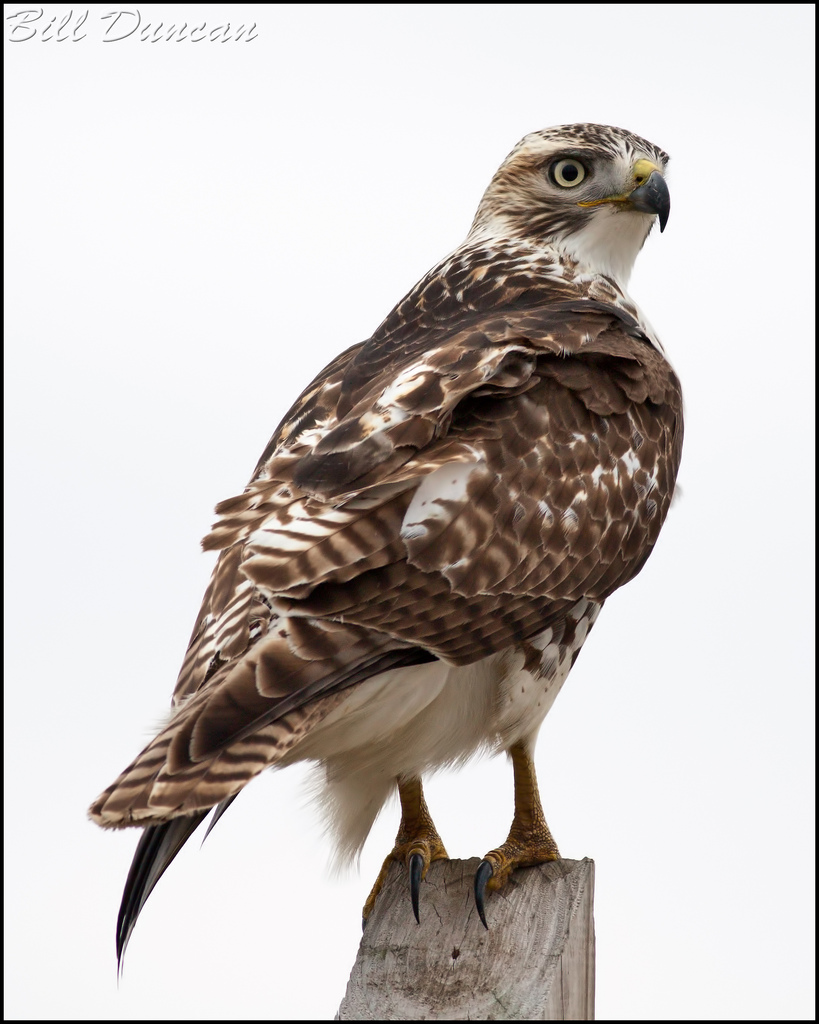
These areas may seem very different to us bird watchers because it is about a 15-20 minute drive between the two.  The birds, however can literally move between the two locations in 20-30 seconds.  Such was the case with this Red-tailed Hawk, which is pictured above.  This guy was present in the confluence area for three weeks or so and I had several great opportunities to photograph it.  This is probably my favorite bird photograph to date.  My wife and I were doing a drive through CBCA and in one of the smaller gravel parking lots here was the bird perched atop a post.  I slowly pulled within about 25 feet or so from her going as slow as possible so not to flush her.  The bird cooperatively sat still for maybe five minutes before another car flying by a nearby road caused her to take off.

Technical details: Canon EOS 7D camera, EF400mm f/5.6L USM lens, ISO 250,  f/5.6, 1/1000 sec

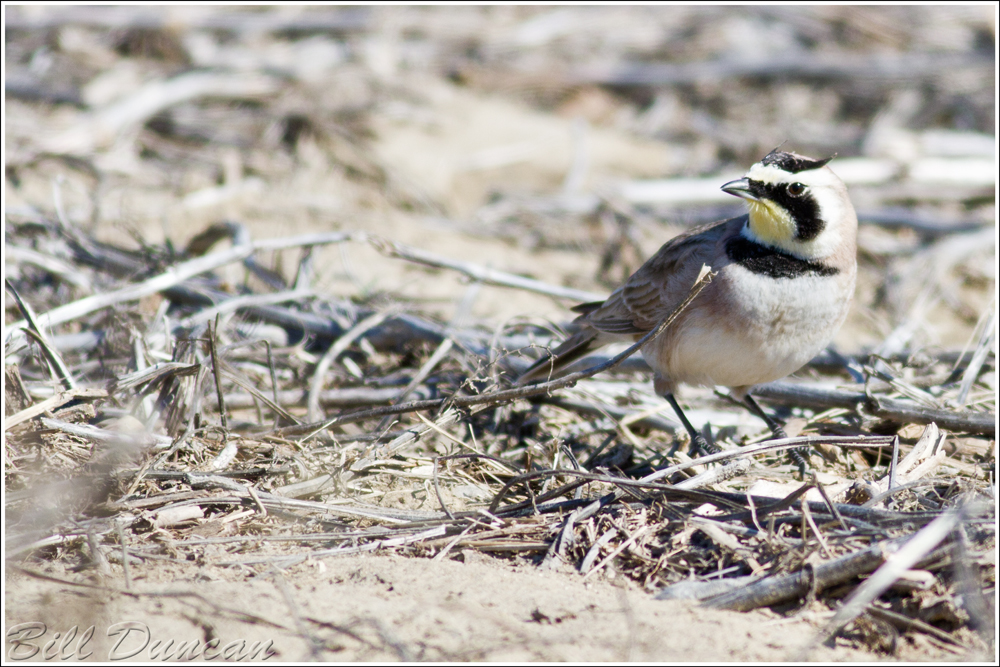
One of the great things about birding the confluence region is that every season brings with it a different species composition.  On a monthly basis you will find that some species have arrived and some have left in the ever ongoing event we call migration.  The bird pictured above is a Horned-Lark and he is found in about equal numbers year round.  They are a little more noticeable in the winter season, however, because they tend to aggregate in small flocks – most likely to make finding food easier and potentially spotting predators quicker.  Starting in early spring they will slowly form the mating pairs that will spend the breeding season together.

Technical details: Canon EOS 50D camera, EF400mm f/5.6L USM lens, ISO 400,  f/5.6, 1/250 sec

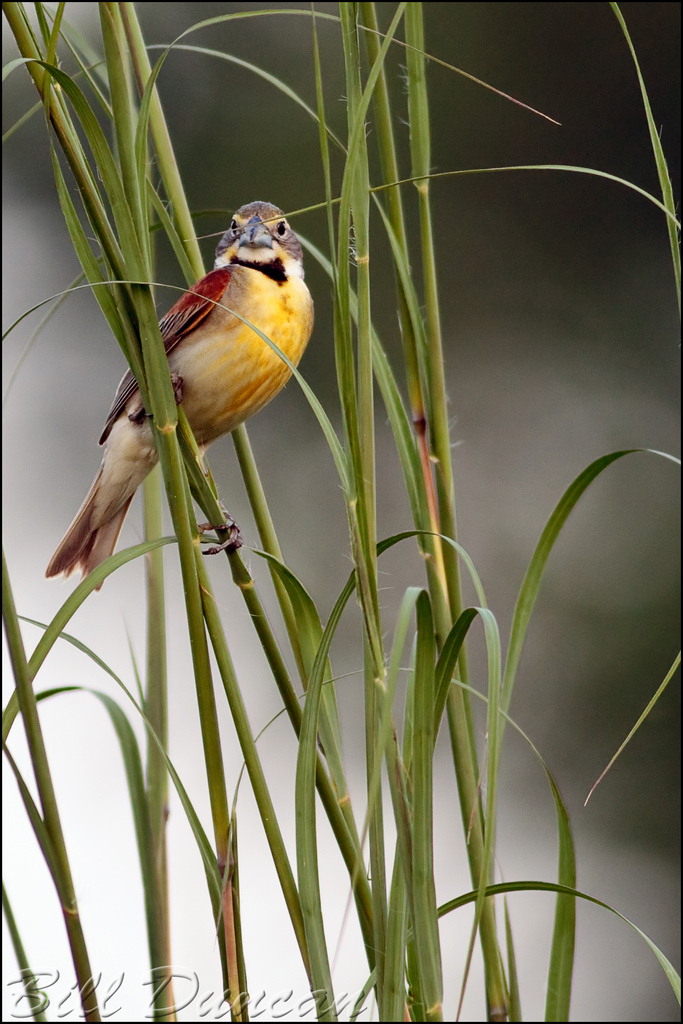
This relative of the Cardinal is the monotypic, Dickcissel, and is very much a summer visitor.  These guys arrive en masse to the confluence area around mid-May and following the breeding season leave just as abruptly to their over-wintering homes that lie from southern Mexico to northern South America.  These guys are usually very numerous, but their population in recent decades are facing pressures.  Dickcissel are grassland specialist, seed eaters.  As such they have found there are easy pickings in agricultural areas.  In their off-breading homes in Latin America, where there are fewer regulations against such things, farmers are using very dangerous poisons that have been documented in the killing of thousands of these birds as well as other non-targeted species.

Technical details: Canon EOS 50D camera, EF400mm f/5.6L USM lens, ISO 640,  f/5.6, 1/320 sec

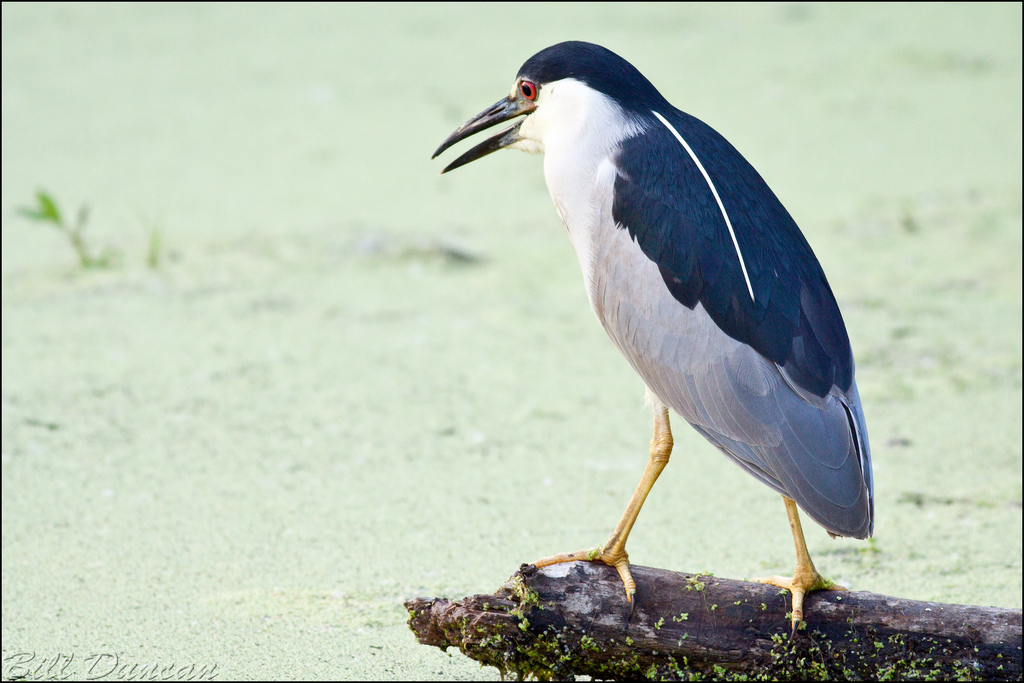
The widely distributed, Black-crowned Night Heron is the quintessential marsh associated bird.  These guys are perfectly adapted at catching and consuming a wide variety of animal prey items that they come across in wetlands across the world.  I very much enjoy watching and photographing these birds.  They can be found in the confluence region during the warmer months of the calendar.

Technical details: Canon EOS 50D camera, EF400mm f/5.6L USM lens, ISO 400,  f/6.3, 1/1000 sec

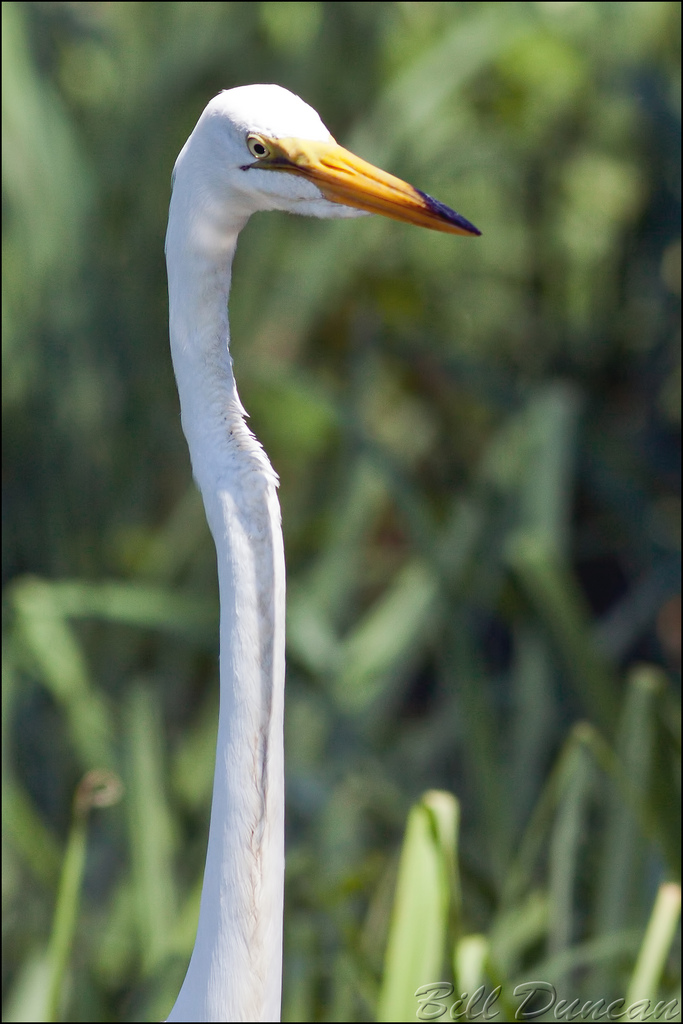
In bird photography nothing beats a typical, perfect, “documentary” style shot.  You know, the photograph in which you were actually able to get close enough to your subject to come close to filling the frame, acheive a perfect exposure and obtain sharpness that will make your eyes bleed?  That is definitely nice, but just as much, I appreciate the “bird as art” image; the photograph in which, with intent or not, you are able to show the subject and/or its environment in a way that looks different than a mere documentary of what the species “looks like”.  The image above of a Great Egret is probably somewhere in between these two image styles.  I wanted to exaggerate the length of this bird’s neck by cutting it from its body.  The shallow DOF separates the bird from the background to further emphasize the subject and its lengthy proportions.

Technical details: Canon EOS 7D camera, EF400mm f/5.6L USM lens, ISO 250,  f/5.6, 1/1600 sec

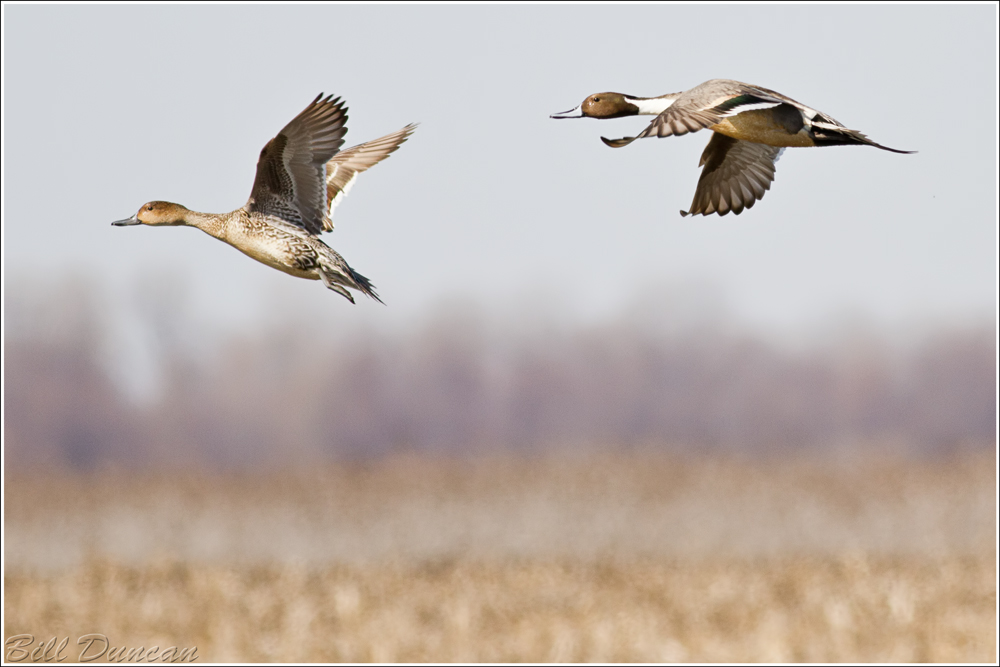
The Cadillac driving, fancy-pants of the duck world, the Northern Pintail is probably my favorite of the waterfowl.  Much like any photographer who can’t afford to own $10K in glass that will reach, I always struggle to get close enough to ducks.  I made this image just this weekend and it’s probably the closest I’ve ever been able to get to this species with a camera.  The Confluence area lies almost directly in the middle of these guys range.  We are near the northern limit of their wintering range and the southern limit of their breeding range.  Their presence is hard to predict in this area.  Typically they will start to arrive in early spring, but they are not uncommon to find any time during the winter when unfrozen water is present in marshy habitats.  They typically are not found here in the summer as northern Missouri has only a small number of breeding pairs on record.

Folks who give a darn about things other than economic concerns have recently saved the confluence region from an environmental threat.  The development that was proposed would have threatened and endangered many of the birds that rely on this region of the Mississippi River Flyway.  I have attached a few links below for those of you who may be interested in this story.

http://missouri.sierraclub.org/home.aspx?/emg/sierrascape/s2009m10/05_casino.html

http://www.savetheconfluence.org/

http://blogs.riverfronttimes.com/dailyrft/2009/11/conservation_area_casino_faces.php

Migrating to What End?

Technical details: Canon EOS 7D camera, EF400mm f/5.6L USM lens, ISO 100,  f/5.6, 1/320 sec

The Snow Goose ranks right up there with the warblers, in my opinion, in a peculiar sector of the natural world that lie conspicuously under the noses of the vast majority of our neighbors who have no idea they even exist.  Take one of your friends outside for a spring-migratory birding experience.  Explain to them that the population of the bird we call Snow Geese stands at more than five million and that the majority of these birds travel twice a year through the Mississippi River Flyway Migratory Corridor, which ranges from eastern Nebraska and Kansas to Eastern Illinois.  In February and March, find a nice open piece of high land within 50 or so miles of either side of the Mississippi River and let them watch with binoculars or scope as groups of birds ranging from 50 to 5000 birds or more travel back to Canada for their nesting season.  Similarly to the beautifully colored and tiny wood warblers who travel through Missouri northward bound mainly during the months of April and May, your friend or neighbor will most likely tell you that they had no idea these beings even existed, much less spent some time in the trees or skies right outside their own front doors.

The Snow Goose population may actually be a harbinger of things to come for the human species.  Low numbers of traditional predators combined with the fact that these birds are both extremely difficult to hunt (compared to other water fowl) and are not a source of desirable meat are resulting in this species’ increasing population to a critical mass.  These birds taste for a particular diet in their nesting grounds and as stated above, low levels of predation, are pushing this species very close to a population crash.  Current research is showing that Snow Geese are currently experiencing increased levels of starvation and disease incidence.

In my opinion, this could be analogous to the human population’s pace of continued growth with too little concern for population control and resource management.  As long as political “leaders” focus the majority of their efforts on up to the minute economic concerns, rather than the long-term prosperity of our planet and the resources of the commons, we will continue towards a similar state.


Birds of the Great Confluence – Part One – Riverlands MBS and Confluence SP

The Great Rivers Confluence is the area where North America’s two largest rivers, the Missouri and the Mississippi, meet together and flow as the Mississippi.  This confluence is just north of St. Louis, Missouri and provides many opportunities for birds along the Mississippi migratory flyway to find the habitat they need.  These areas provide great opportunities for bird-watchers, hunters, and other outdoors types and go by names such as Riverlands Migratory Bird Sanctuary, Jones Confluence State Park, Columbia Bottom Conservation Area, Marais Temps Clair CA, and a handful of other public properties that have been given mandates based on conserving the basic habitat that wild birds and our other wildlife kin rely upon for their existence.

I have been bird watching in this region for about five years and taking bird photographs here for the last two or three.  In this post, I will be showcasing six of my favorite images I have made at Riverlands MBS and Confluence SP.  I will feature another group taken at Columbia Bottom CA, which sets on the south side of the Missouri River at another time.
Technical details: Canon EOS 50D camera, EF400mm f/5.6L USM lens, ISO 640,  f/5.6, 1/800 sec

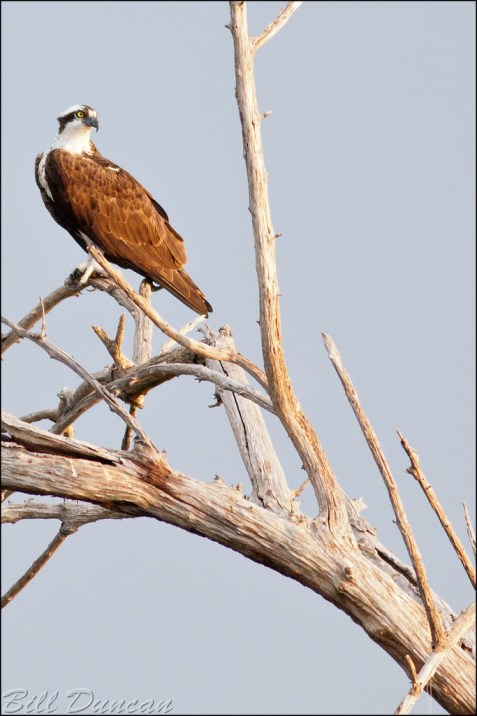
The bird pictured above is an Osprey, also known as the Fish Hawk and is one of several species of conservation concern that benefit from the types of refuge that Riverlands and the other preserved and well-managed habitats in the confluence region provide.  These birds feed almost exclusively on fish so it is of no surprise that these birds utilize the Mississippi River and surrounding waterways during their migration for their supper.  These birds will use man-made structures, such as telephone poles to build their nests.  At RMBS you can find special structures designed for this specific purpose.  To my knowledge, these structures have not been used but the birds have nested in trees nearby for the past several years.

Technical details: Canon EOS 50D camera, EF400mm f/5.6L USM lens, ISO 400,  f/5.6, 1/640 sec

Probably the best known group of birds that rely on the habitat of the confluence region are the waterfowl.  In this day and age, hunting has been one of the bright spots in conservation and management of the types of habitat that ducks and swans rely on during migration.  Without hunters and the money they spend we probably would have lost much more land to development along the Mississippi flyway than we have.  The number of waterfowl hunters has decreased over the past few decades, while the number of bird-watchers, nature photographers and other conservation-minded types has increased.  This is somewhat ironical because organizations that have relied on funds generated from hunting to purchase, protect and manage wetlands are now experiencing budget shortages.  Bird-watching, photography and hiking do not, naturally put money back into the system.  If a new method of fundraising is not found, we may be facing a crisis in the management and protection of these wetlands and the chance to procure new properties for this purpose.  An obvious solution would be for private donations to be given by anyone interested in the protection of these habitats.  Anyone can purchase Duck Stamps, which monies go into managing habitats in which migratory waterfowl rely.
http://www.flickr.com/photos/ozark_bill/6135882341/in/set-72157622457983078/lightbox/

Technical details: Canon EOS 50D camera, EF400mm f/5.6L USM lens, ISO 640,  f/5.6, 1/400 sec

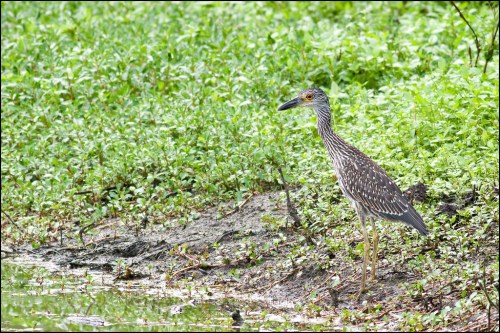
Other groups of birds, the waders, shorebirds, songbirds and others also rely on the habitat found at Riverlands.  This Yellow-crowned Knight Heron, for instance, is a species that is seldomly found here.  One early August morning I came across a group of these juveniles who were making their way south through the Mississippi flyway together.  As you can see, their colors and patterns make them difficult to spot in almost any natural habitat.
Technical details: Canon EOS 50D camera, EF400mm f/5.6L USM lens, ISO 250,  f/6.3, 1/1600 sec

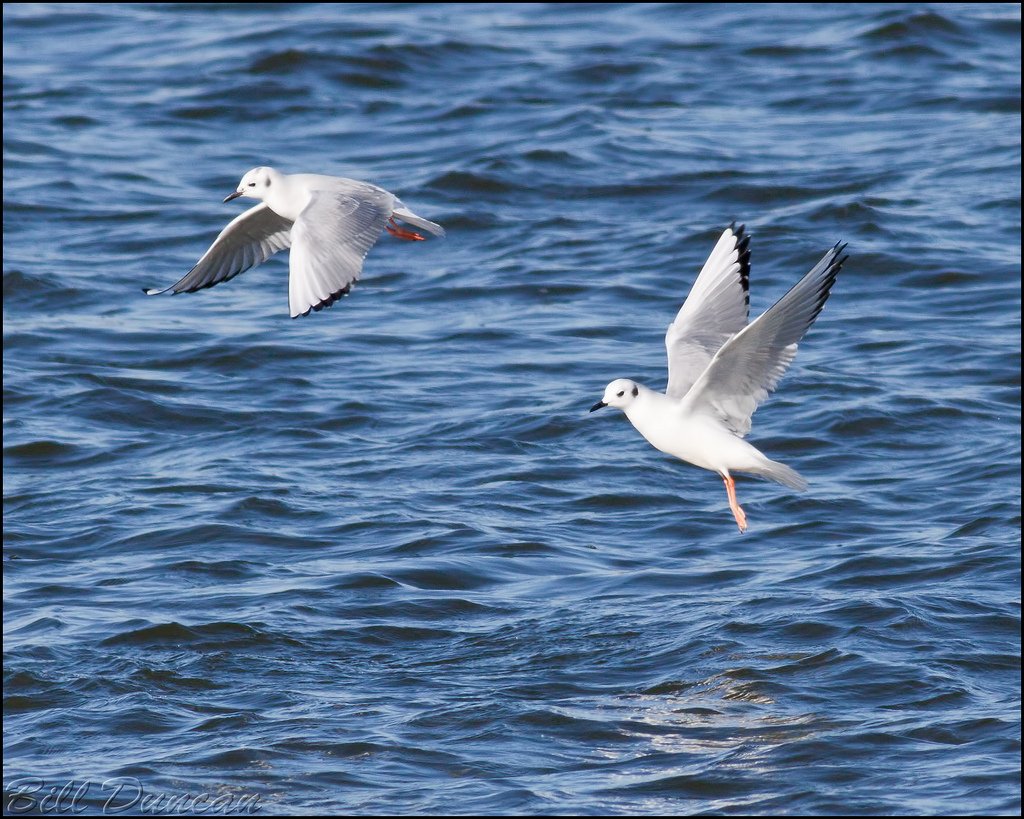
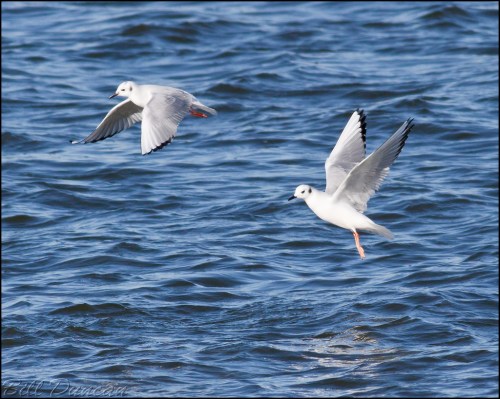
Winter gulls are a very challenging group of birds to identify.  During normal winters, unlike the tropical winter we are experiencing this year, several rare northern migrants can be found along the dam and other man-made structures.  During the dead of winter it is not uncommon to find groups of experienced birders shivering under the frigid temperatures and gale-force winds at the lock and dam at Riverlands looking at hard to distinguish, rather drab gulls through 60X scopes hoping to find that rare gull to add to their year list.  I have done a little of this myself and it can become addicting!  These cute and graceful Bonaparte’s Gulls are rather earlier migrants that favor warmer weather than many other gulls.

Technical details: Canon EOS 50D camera, EF400mm f/5.6L USM lens, ISO 400,  f/5.6, 1/800 sec

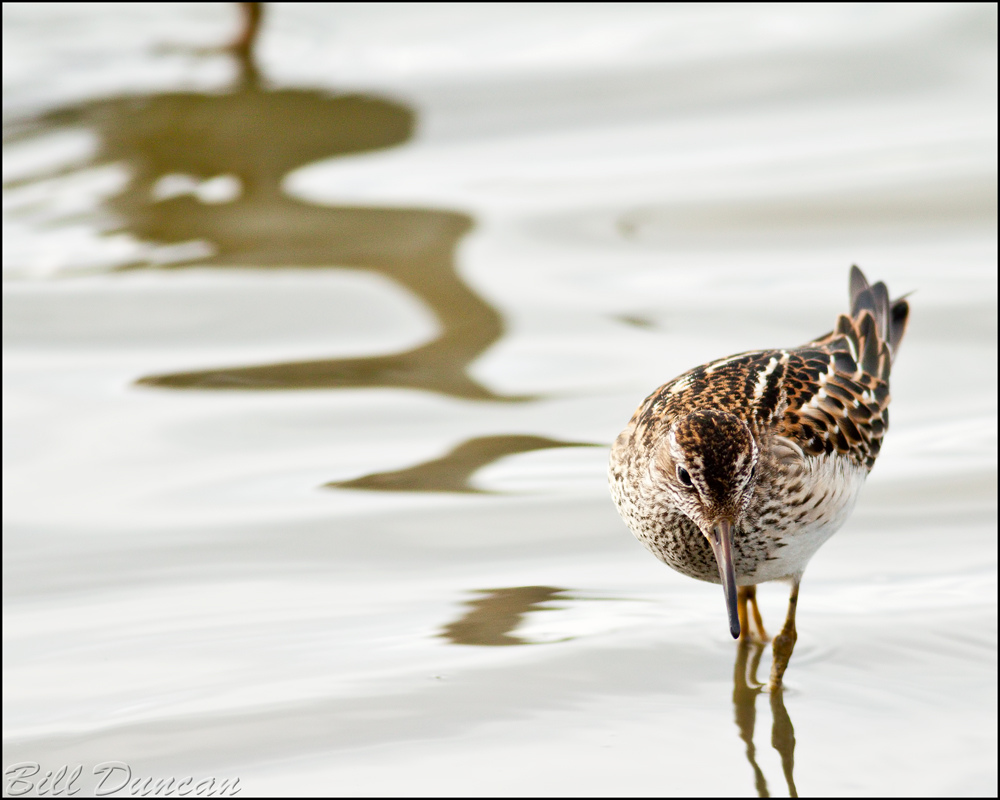
Another challenging group of birds that will have the uber-birder skipping work, church and ignoring family is the shore-birds.  These birds, whom I have recently become enamored with, move through the confluence region mostly during March-May in the spring and August-October in the fall.  These are beautiful, photogenic and biologically fascinating and diverse birds.  The shorebirds are almost strictly a migratory group concerning the confluence region.  These birds have some of the largest migratory routes in the animal kingdom and their routes across Missouri and Illinois vary and can be tricky in predicting.  Farming and other land development practices are hurting this group badly across their migratory route.  Most species of shorebird have pretty narrow requirements or preferences when it comes to the particular habitat and water depth they need to thrive.  Managing a wetland becomes troublesome when the specific needs for a species is considered and skilled management practices are a must.  Unfortunately, almost half of the shorebirds of the new-world are experiencing declining populations, due almost solely to man-made influences.  Serious action needs to be taken to preserve these populations.  You can read more about this by reading the United States Shorebird Conservation Plan.
Technical details: Canon EOS 7D camera, EF400mm f/5.6L USM lens, ISO 400,  f/5.6, 1/800 sec

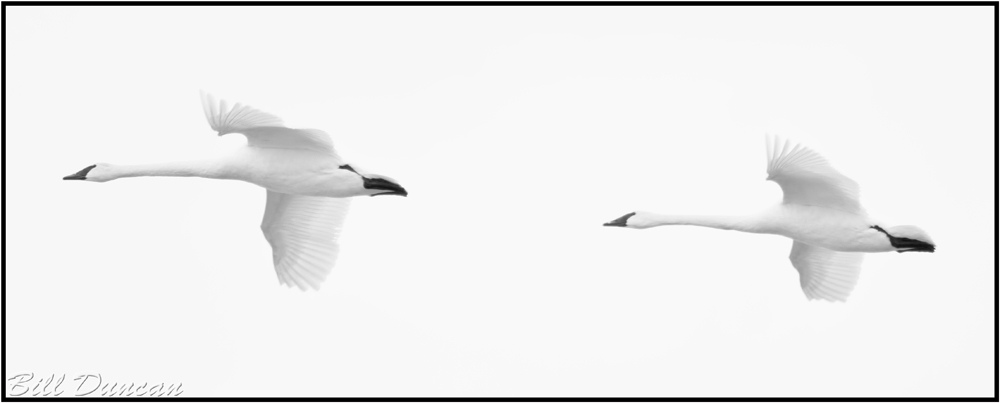
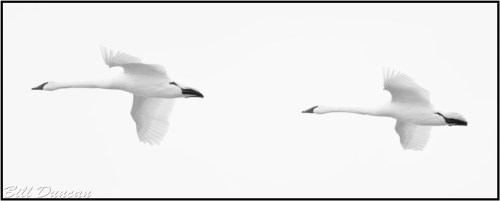
Next to the Bald Eagle, the Trumpeter Swan may be the most recognized bird species of conservation concern that calls the confluence region home during the winter.  Upwards of 400 of these birds and lower numbers of the similar, Tundra Swan can be seen in a single day at Riverlands and surrounding area.  These birds are rugged survivors that spend the majority of their day searching the surrounding farm fields for wasted grain and overnighting in the sanctuary’s water bodies.  These birds, the world’s heaviest that are still capable of flight, are a treasure to watch and photograph.

I often tell people that photographing birds is simultaneously the most rewarding and the most frustrating experience I can think of.  For each of these six images that I am relatively proud of there are at least 500 that were unusable.  Fortune favors the prepared photographer who understands not only how to use their equipment, but understands the behavior of the birds they are after.  Getting close is key, but not getting so close as to disturb the natural behavior and sense of security these wild animals should expect to have.  This is often a fine line.

The confluence region where the Big Muddy and the Father of Waters join was once one of the greatest wetlands areas in all the temperate regions of the world.  Farming and urban sprawl have made considerable changes to these natural habitats.  We can do something to maintain and potentially repair some of what has been lost.