"What a thousand acres of Silphiums looked like when they tickled the bellies of the buffalo is a question never again to be answered, and perhaps not even asked." -Aldo Leopold
As usual, I am woefully behind on processing images this year, probably worse than usual actually. I’ve also not put much work into birds this year, a general trend over the past few years. Too much I’m interested in and not enough time. Anyway, here is some avian miscellany from 2020 so far.
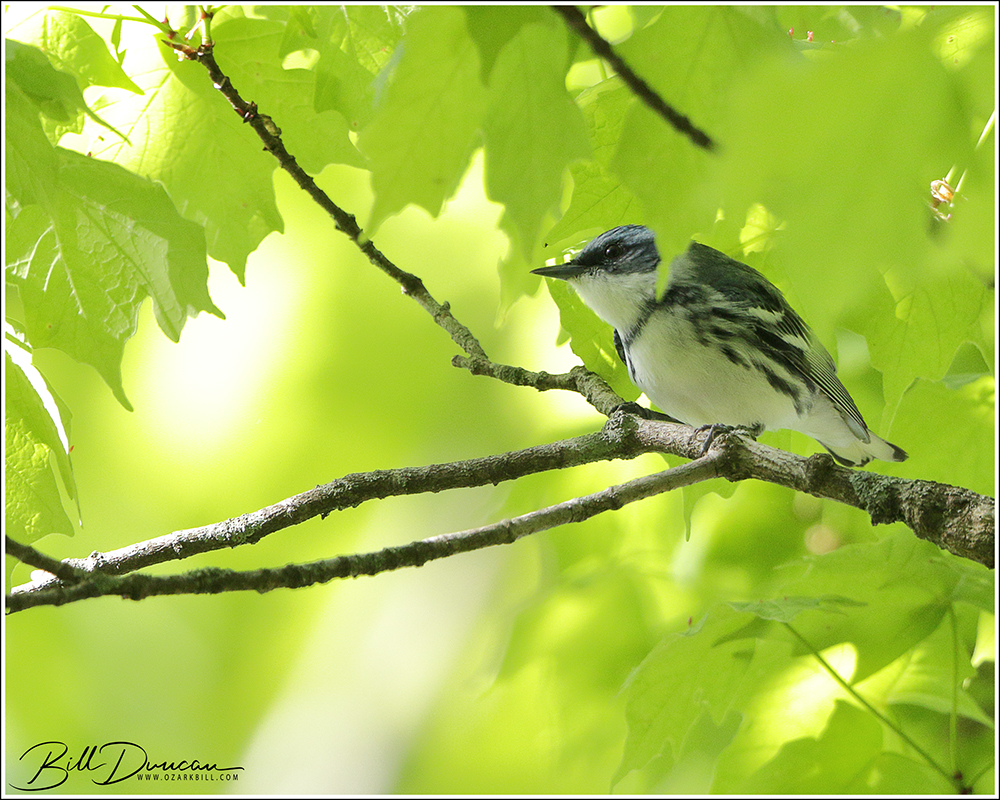
Cerulean Warbler photographed at Weldon Spring C.A.
My quest is to get the perfect Cerulean Warbler shot. These are not it, but getting closer. Better luck next year.
Cerulean Warbler photographed at Weldon Spring C.A.Cerulean Warbler photographed at Weldon Spring C.A.
This pair of Blue-grey Gnatcatchers were also photographed this spring at Weldon Spring Conservation Area.
I was happy to fins this Hairy Woodpecker nest this past spring, but, unfortunately, the parents never got used to my presence so I didn’t spend much time here.
Hairy Woodpecker bringing food to nest, Beckemeier Conservation Area
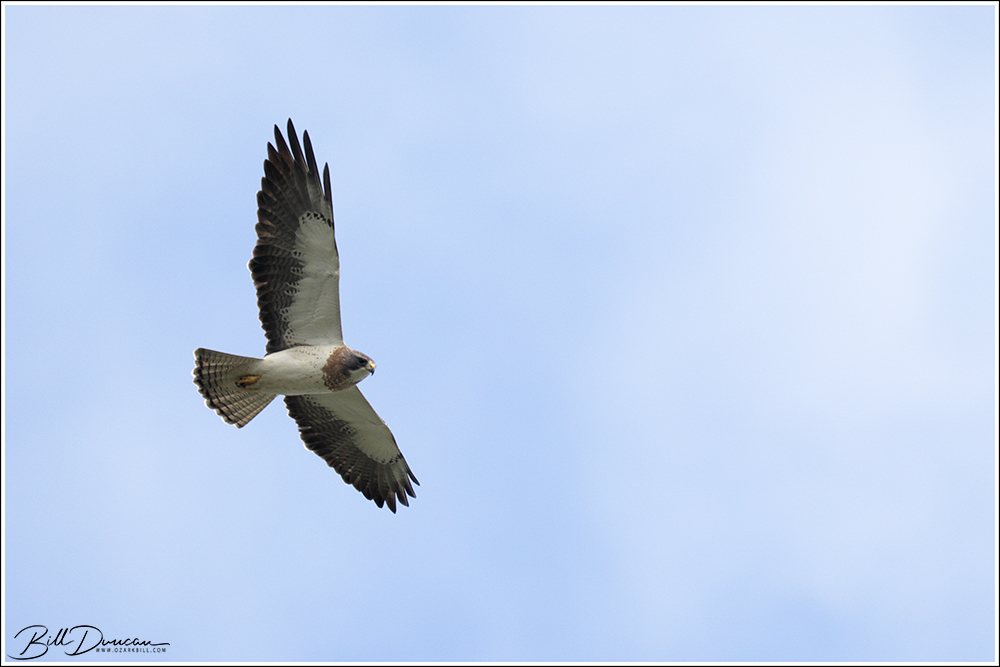
Back in April, Casey and I visited a hotspot for the small population of Swainson’s Hawks in Greene County. These hawks are rare in Missouri and nesting pairs are limited to the southwestern portion of the state.
Swainson’s Hawk
While waiting for more interesting subjects, Killdeer can sometimes get close enough to make it worthwhile. This one was strutting in some pretty good light.
Killdeer, RMBS
Finally, this Red-winged Blackbird was captured establishing his territory outside the Audubon Center in early spring.
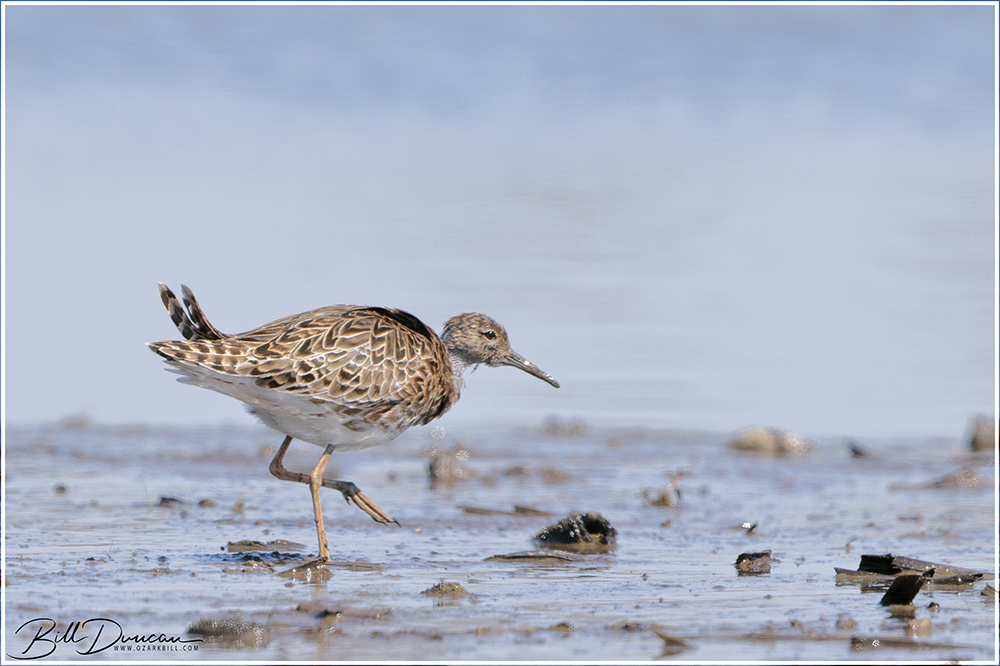
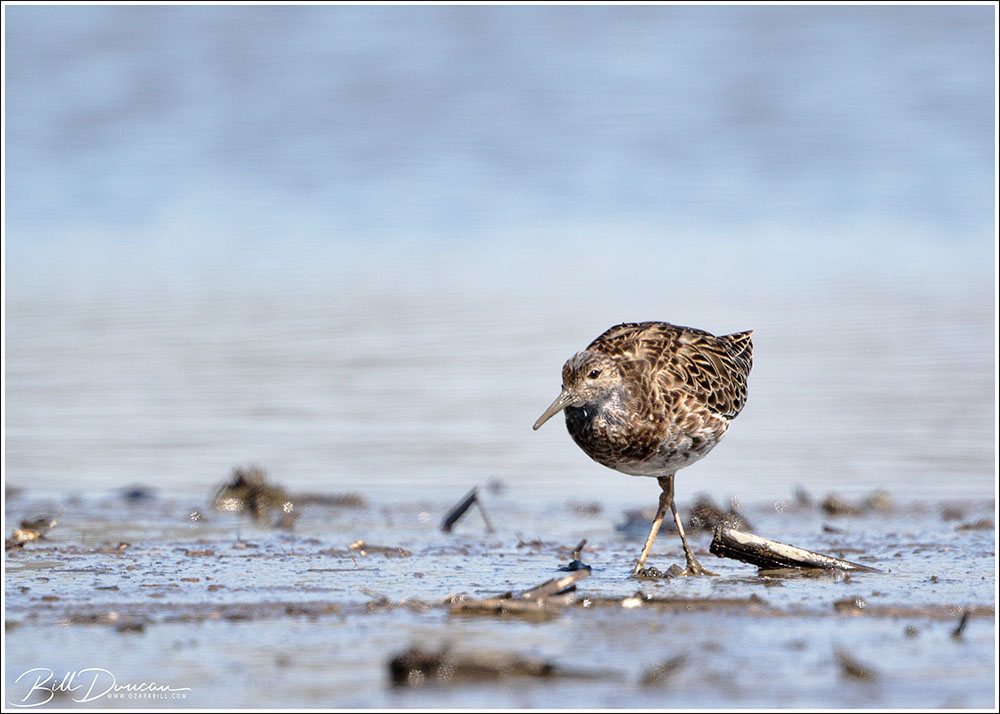
Ruff (Calidris pugnax) Camera settings: f/8, 1/1000 sec., ISO-640, 1120 mm focal length equivalent.
Never have I worked so hard to get mediocre photos of such an ugly bird. The sky was clear, the air cool and this combination created a terribly turbulent atmosphere over the mud flats the bird was foraging in, making it near impossible to get the sharpness desired in a photograph.
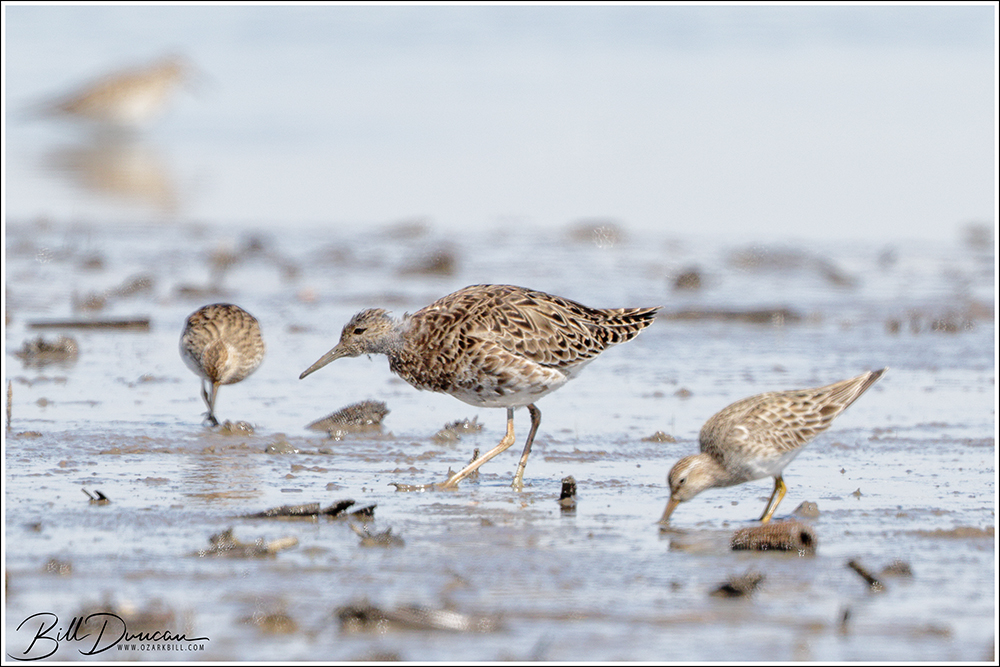
Ruff (Calidris pugnax) Camera settings: f/5.6, 1/1250 sec., ISO-400, 1120 mm focal length equivalent.
The Ruff is a bird that is native to Eurasia, visiting North America somewhat regularly. There have been sightings of this species in Missouri and Illinois in the recent past (at least three during this spring), but this is the first one I’ve been able to track down and photograph. Josh Uffman happened to discover this bird near Riverlands Migratory Bird Sanctuary on April 18th while we were in the area. I want to thank Josh who turned on the St. Louis birding community to this special visitor from overseas.
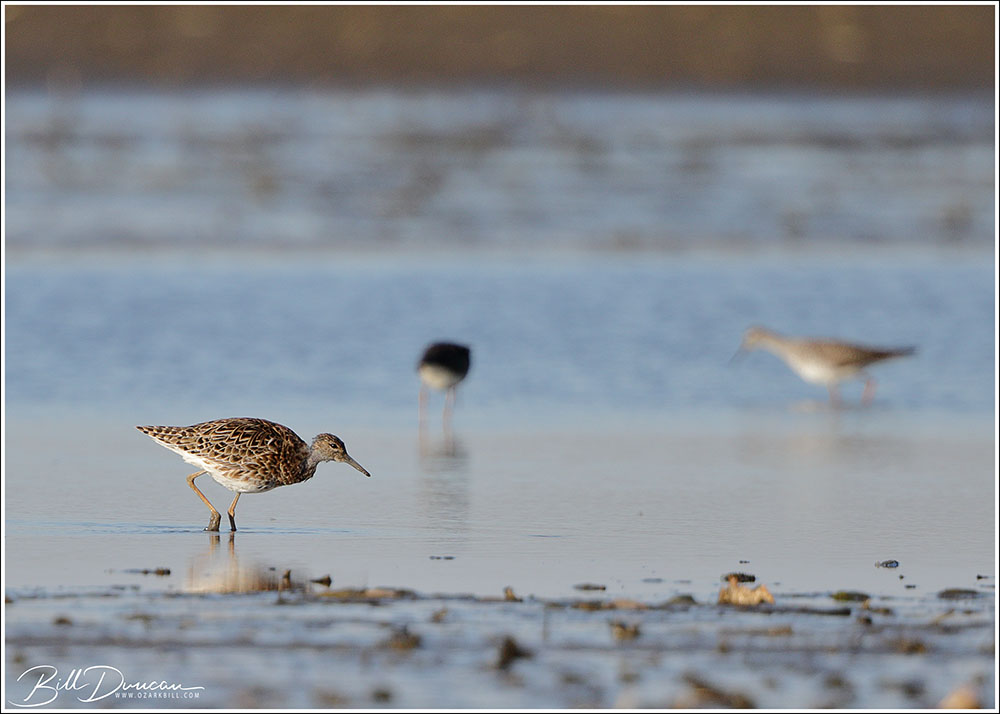
Ruff (Calidris pugnax) Camera settings: f/8, 1/1000 sec., ISO-640, 1120 mm focal length equivalent.
The Ruff is a member of the Calidris genus of shorebirds. Local members of this group include many of the sandpipers we are familiar with, like the peeps, Dunlin and Red Knot.
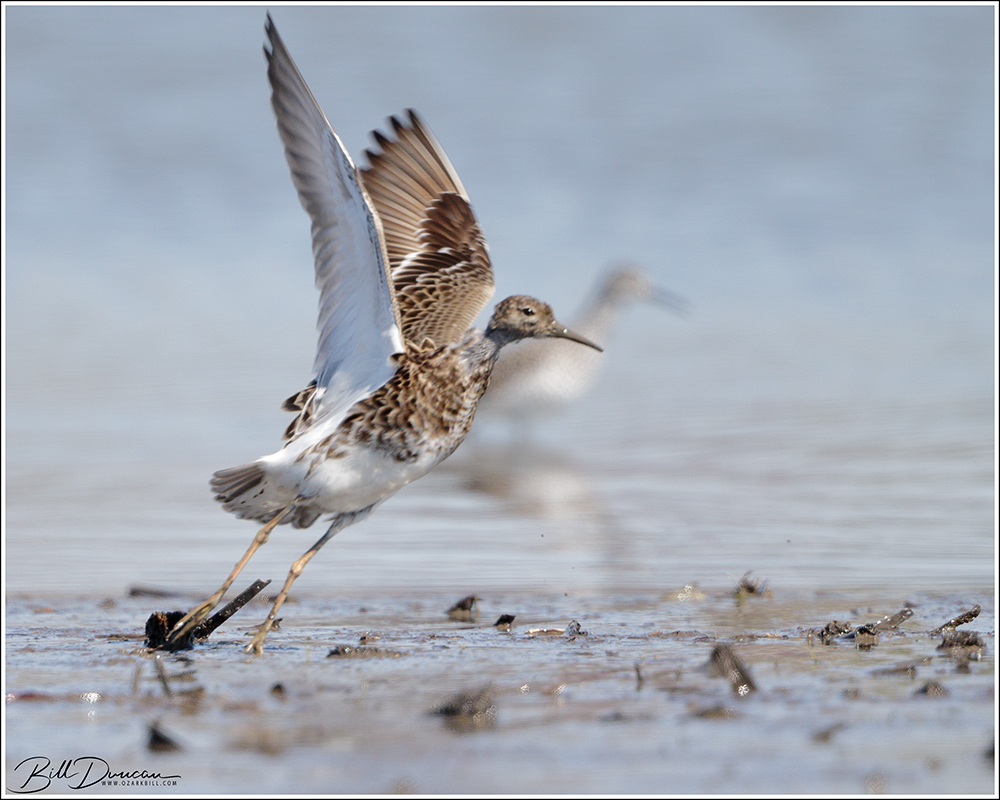
Ruff (Calidris pugnax) Camera settings: f/5.6, 1/1000 sec., ISO-200, 1120 mm focal length equivalent.
I know I called this particular bird ugly earlier in the post. However, if you are not familiar, look this bird up on the internet or your favorite bird guide. The birds in breeding plumage are absolutely stunning and their behavior on leks makes them a very special bird.
Ruff (Calidris pugnax) Camera settings: f/5.6, 1/1250 sec., ISO-400, 1120 mm focal length equivalent.
These were just a few of the couple thousand or so photos of this bird taken on that day. Most were boring shots of the bird foraging in the flooded farm field. Perhaps one day I’ll be fortunate enough to see these guys on their leks.
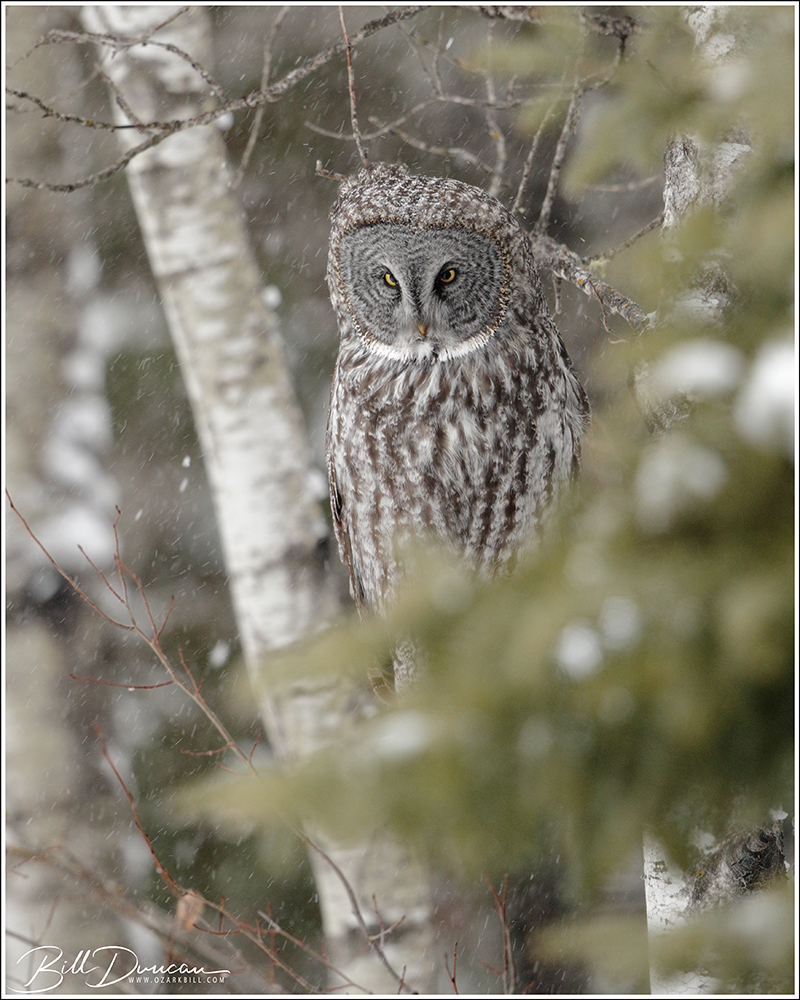
Great Grey Owl, Sax-Zim Bog, MN. Camera settings: f/5.6, 1/200 sec., ISO-4000, 1120 mm focal length equivalent.
First up is the Great Grey Owl that Miguel, Dave and I found on our trip to northern Minnesota in late December, 2019.
Great Grey Owl, Sax-Zim Bog, MN. Camera settings: f/5.6, 1/125 sec., ISO-1250, 1120 mm focal length equivalent.
Great Grey Owl, Sax-Zim Bog, MN. Camera settings: f/4, 1/200 sec., ISO-800, 800 mm focal length equivalent.
Northern Hawk Owl, Sax-Zim Bog, MN. Camera settings: f/10, 1/640 sec., ISO-320, 1600 mm focal length equivalent.
Next is the Northern Hawk Owl photographed on the same trip. We really enjoyed watching these guys as they hunted in broad daylight from their high perches. You never knew when they would take off in a powered flight after a prey.
Northern Hawk Owl, Sax-Zim Bog, MN. Camera settings: f/5.6, 1/250 sec., ISO-640, 1120 mm focal length equivalent.
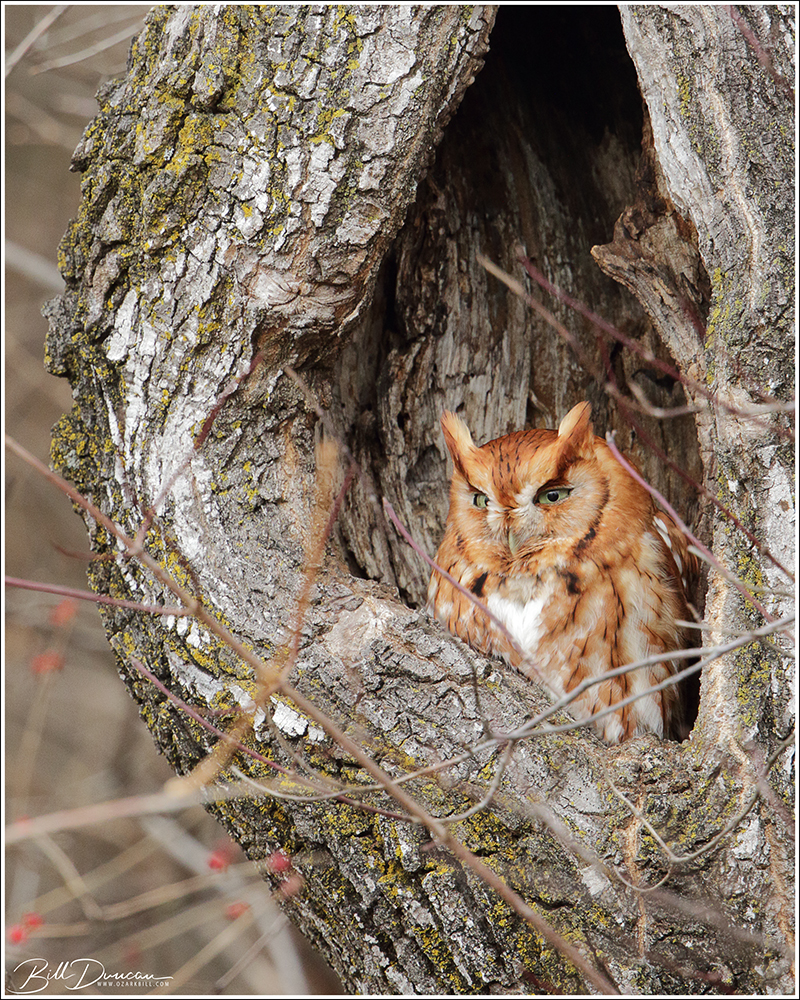
Eastern Screech Owl, Grafton IL. Camera settings: f/5.6, 1/200 sec., ISO-1600, 1120 mm focal length equivalent.
Last of all is this gorgeous red-phase Eastern Screech Owl. Whether it is the same owl, or multiple birds using the same hole in this tree, this species has been observed using this cavity for at least the past three winter seasons at the Visitor’s Center in Grafton, IL.
Eastern Screech Owl, Grafton IL. Camera settings: f/5.6, 1/320 sec., ISO-1250, 1120 mm focal length equivalent.
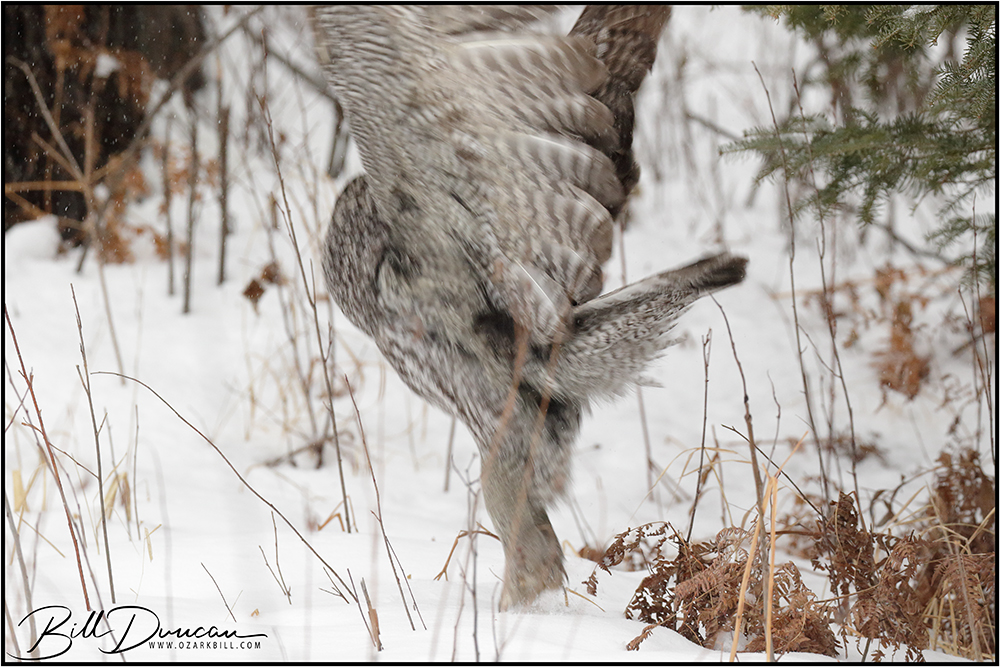
GGOW – Locked on target. f/5.6, 1/320 sec., ISO-2000, 445 mm focal length equivalent
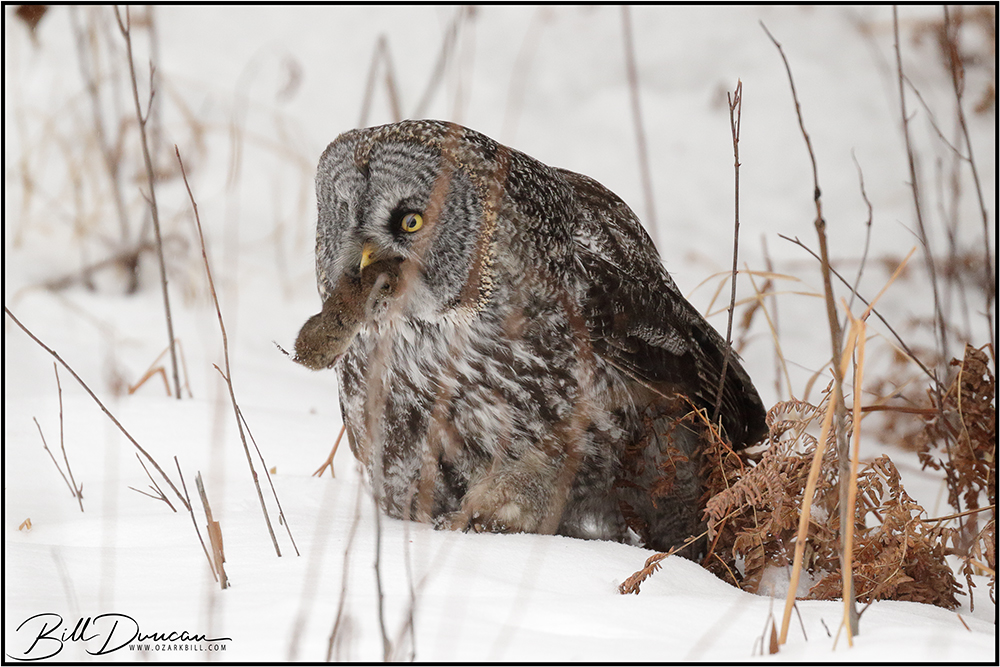
During December of 2019, Miguel, Dave and I were fortunate to have this Great Grey Owl successfully hunt and ingest a vole along the roadside in the Sax-Zim Bog. Here is what portions of the sequence I was able to capture.
GGOW – Locked on target. f/5.6, 1/320 sec., ISO-2000, 445 mm focal length equivalent
GGOW – Immediately after capture. f/5.6, 1/320 sec., ISO-2000, 640 mm focal length equivalent
GGOW – With prey. f/5.6, 1/320 sec., ISO-2000, 278 mm focal length equivalent
GGOW – Check out feathered legs. f/5.6, 1/320 sec., ISO-2000, 278 mm focal length equivalent
GGOW – Always head first. f/5.6, 1/320 sec., ISO-2000, 278 mm focal length equivalent
GGOW – Down the hatch. f/5.6, 1/320 sec., ISO-2000, 278 mm focal length equivalent
GGOW – Down the hatch. f/5.6, 1/320 sec., ISO-2000, 278 mm focal length equivalent
GGOW – Down the hatch. f/5.6, 1/320 sec., ISO-2000, 278 mm focal length equivalent
GGOW – All gone. f/5.6, 1/320 sec., ISO-2000, 278 mm focal length equivalent
GGOW – Back to the hunt. f/5.6, 1/320 sec., ISO-2000, 480 mm focal length equivalent
This post is an article that was originally published in the Webster Groves Nature Study Society’s journal, Nature Notes (November, 2019, Vol. 91, No. 9).
I have previously shared a fair amount of material regarding the Ruby-throated Hummingbird nest. You can find more photos and video at the following locations: RTHU Part One, RTHU Part Two, RTHU Part Three.
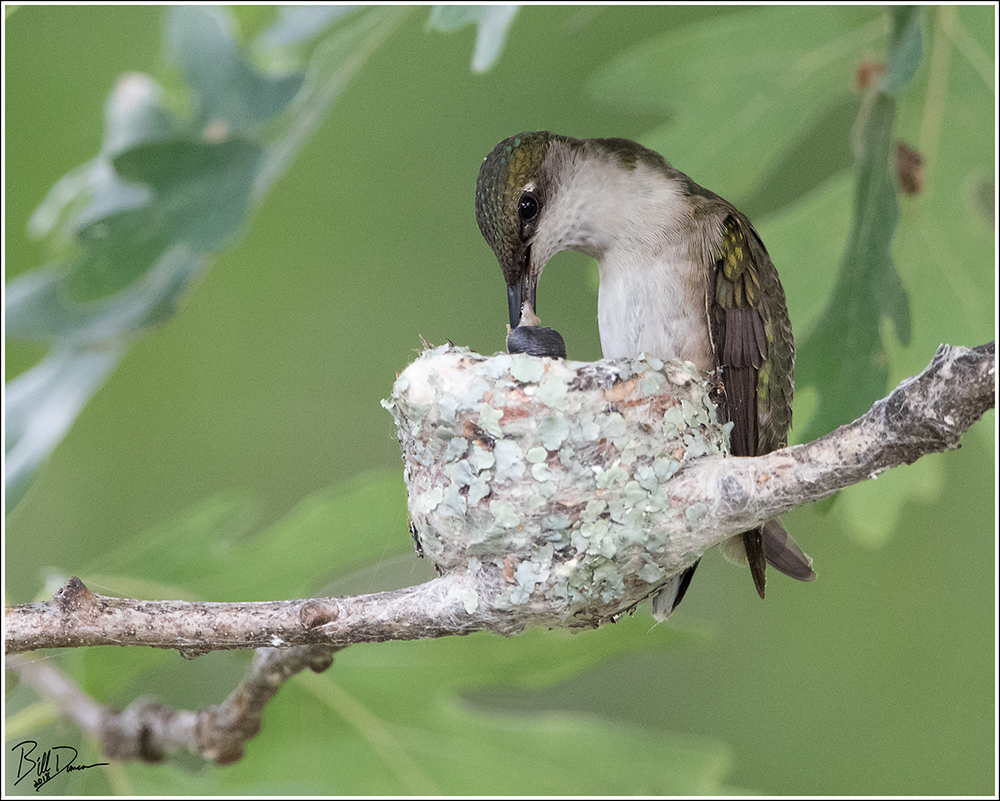
Mom feeding on the last day chicks remained at nest. She will continue to feed the chicks for up to two weeks following fledging until they are capable of feeding on their own. Photo by Bill Duncan.
During the summer of 2018, I had the opportunity of a lifetime to watch a mother Ruby-throated Hummingbird (RTHU) incubate and raise a pair of offspring. To make these observations, I simply needed to step onto my back deck and pull up a chair. Mom had built a nest approximately 30 feet away and eight feet off the ground. From the deck, I had an almost eye-to-eye vantage into the nest.
Knowing my interests in Nature and photography, my kind next-door neighbors turned me on to the nest on July 13th. The white oak branch that the nest had been built upon was on their property in St. Louis County. Along with taking nearly 50,000 photographs of the nest and growing birds, I also collected rudimentary data focused on the nesting habits of mom. This should not be considered exactly ‘scientific’, but I do find it interesting enough to share.
I began collecting the following data on July 17th: time mom spent on or off the nest in one-minute increments, weather data (temperature, wind speeds. and sky cover), number of times she visited the artificial feeder in my yard that was approximately 20’ from the nest location, chick feeding, and other bits of behavior (e.g. encounters with other RTHU in the area, behavior of mom in severe weather, etc.).
Incubation behavior
From my angle of viewing, I could not see directly inside the nest. However, going by the behavior of mom, I believe the two eggs (most typical clutch size for RTHU) hatched during the night of July 25/26, so the data I am sharing for the incubation period covers the final nine days (7/17–7/25) of incubation. Incubation typically takes ~12–14 days (Robinson et al. 1996), so I assume the eggs were in the nest prior to the initiation of my data collection and it is likely eggs were laid on or near July 13th.
I collected incubation behavior data for a total of 753 minutes, averaging 83.7 minutes per day (59–130 minutes), the majority of which was in the first 1-3 hours of daylight each day. I observed mom on the nest 69% of the time (520 min.). This closely matches the ~75–85% of the time on nest reported of RTHU incubation activity (rubythroat.org, journynorth.org). Mom spent 31% of the time (233 min.) away from the nest and these trips off the nest (n = 56) averaged 4 minutes, 5 seconds (1–18 min.). During her time off the nest, I recorded her visiting the artificial feeder in my yard 26 times for an average visitation of a little more than 2x per hour of observation. Unfortunately, I wasn’t diligent at watching the feeder and likely missed a few visits.
Regarding the time it takes for incubation and fledging to occur in the RTHU, I felt that it seemed a bit long on both compared to birds of similar size. With some investigation, and not surprising, there is a strong correlation between egg volume and incubation timing (Worth, 1940). Someone who pays little to no attention to birds would easily realize how much greater volume a Mourning Dove egg (0.34 cu. in) has than a RTHU (0.03 cu. in.) egg. However, it would probably surprise them, and potentially you, dear reader, to know that eggs of both species hatch in approximately the same number of days (Worth, 1940). Therefore, there is indeed a delay in the amount of time expected for a complete nesting cycle in the RTHU when compared with other similarly-sized species. The primary reasons for this may be obvious. Mourning Doves provide bi-parental care, meaning males help with both incubation and feeding of young. For the RTHU, mom is on her own; the father typically provides nothing but genetic material. Consequently, female RTHU are compelled to take more frequent trips from the nest to feed and leave the eggs or chicks relatively exposed to the environment (cooling). The second primary reason for this delayed development is the size of the RTHU eggs. Objects with larger volumes can retain heat longer. Considering the ~30% of the time mom spends doing things other than incubating and the small volume of these eggs, this longer than expected nesting cycle for the RTHU is not surprising. This naturally poses questions regarding selection pressures for and against species where males provide little to no care in their offspring. This has not much to do with my personal observations, but I thought an interesting aside.
Chick rearing behavior
The first time I was able to see the chicks above the level of the nest was when they were approximately 6 days old. Photo by Bill Duncan.
Chick rearing prior to fledging took place between July 26th and August 16th for a total of 21 days from hatching to both chicks fledging. This falls within the range of time reported to fledging (18-22 days) by Robinson et al. (1996). During the 3,846 minutes I observed the nest during this period, mom fed her chicks 124 times for an average of a little less than two times per hour. With my closeness to the nest and using sufficient optics, it was sometimes easy to see that mom was feeding a mixture of nectar (presumably a mixture of natural and artificial) and small arthropods that she collected in the bug-rich environment of our neighborhood.
At 11 days, the chick’s eyes were open and they were voracious feeders. Photo by Bill Duncan.
Mom brooded the two chicks following hatching, staying on the nest for similar periods of time presumably to provide heat and avoid exposure to the altricial young. Mom spent significant portions of time on the nest between July 26th and August 3rd. During these eight days, I observed the nest for 1,052 minutes and recorded mom on the nest 52% of this time (543 min.). I presume, but did not document, that mom stayed on the nest most or all the nighttime hours during this period as well as during incubation.
At 15 days, mom takes a break after feeding, but chicks are expecting more. Photo by Bill Duncan.
On August 4th, her behavior changed dramatically. From this date until fledging, mom only spent a total of three minutes on the nest. It is likely that after eight days out of the egg, a physiological switch was turned on, and/or, sufficient feather development enabled the chicks to maintain their own body temperature. From this date until fledging, mom spent most of her time foraging and often was seen perched within eyeshot of the nest. She only physically visited the nest to feed or provide shelter from rain and winds.
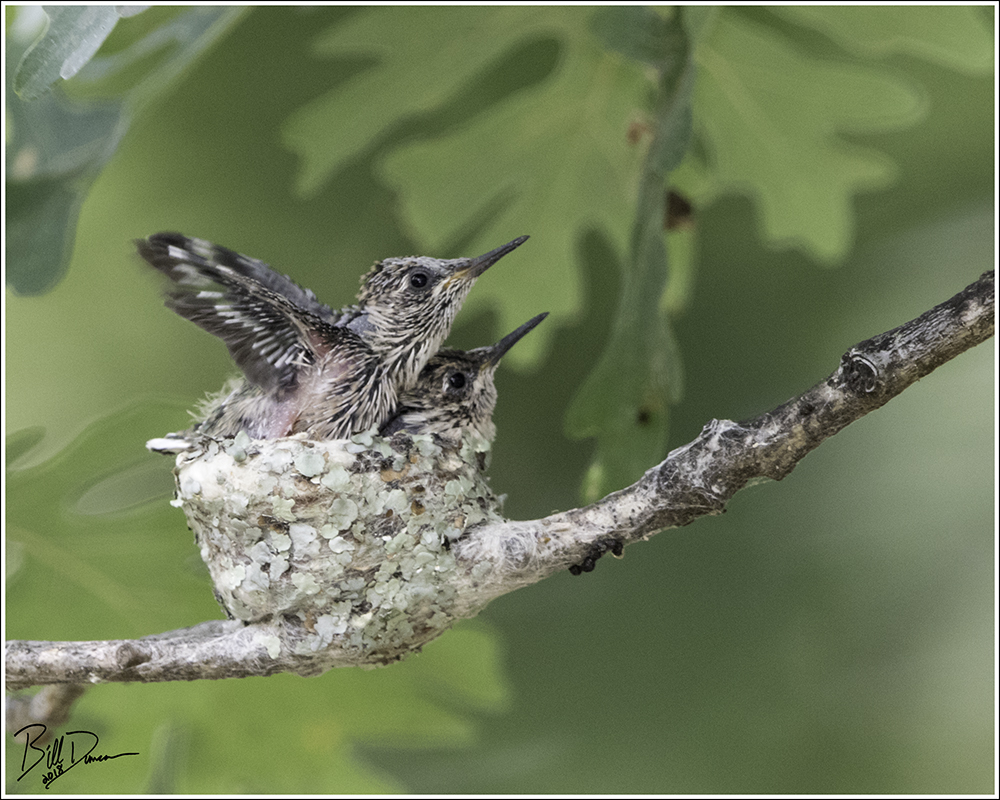
At 18 days, the chicks were beginning to try out their wings. The larger/older chick started this behavior first. Photo by Bill Duncan.
Documenting these observations gave me something to do while waiting to get my action shots of this wonderful story. I hope these words and the documenting photos adequately describe this experience and hope that you might be fortunate enough to experience a similar story.
No more room in the nest. On the final day in the nest (day 21), the chicks reassure each other. Photo by Bill Duncan.
Robinson, T.R., R.R. Sargent, and M.B. Sargent. 1996. Ruby-throated Hummingbird, Archilochus colubris. In The Birds of North America, no. 204. Edited by A. Poole and F. Gill. The Academy of Natural Sciences, Philadelphia, and The American Ornithologists’ Union, Washington, D.C.
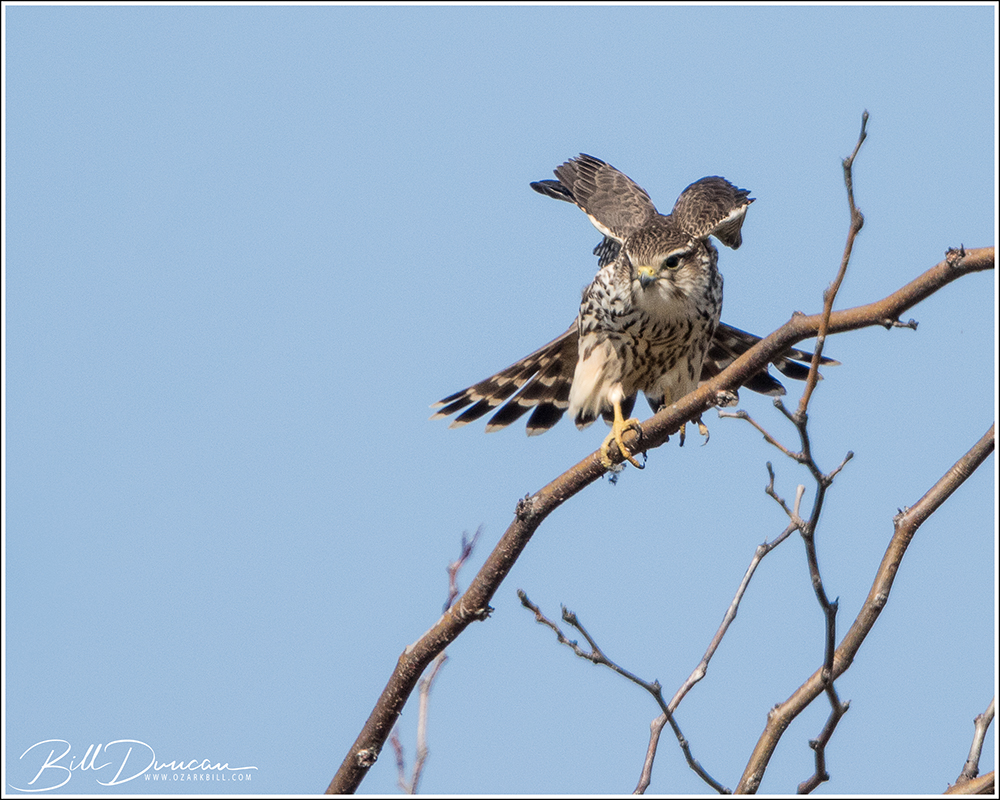
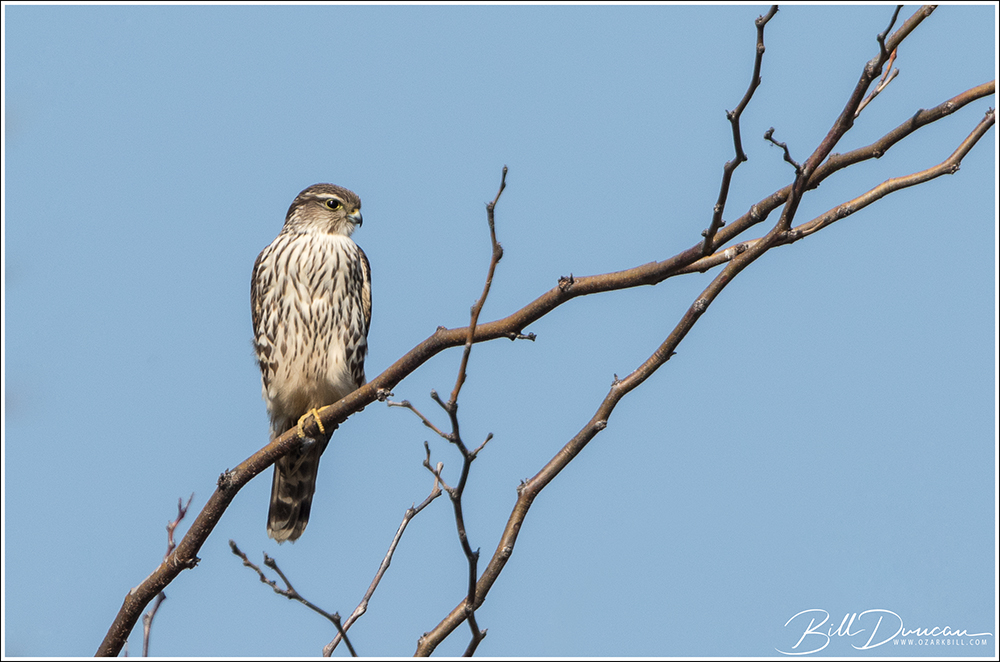
A trip to Riverlands Migratory Bird Sanctuary last weekend paid off. I crossed paths with this juvenile Merlin, my first of this season, three different times. In this instance I had my camera prepared. He kindly perched long enough that I could swap for the 2X teleconverter. I think the 2X performed pretty well in this perfect light, but heat distortion was a major problem on this cool but sunny day.
It’s been quite some time since I’ve shared a blog post. This has primarily been due to being in a residence move that is seemingly never going to end. But, I have been finding time here and there to make new images and even get some post-processing done. I have switched themes in this blog, picking a theme that should allow me to create a “portfolio” page to showcase my stronger photos. Unfortunately, I haven’t been able to figure out how to do this in WordPress. So I have not gotten far in this endeavor.
My goal is to post more frequently, just to share photos. There may not be a lot of accompanying text, but will depend on the subjects, my amount of free-time and my mood.
Greater Prairie Chicken in golden light
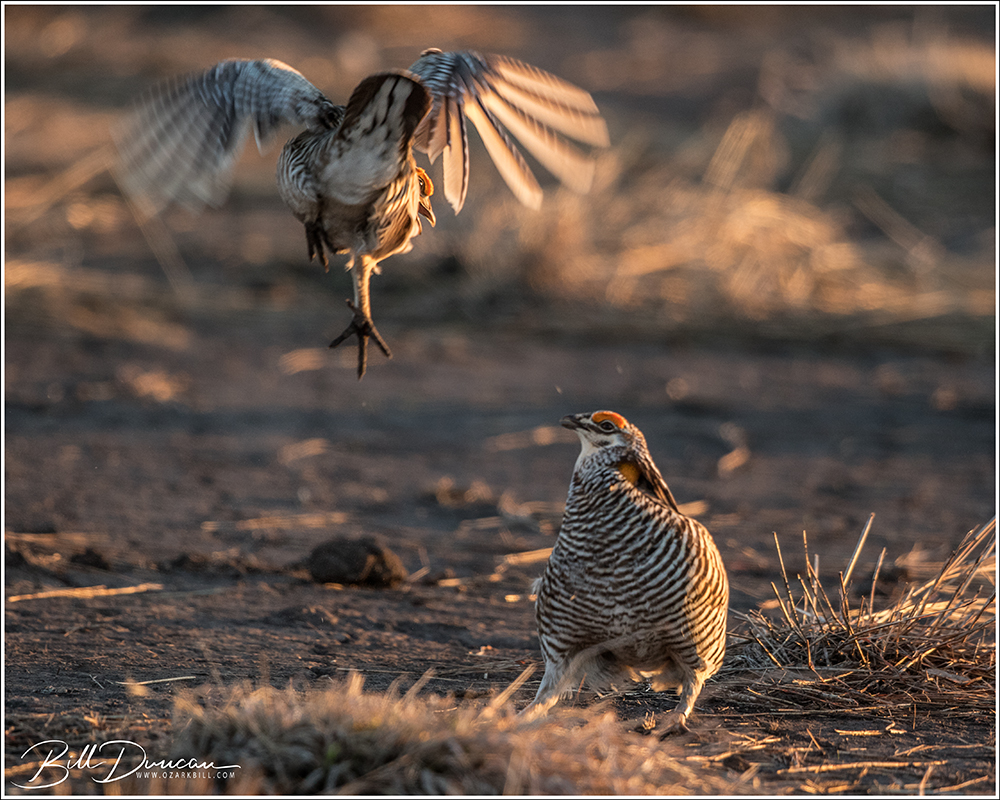
The images in this post were taken back in April of 2019 during a WGNSS Nature Photo Group outing to Dunn Ranch Prairie. This visit was close to the end of the lekking period and was the latest date that the MDC was keeping the blind open. This was different than our previous visit when we visited in the earlier part of the season and had pros and cons associated.
Boomer
Visiting the lek later in the season created better chances for better light (clear skies) and warmer weather. However, what we didn’t expect was that the females typically choose the dominant males to copulate with in the earlier days of the season and will often be nesting come the later days of the lekking season. This is what we had found during this visit. We did not see a single hen during this visit.
The standoff
Because there were no hens to compete for, the males had no heart for the competition. We had very few opportunities to photograph the action we had witnessed during our first visit to the lek two years prior.
One of the few opportunities to capture a fight between males
The light, however, was spectacular – we had no reason to complain and we all made memorable portrait style photos of these birds booming, dancing and cackling.
Never a disappointment, hopefully this Missouri population somehow continues to hang on so that WGNSS members can continue to enjoy this spectacle in Missouri.
























 A Thousand Acres of Silphiums