June 2023 Update
In June of 2023, Casey, Pete, Miguel and I headed back to the same location in hopes of finding and photographing the adults of this species. Unfortunately, we were likely too late and could not find a single adult in flight. However, we looked over the site, looking closely at the Pedicularis canadensis to see if we might find females laying eggs. We had no luck with this and found no eggs nor larvae. Pete’s botanical eye did find a single Aureolaria grandiflora, where he found an egg mass. On closer inspection, I concluded that these were definitely butterfly eggs. A quick Google search confirmed that these were indeed checkerspot eggs! Now I need to photograph the beautiful adults and the absolutely stunning chrysalis of this species in order to capture every life stage of this fantastic creature.
Thinking on this further, on what has been described of this species (read more below), this makes perfect sense. We were not likely to find larvae on P. canadensis, nor find the females depositing eggs. Eggs are typically deposited on A. grandiflora, whereupon the larvae feed until the end of the season, moving on to finish this stage in the spring where the feed on P. canadensis.
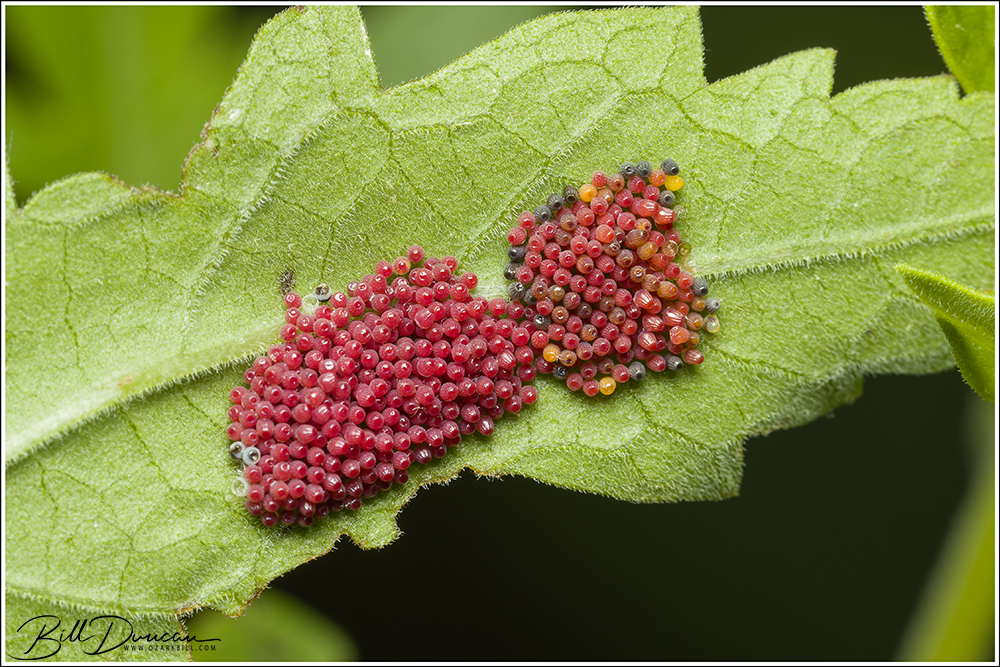
End of June 2023 update.
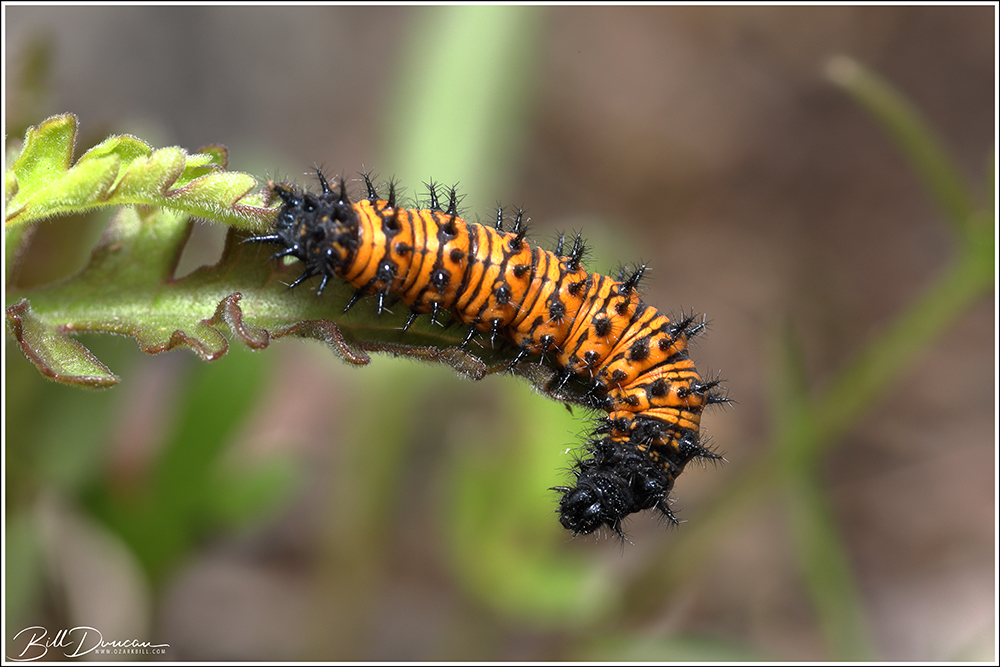
Early April, 2020, Casey and I head to the southwest corner of the state looking for multiple subjects. Our primary target of this trip was to check for caterpillars of a rare subspecies of the Baltimore Checkerspot (Euphydryas phaeton ozarkae). This subspecies occurs primarily in the Arkansas Ozarks, but can be found in extreme southern Missouri.

The main distinction that separates this purported subspecies is habitat and host plant preference. The primary habitat for E. phaeton phaeton is marshy wetlands, while E. phaeton ozarkea prefers oak woodlands. The primary host plant for E. phaeton phaeton are the turtleheads (Chelone sp.) while E. phaeton ozarkea primarily uses false foxglove (Aureolaria grandiflora). These animals will overwinter as caterpillars and then will often find new host plant species the following year – as shown in these photographs, they are using lousewort (Pedicularis canadensis). They will then pupate in May to June of their second year.

Browsing the literature, there seems to be some who question the legitimacy of the subspecific status of of E. phaeton ozarkae. Is this simply a case of an opportunistic generalist finding new ways to make a living in varying habitats, or is there a concrete genetic distinction between these two? From what I’ve been able to tell, there does not seem to be a consensus. If you are aware of any newer literature that might shed light here, please let me know.
-OZB
 A Thousand Acres of Silphiums
One thought on “The Ozark Baltimore Checkerspot???”