Eastern Bluebird Nesting Season – 2023

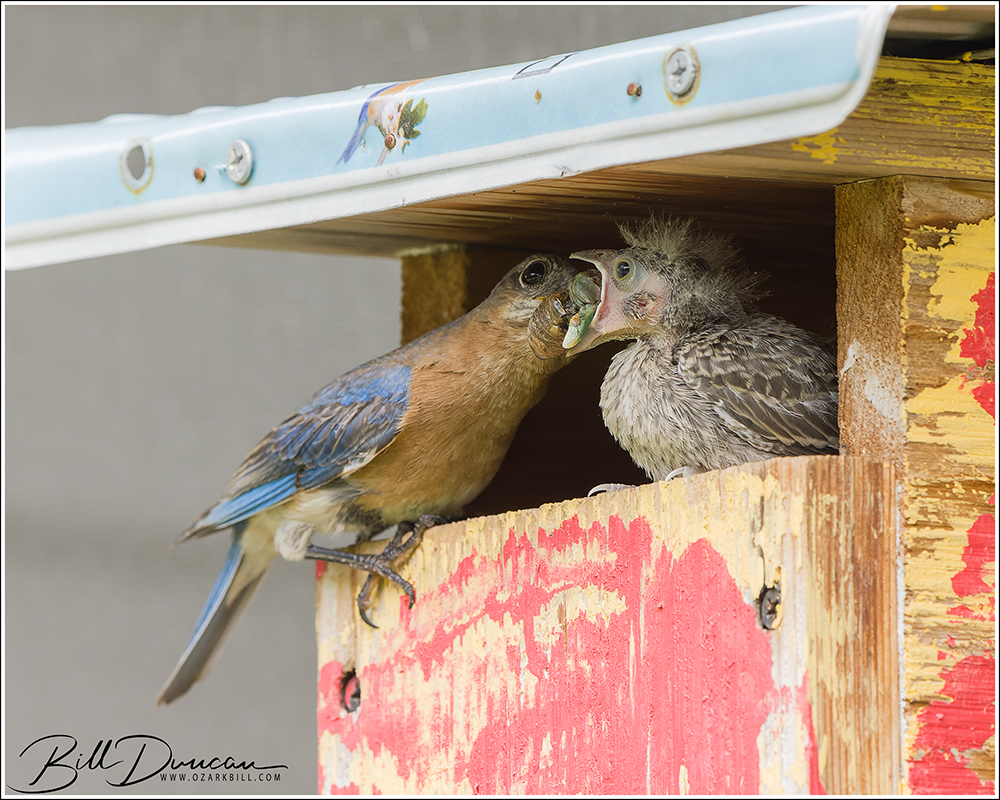
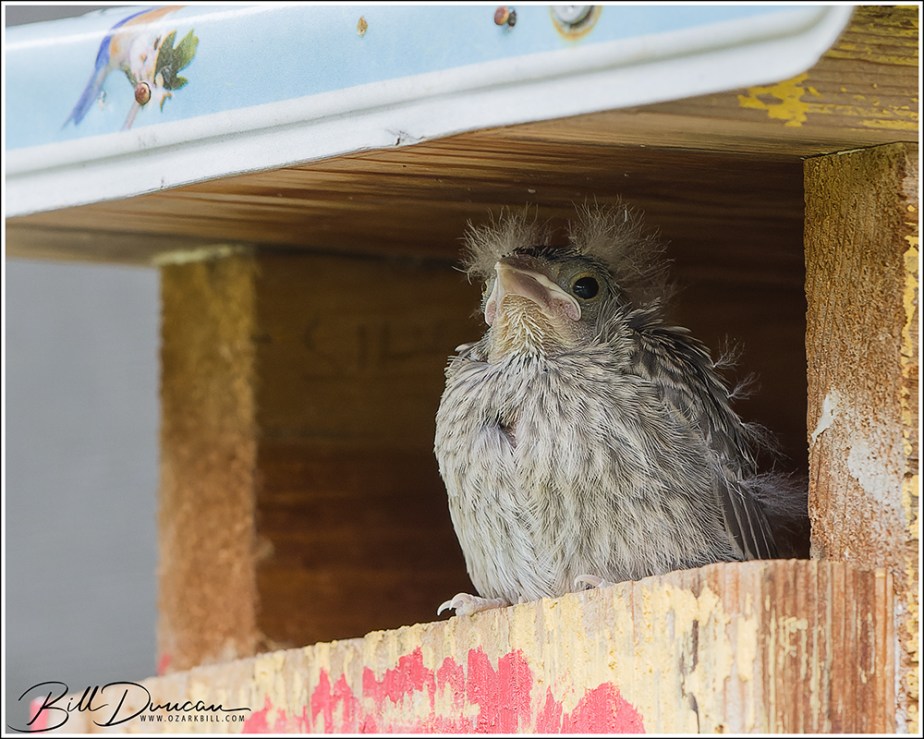
The Bluebirds had another great year. I was much to busy to do the typical monitoring I normally like to do, but they did have three clutches this year with a total of 12 fledged birds (3, 5 and 4 eggs in 1st, 2nd and 3rd nests). Immediately after putting up the nest box in early March, a pair took control and made their first nest. After completing this, I cleaned the box and began a daily routine of removing nesting material from the non stop Eurasian Tree Sparrows. I removed nests 1-2 times per day, often removing up to eight inches of nest and sometimes with an egg or two. They were relentless. This went on for at least six weeks. I was wondering why the Bluebirds didn’t come in and take over so I could have a break when I finally decided to have a look in the Wren box, which they did use in a previous year. Yep, inside I found five young chicks (nest 2). I took advantage of this and was able to take a few photographs that I am sharing here. They then went back to the Bluebird box for their third nest. These chicks fledged a couple weeks ago.

I knew the ETS would be back to this box in a heartbeat like they do every late summer and fall, so I removed the Bluebird box for the season. I think three clutches for the season is great, although it wouldn’t have surprised me to see that the Bluebird pair might try for a forth. But, I think it might be better not to push the female too far and let her build some fat for the winter.

Eastern Bluebird Nest – 2021

In the spring of 2021, I finally put up a couple of nest boxes in the yard of the new house. Both boxes were built and gifted by my father, Bart Duncan. Much appreciation! One box was designed specifically for bluebirds and a pair quickly staked their claim. They had an initial successful clutch, fledging three chicks, but on the next attempt, tragedy struck. During my monitoring visit, where there had been four half-developed chicks the day before I found not a single one. I believe the neighborhood racoons made a meal of them sometime during the night, leaving no evidence. It was early enough in the year that I wasn’t surprised that the pair tried again, but what surprised me was that they did not build a nest in the bluebird box, but used a box that was designed for Carolina Wrens that was bolted to the side of our screen porch. It made for some great photo opportunities that I am sharing here. I learned from my mistakes and have installed a baffle around the pole to the bluebird box along with a wire cage over the nest entrance. If a brood predator wants to get at them now they will really have to try hard. I am happy to say that to date, in the 2022 season, the pair successfully fledged two clutches – one of six and one of five chicks. Eleven new bluebirds this year, flooding the subdivision with bluebirds!

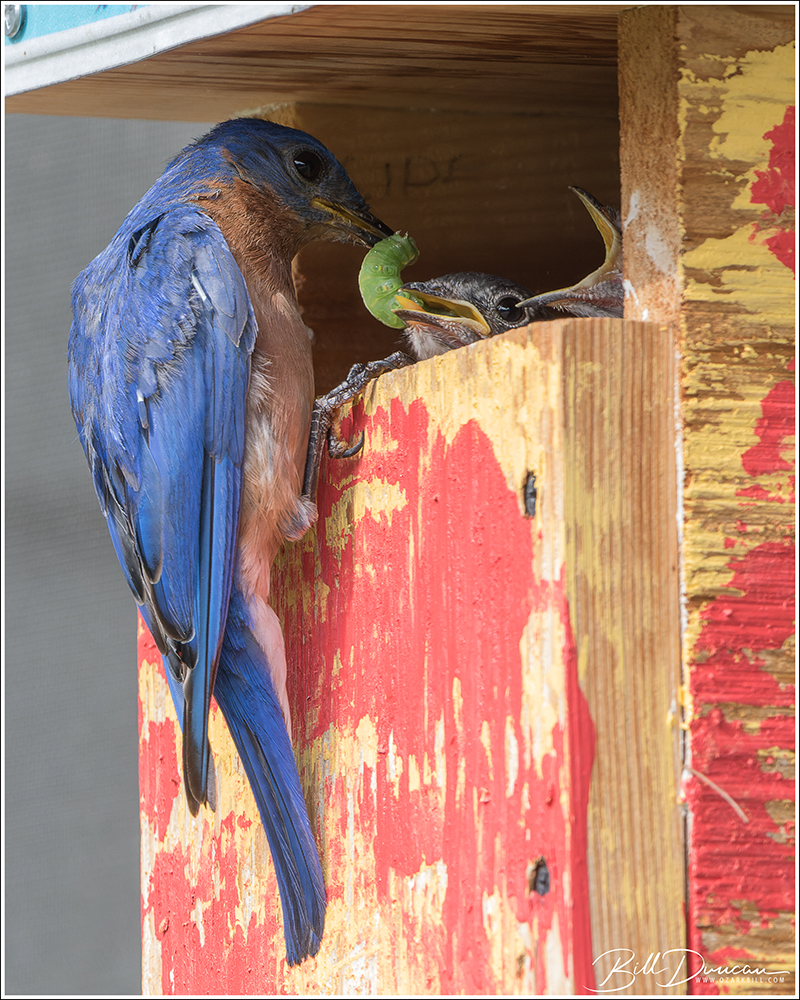
Here dad brings a green and juicy caterpillar for one of the four chicks in the box. I realized that this could be a great way of doing an entomological survey of the neighborhood!
Settings: 1,120 mm focal length equivalent, f/8, 1/400 sec., ISO-800.
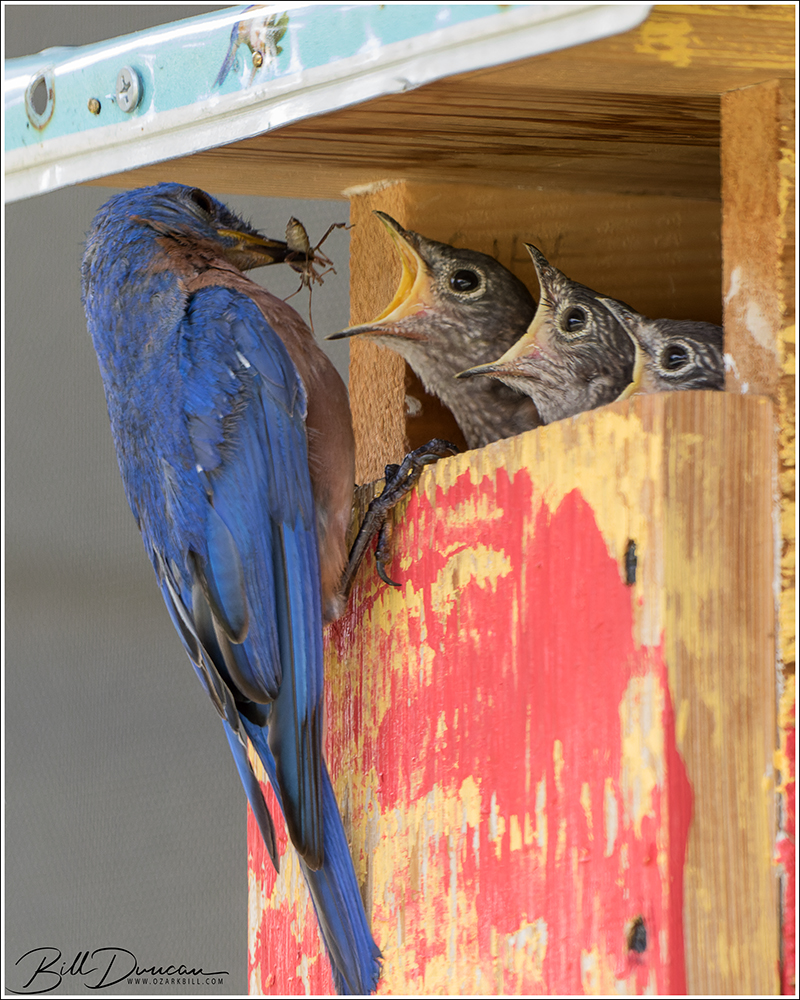
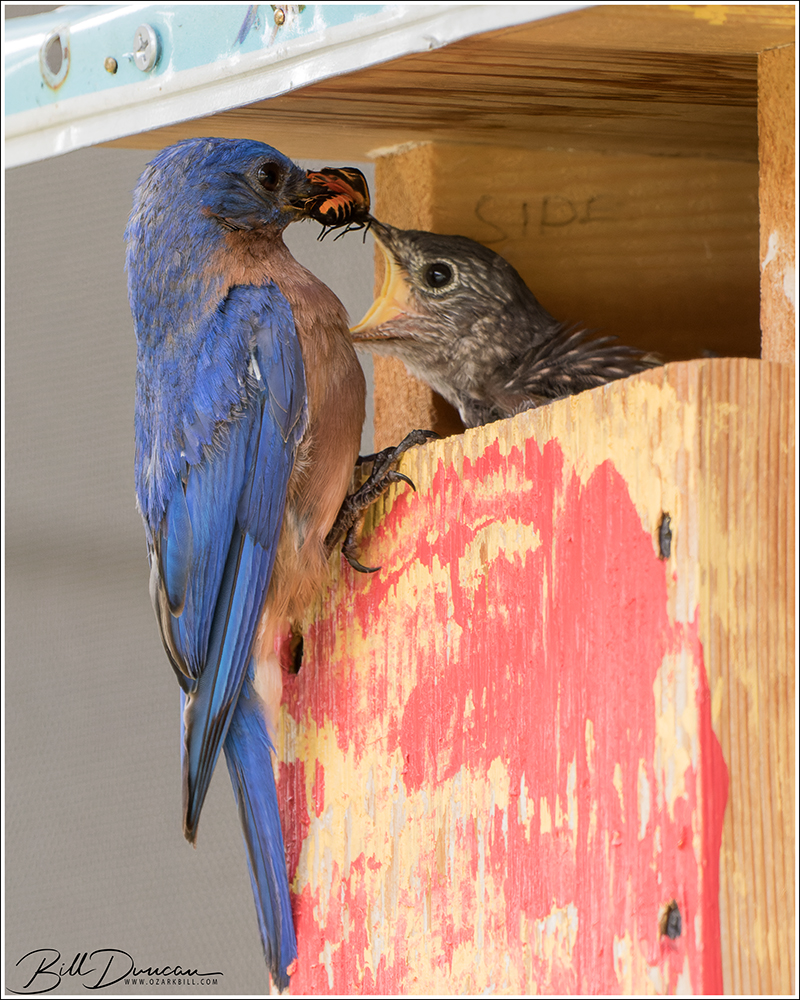
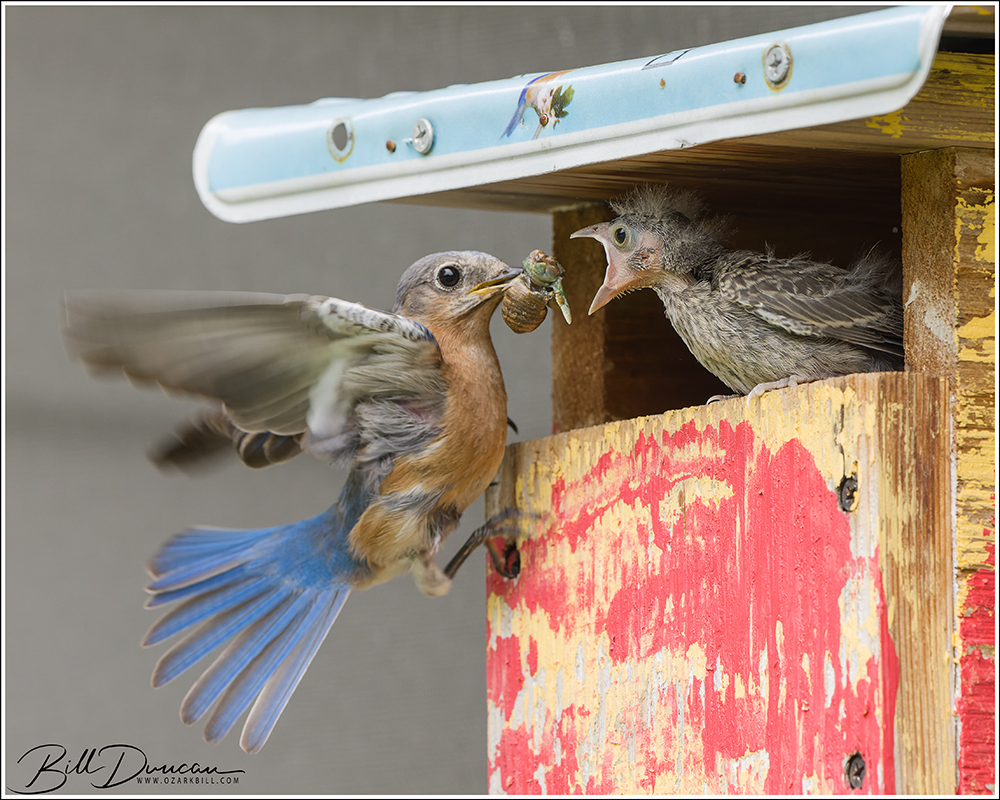
Here dad brings what looks to be a Hemipteran bug of some kind. I supplement the adults with dried mealworms in a special feeder but the chicks need fresh grub. I am happy to live in a neighborhood that can support the nesting of these birds.
Settings: 1,120 mm focal length equivalent, f/7.1, 1/320 sec., ISO-1250.
Mom brings in a tiger moth. In my short time making observations, I found this to be the most common prey brought to the nest.
Settings: 1,120 mm focal length equivalent, f/7.1, 1/320 sec., ISO-1250.
Dad brings a tiger moth.
Settings: 1,120 mm focal length equivalent, f/7.1, 1/320 sec., ISO-1250.
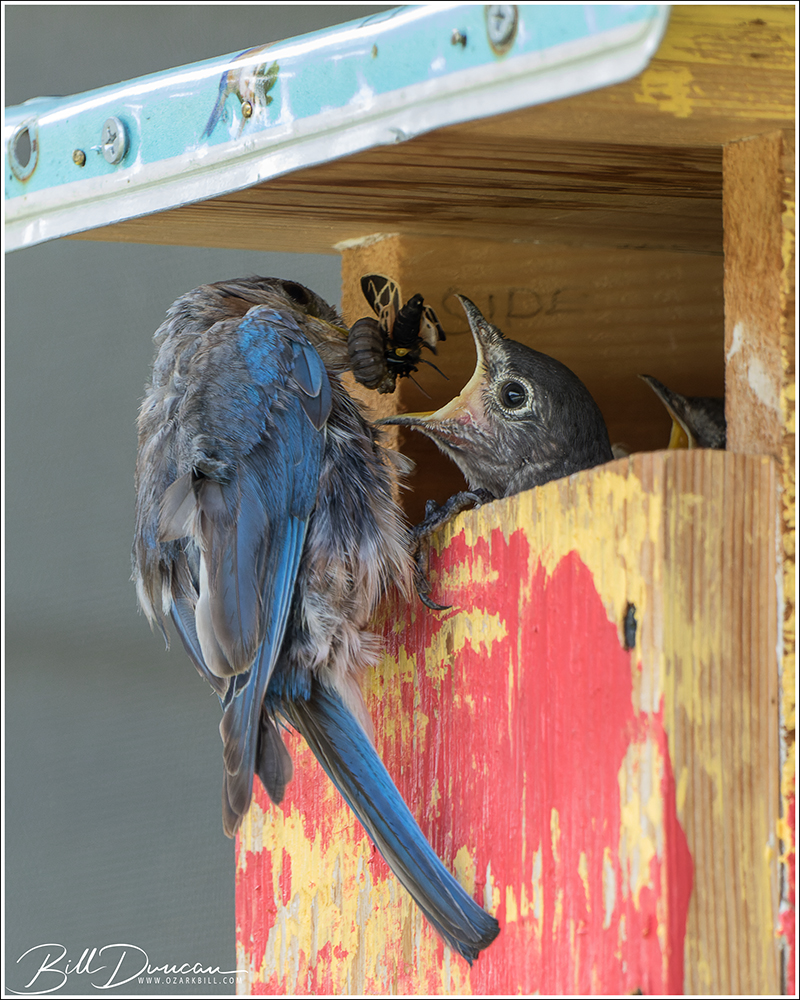
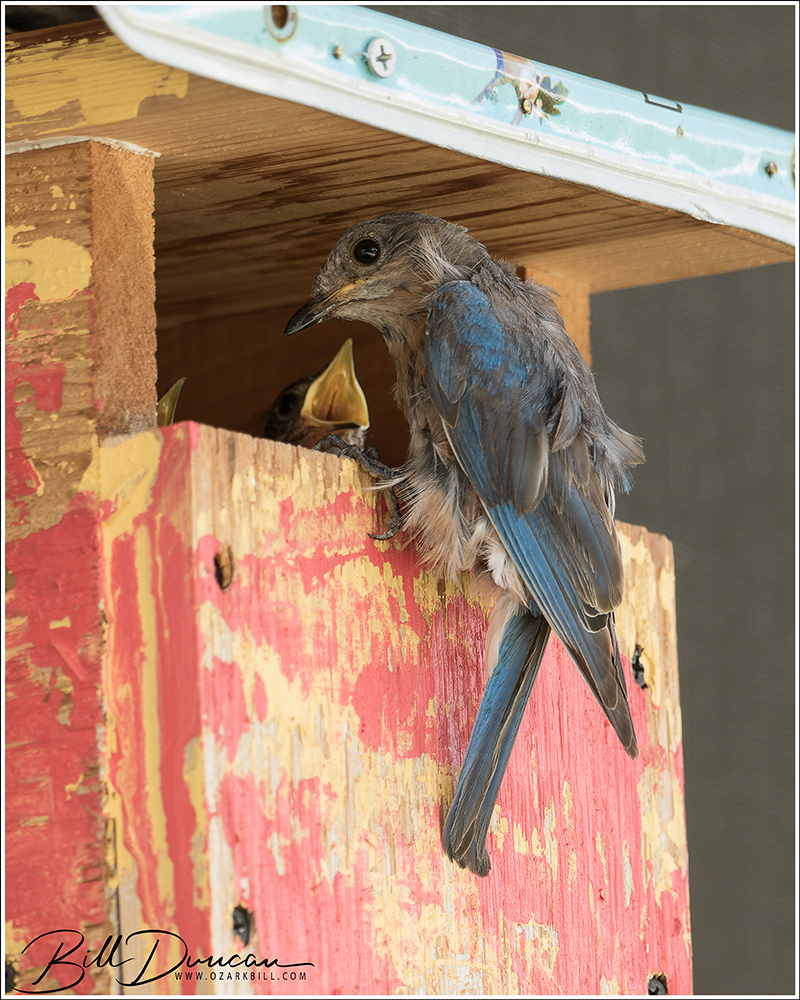
Mom, looking a little well-worn. It was late into a rather busy nesting season for her.
Settings: 1,120 mm focal length equivalent, f/5.6, 1/250 sec., ISO-640.
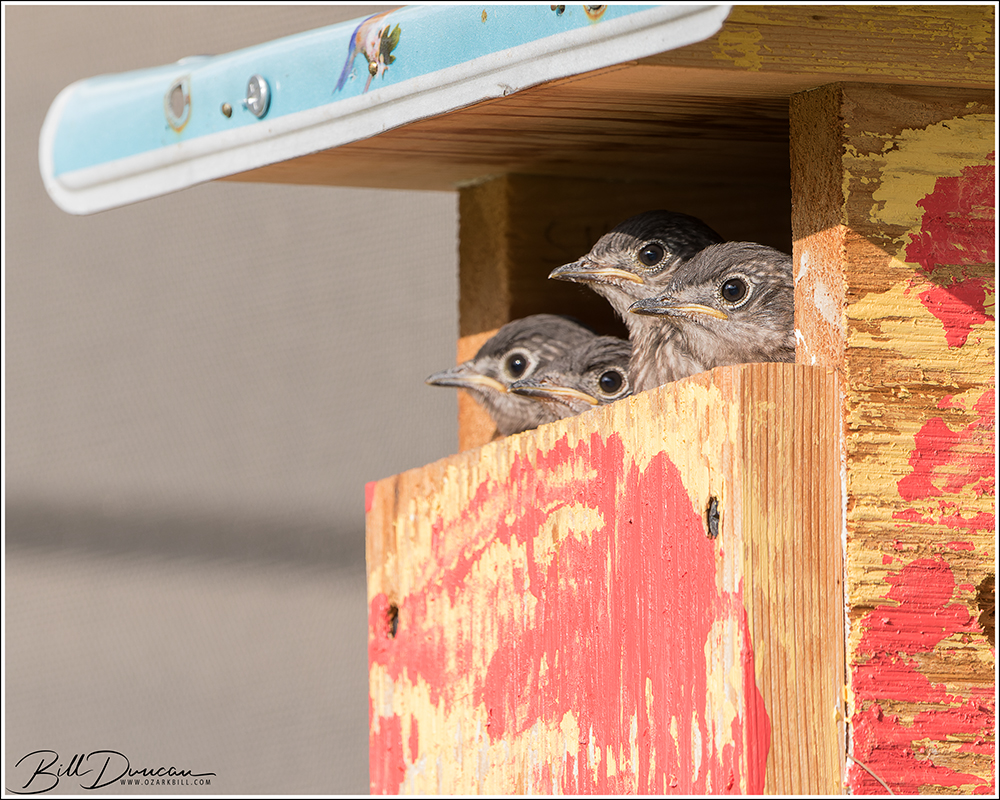
All four chicks waiting for the next visit by a food carrying parent.
Settings: 1,120 mm focal length equivalent, f/8, 1/400 sec., ISO-700.

Ozark Bill