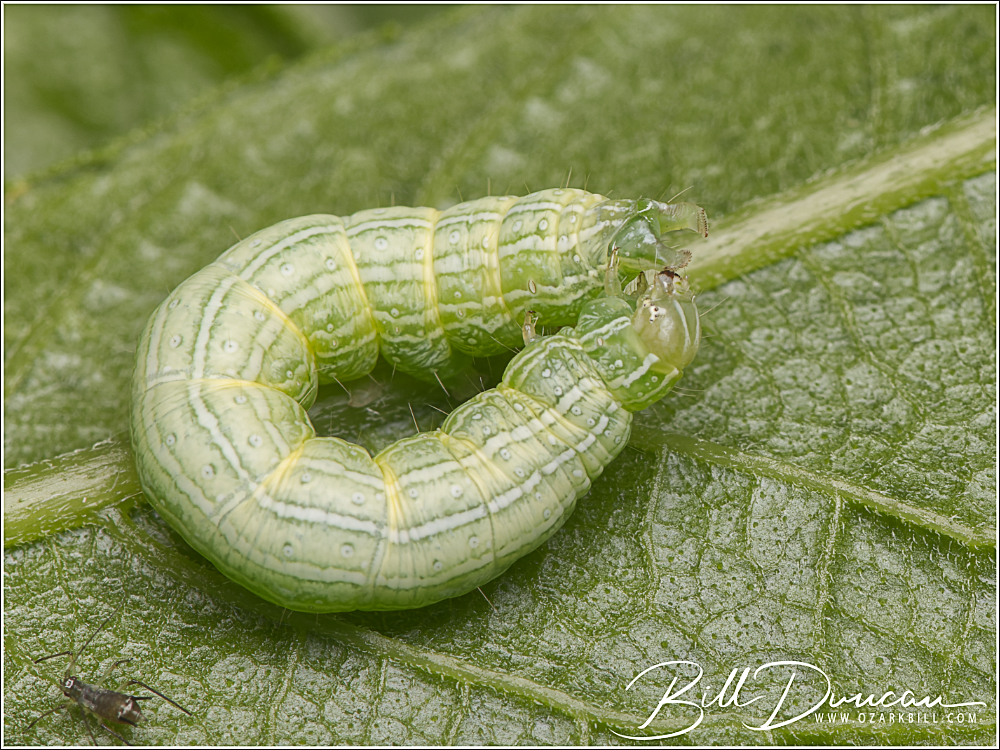
Today’s featured caterpillar is the Noctuid, Ogdoconta cinereola, or “common pinkband groundling.” This one was found in early July at St. Francois State Park on wingstem (Verbesina).

"What a thousand acres of Silphiums looked like when they tickled the bellies of the buffalo is a question never again to be answered, and perhaps not even asked." -Aldo Leopold
Today’s featured caterpillar is the Noctuid, Ogdoconta cinereola, or “common pinkband groundling.” This one was found in early July at St. Francois State Park on wingstem (Verbesina).
Tonight’s caterpillar is a member of the Crambidae family – Saucrobotys futilalis, or the “dogbane saucrobotys moth.” The host for this species is the namesake dogbane (Apocynum species) and they can also feed on milkweeds (Asclepias species). I found these pretty easy to find in mid to late July at Don Robinson State Park by simply looking for their web nests within dogbane plants. There were usually several cats within each nest and a little beating of the plants could get quite a few tumbling out.
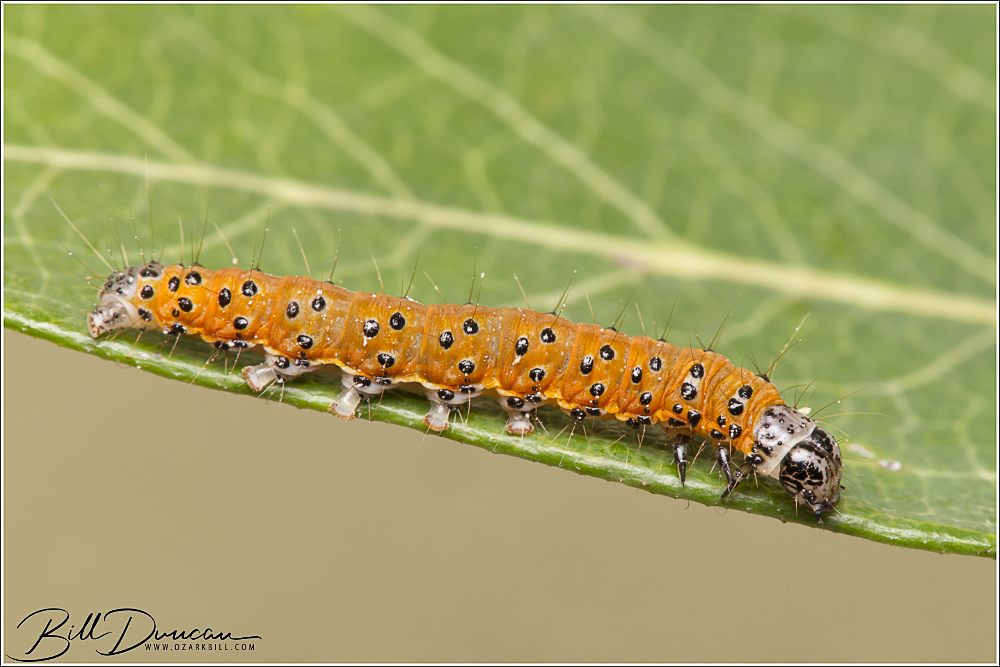
I find the Latin binomial for this one to be pretty entertaining. Saucro, coming from the Greek for graceful, pretty and beauty, along with botys, the genus to which this moth was originally ascribed. While, on the other hand, the specific futilalis seems to come from the Latin futilis, meaning brittle, vain, or worthless. Taxonomic nomenclature can be confusing and is often steeped in history (this species was described in 1863), but I find this grouping to be pretty entertaining.

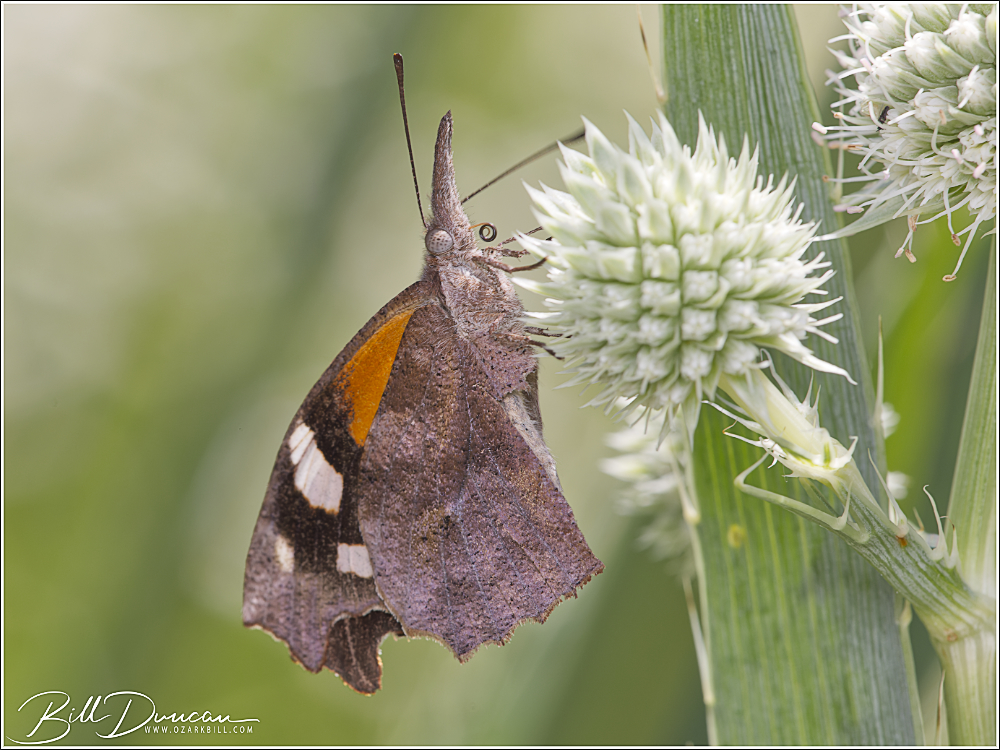
The American snout (Libytheana carinenta) of the Nymphalidae family was a new yard butterfly this year.

I’m pleased to say I found a “holy grail” caterpillar species this year. Unfortunately, at the time, I did not know what I had found. On July 13th, while searching right off a parking lot at Huzzah Conservation Area in Crawford County, MO, I found this smallish bird poop mimic caterpillar. I knew I had seen this one in photos before, but on this day I had left my field guides at home and I was in an area with absolutely no cell phone coverage.
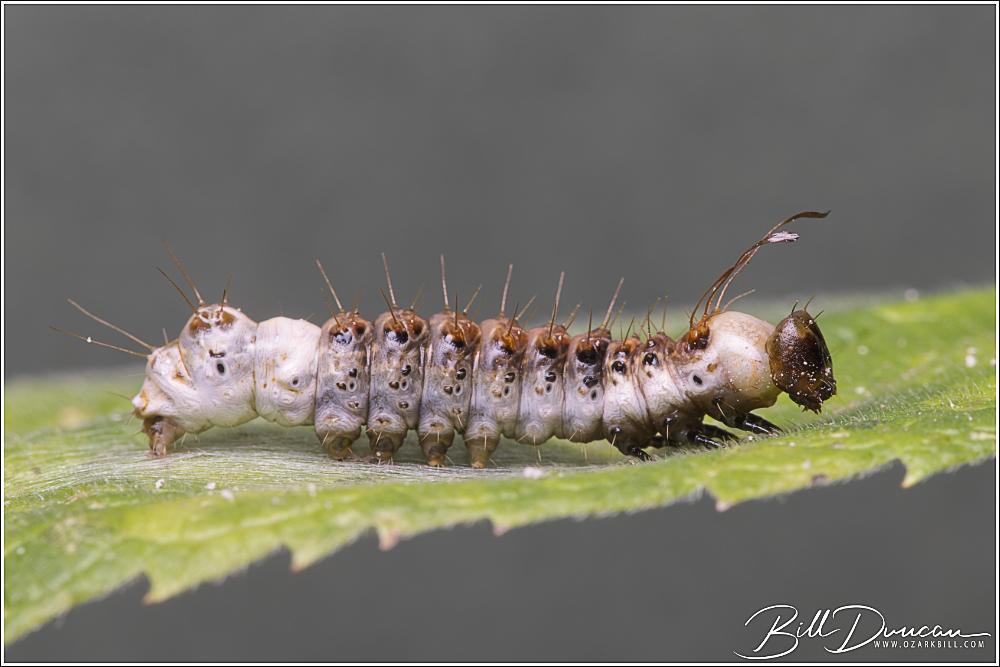
After getting back home, I identified this as a member of the Noctuidae family – Acronicta funeralis, aka the paddle caterpillar. It gets its common name from the paired paddlelike subdorsal setae that are present on the final instar of the caterpillar. I really wish I had known what I had found at the time. I would have brought this guy home to rear in order to get photos of the final instar of this cat. This species is rare enough that it might be the one and only that I find, but I think if I try hard enough, others will come in time.

 A Thousand Acres of Silphiums