
Today I am featuring a guest post by my friend, Casey Galvin, who has spent ample time and efforts photographing rare skippers in recent years. Enjoy!
Butterflies through time have been written about more than any other insect. Their beauty and life cycle are a thing of wonder. Who doesn’t enjoy watching their flight on gossamer wings? Or, the idea to metamorphose from a crawling caterpillar into something that is not only colorful, but to be able to leisurely flutter? No wonder philosophers, artist and poets can’t stop from being in their thrall.
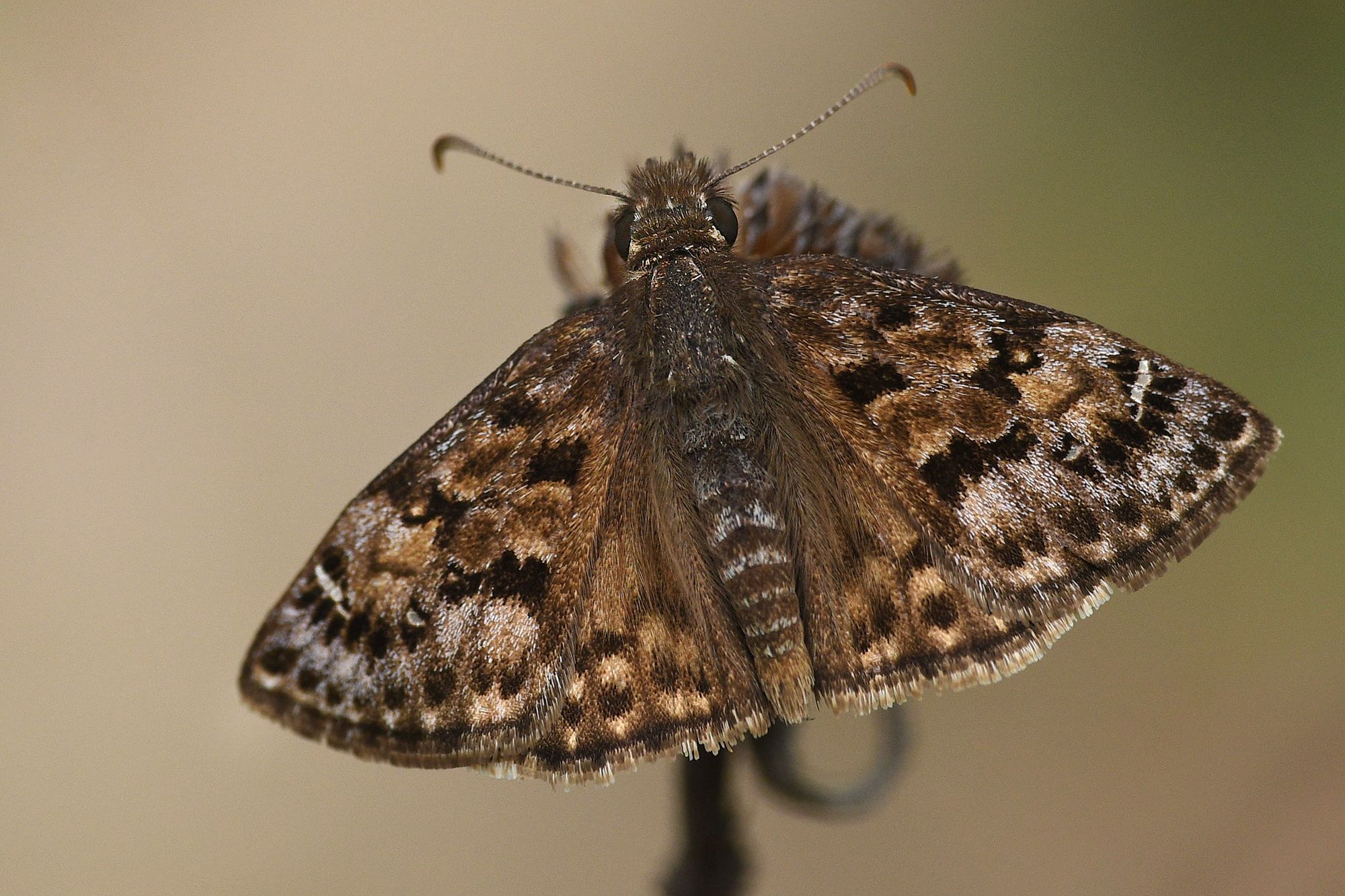
Unfortunately, not all members of the order Lepidoptera are given their just attention. Skippers, those brown moth-looking butterflies, which never seem to sit still and dart quickly from here to yon, are usually given a passing notice at best. Yes, they go through the same life cycle as other butterflies, egg to larva to pupa and then adult. They also serve the same important ecological functions that the rest of the order does. But it is hard for many to see their beauty in any of this when they look so small and often seem so drably colored.
Then there are those lucky enough to look closer and try to appreciate these creatures, opening up opportunities for exploration and adventure in finding and understanding this unique family – the Hesperiidae. If you would like to be in the latter group there are a few things to consider to help in this endeavor.
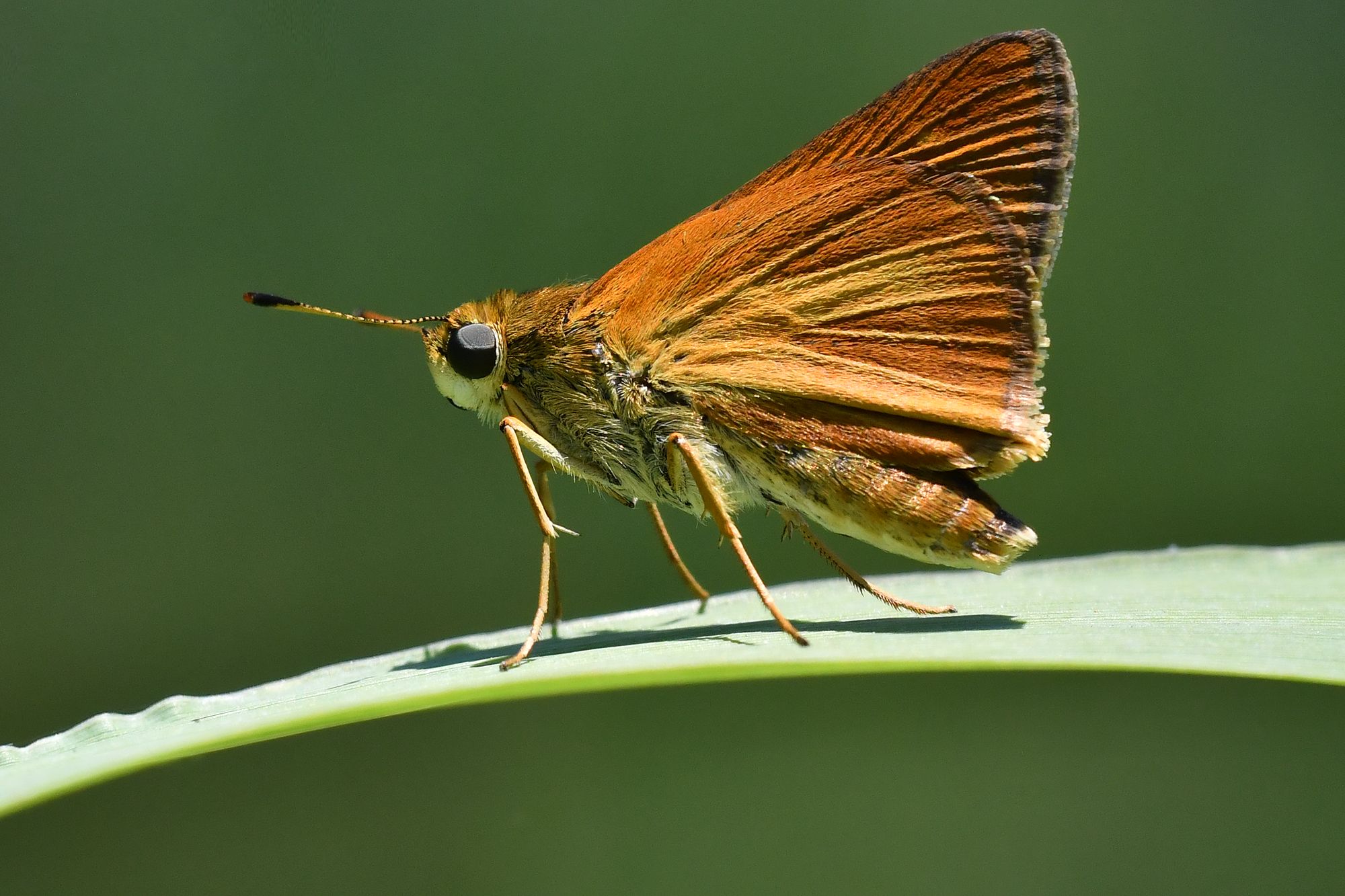
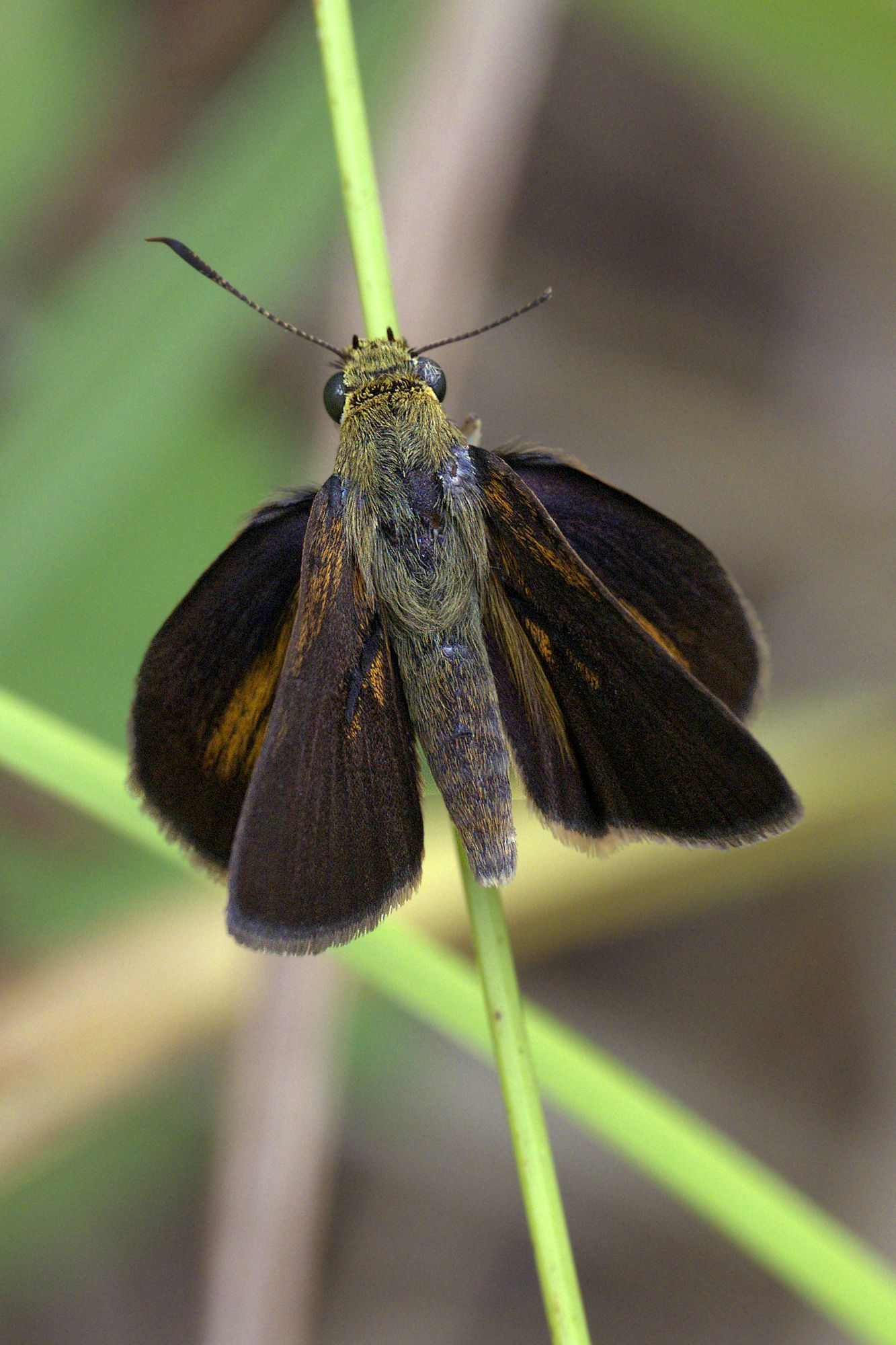
Duke’s skipper (Euphyes dukesi)
Skippers in the U.S.A. can be broken into three subfamilies within the family Hesperiidea. These are the Pyrginae (spreadwings skippers), Hesperiinae (Grass skippers) and the Heteropterinae (skipperlings). The first two groups have hooks at the terminal end of their antennae, whereas the skipperlings do not.
And now to the challenges which I call the three phonetic “F’s”. Finding them, Photographing them and then Figuring out what you have.
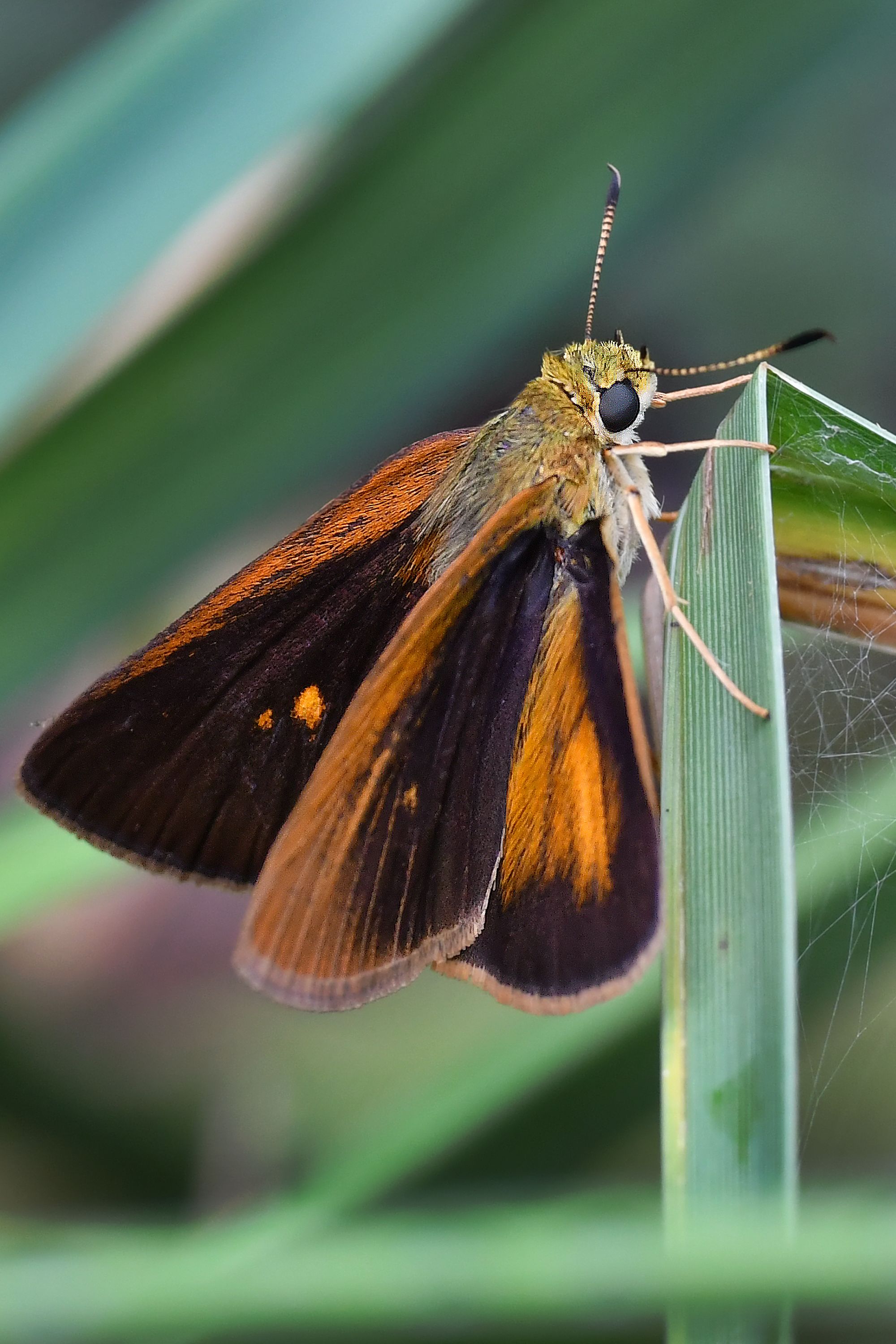

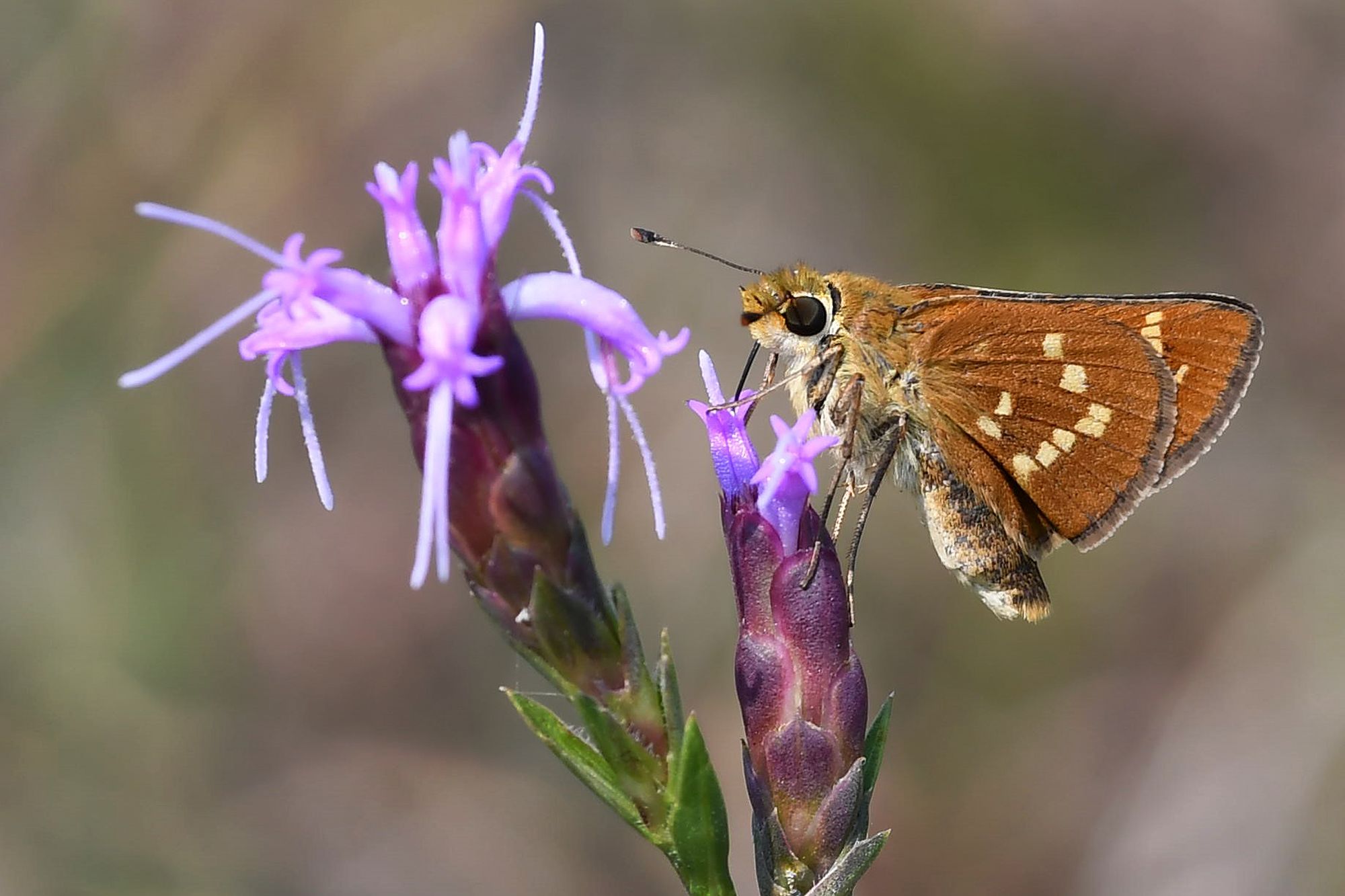
Dion skipper (Euphyes dion)
Finding them.
A key component of finding any living subject is to know their lifestyle. For many insects finding the host plant that the larval stage feeds on is critical. Without the host plant finding the adult can be difficult. The adult females need to lay her eggs on or near the host plant to allow the life cycle to begin. Knowing the flight time for adults is also important. Many of the most frequently seen skippers have two or more generations or broods (known as “polyvoltine”) within a single growing season. Others might have only one generation, or “univoltine,” making for short yearly adults periods. Rarer species usually have fewer annual flight periods.
Assuming you have found your subject, You are now ready to try and photograph them.
Like many insects, skippers are part of the food chain and are aware of their surroundings. Quick movements, casting your shadow across them, or disturbing the platform they are resting, feeding or searching for a mate on may cause them to flush, thus foiling your chances. To be successful, making yourself as small or low to the ground as possible helps tremendously. Walking on your knees or even crawling to get as close to the subject as possible is not out of the question. Also, paying attention to where your shadow is cast is important, as this sudden change may indicate a potential predator. Be aware of the platform the animal is on and how your movements might affect the platform helps in approaching the insect. Does this work all the time? No, but with patience and practice will come success.
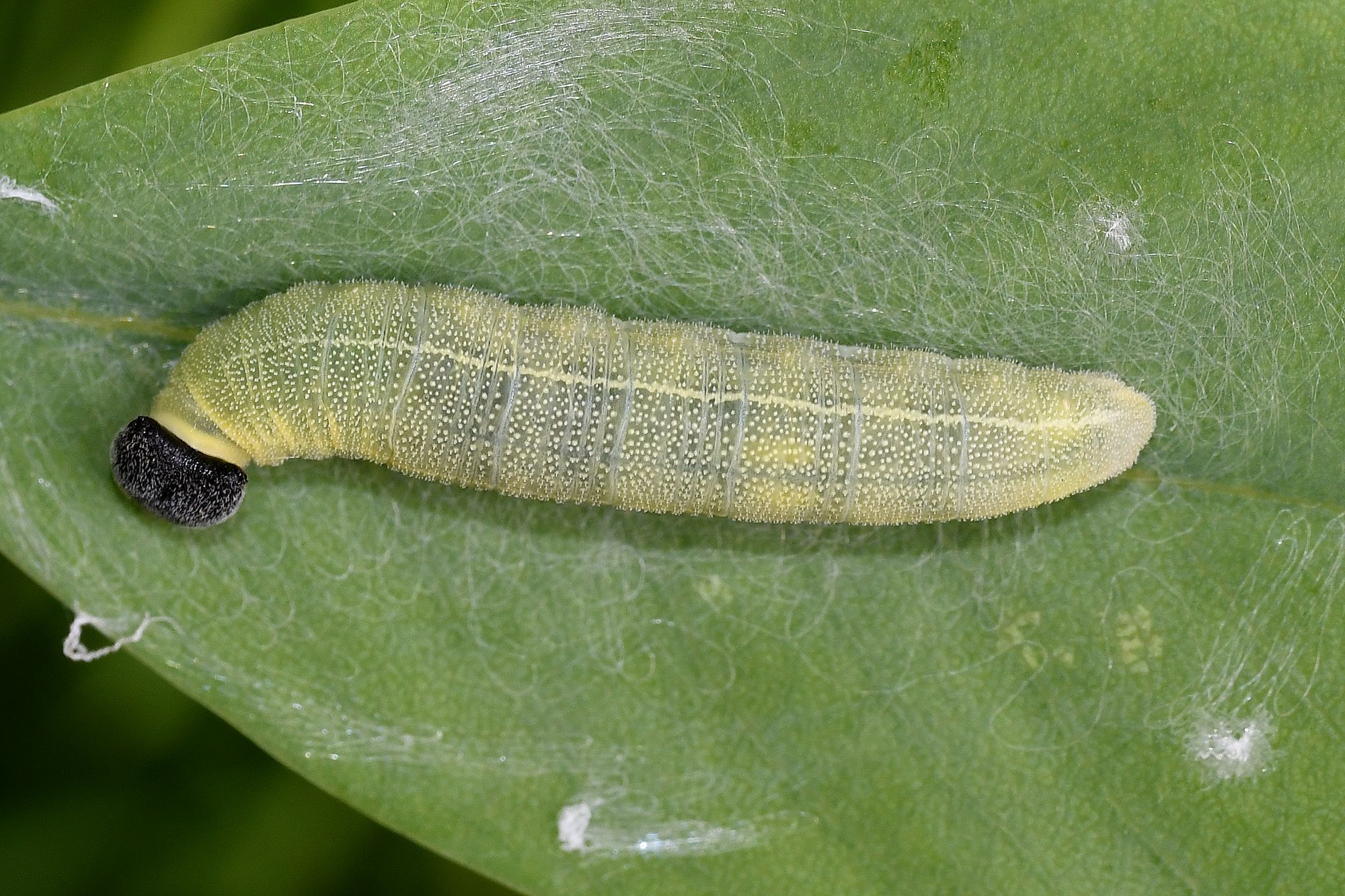
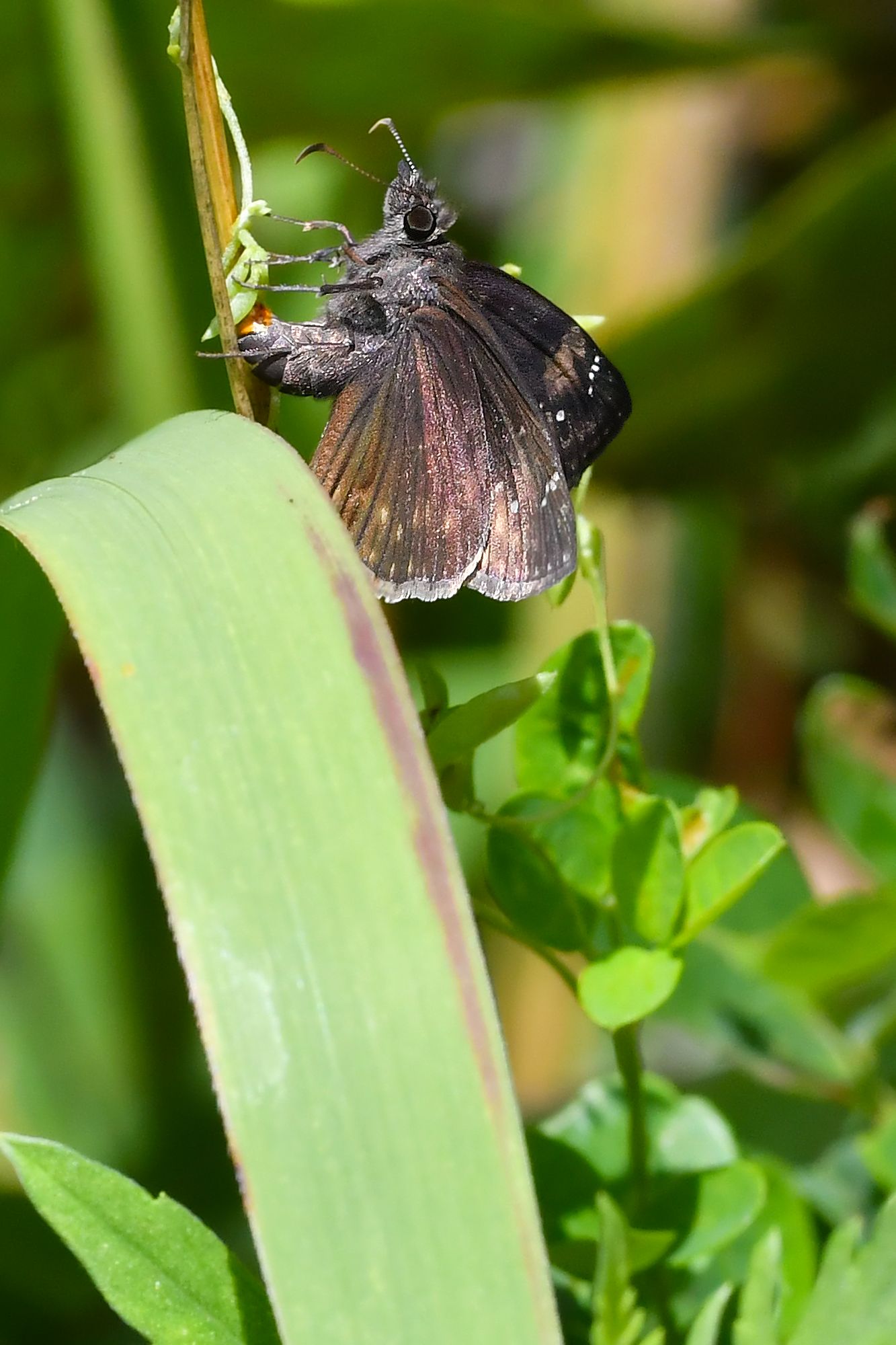
The wild indigo duskywing (Erynnis baptisiae) uses wild indigo (Baptisia spp.) as hosts
Once in a close enough position, try your best to align the plane of focus of your camera’s sensor with that of the butterfly, making sure the subject’s eye is the sharpest part of the image. Try to take as many images of the subject as possible, and make sure to document the sides of both fore and hind wings in the closed (ventral) and open (dorsal) positions, if possible, looking for scale patterns. This will help tremendously in the next process.
For my skipper photography, I use a Nikon D500 attached to a Sigma 180mm f2.8 macro lens. My ISO is typically set to 400 and I use Aperture Priority mode, with my f stop set at f6.3-11 and with autofocus turned on. I will change to fully manual mode and change my ISO and f stop occasionally when necessary. I will also switch off my autofocus if I need to. I carry a flash, but rarely use it, preferring natural lighting. With this photography I usually hand hold my camera.

Once you have accomplished your goals in the field of collecting as many great images as possible, you are now ready to head home and figure out what you might have. This is often the most challenging phase of this process.
How they hold their wings is the first way to know which group a skipper belongs to. When they land, the spreadwings group usually put both sets of wings in a flat plane. The grass skipper group normally keep their wings closed, but can also put one set flat and the other perpendicular to the flat wings giving them a fighter jet look. These butterflies can also flatten the wings like the spreadwing group and usually do this when they are trying to warm themselves in the morning sun before flying. Skipperlings usually spread their wings at a 45 degree angle at rest or keep them closed.
The location where subject was found, local plants (hopefully the host you were looking for) and the time of year will definitely help in identification. Scale patterns will certainly be needed also. It might take some time looking at reference books and online resources to get an identification. Several skippers may have nearly identical patterns. Looking at the details matter in this step.
If you are still stumped after using reference guides and online resources, you might consider taking the next step of seeking help. Web sites like iNaturalist and Butterflies and Moths of North America allow you to create an account and then upload your photographs to have experts in the field help with identifying the subject.
With practice and experience, all the above methods help to make this less stressful and increases your chances for success. Making new acquaintances also becomes rewarding. Many photographers choose new projects in order to improve upon existing or make new skills. This is the latest one I have chosen.
Many of my natural history friends had just two question when I took on this subject. Why? Or really Skippers?
Here are my some of my reasons: Many of the skipper species are not looked for at all. In many cases, there is little information on whether or not a species may still be found at historical location records. Grass skippers, in particular, seem to be disappearing widely, especially ones that have only one or two broods per year. Secondly, I personally like grasslands, tallgrass prairie in particular. This biome and its skipper inhabitants have pretty much disappeared from North America along with the rest of its flora and fauna. To find some parts of it still among us is rewarding. Finally, I like to travel and explore. Even returning to well-known haunts, allows me to look at these sites from a different perspective.
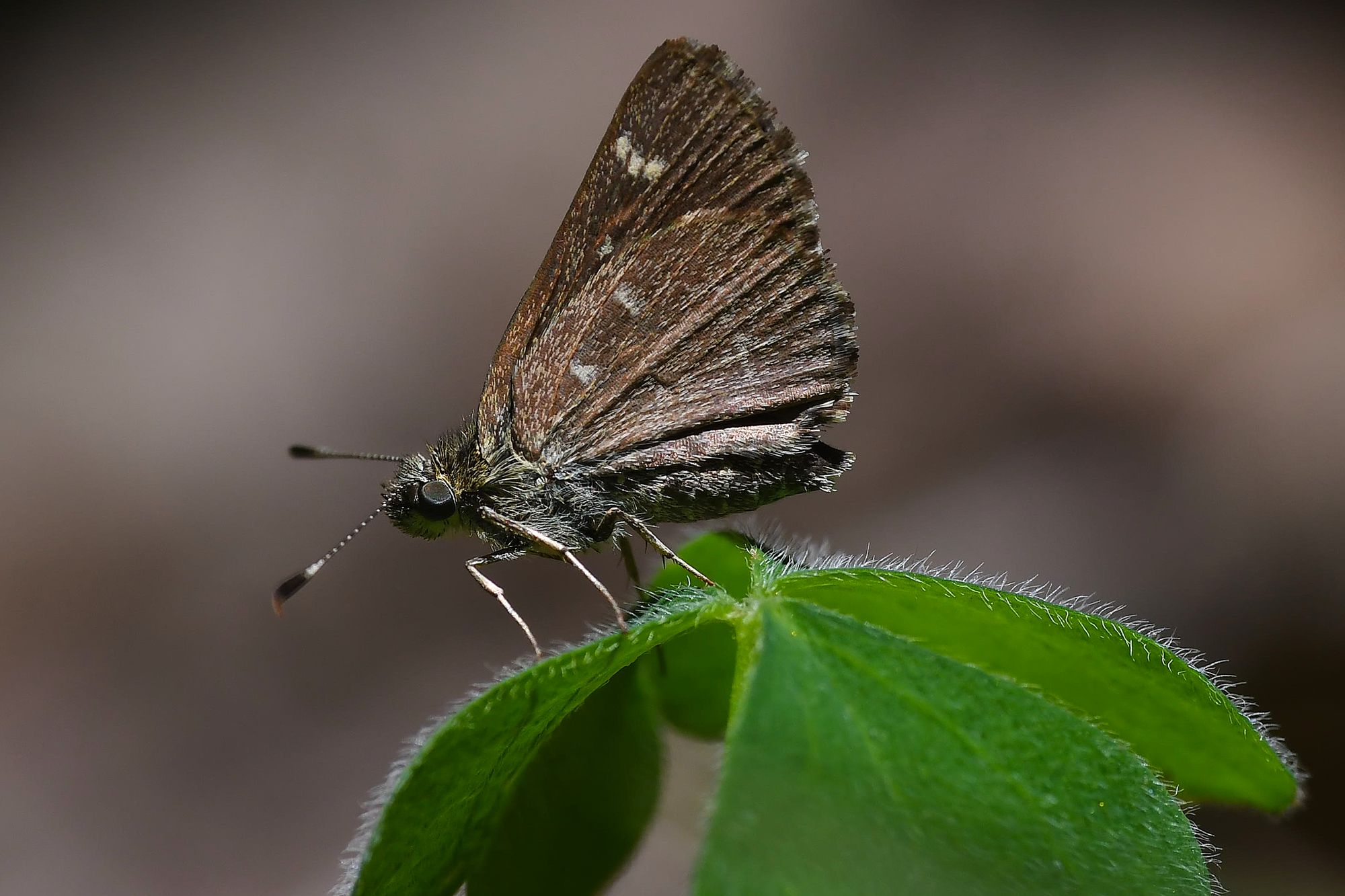
There is still a small group of scientist and enthusiasts that want to keep these wonderful creatures around. We would like others to join our tribe. Why not become one also?
 A Thousand Acres of Silphiums